
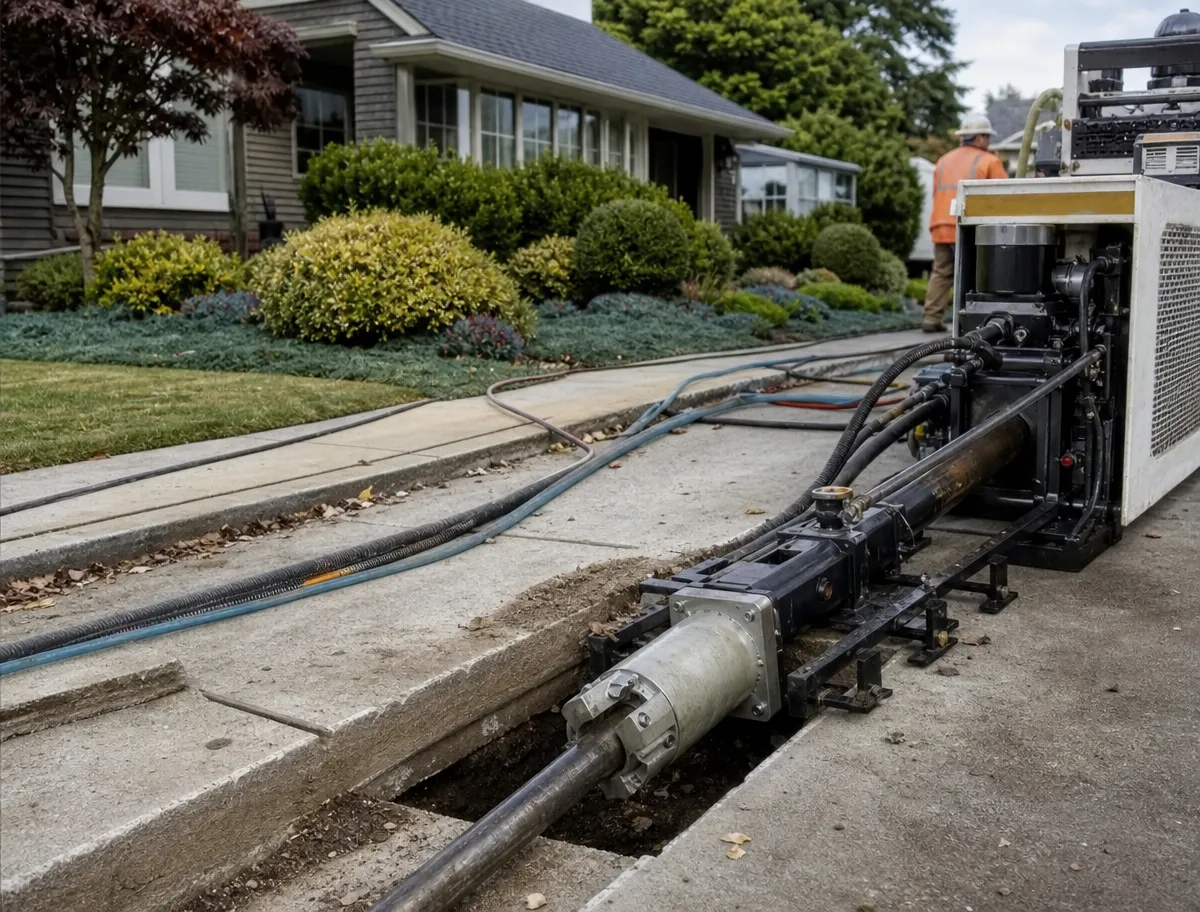
When Does the Pipe Bursting Process Beat Excavation?
Quick Answer: The pipe bursting process wins when a full-diameter or upsized replacement is needed under a driveway, sidewalk, or landscaped yard, avoiding the destruction open-top excavation causes. Rhino Rooter uses this trenchless replacement method to replace collapsed, misaligned, or undersized sewer lines in a day or two, delivering decades of service without a torn-up property in Weber County, UT.
What Are the Key Takeaways on Pipe Bursting vs. Excavation?
What Signs Point to a Trenchless Fix First?
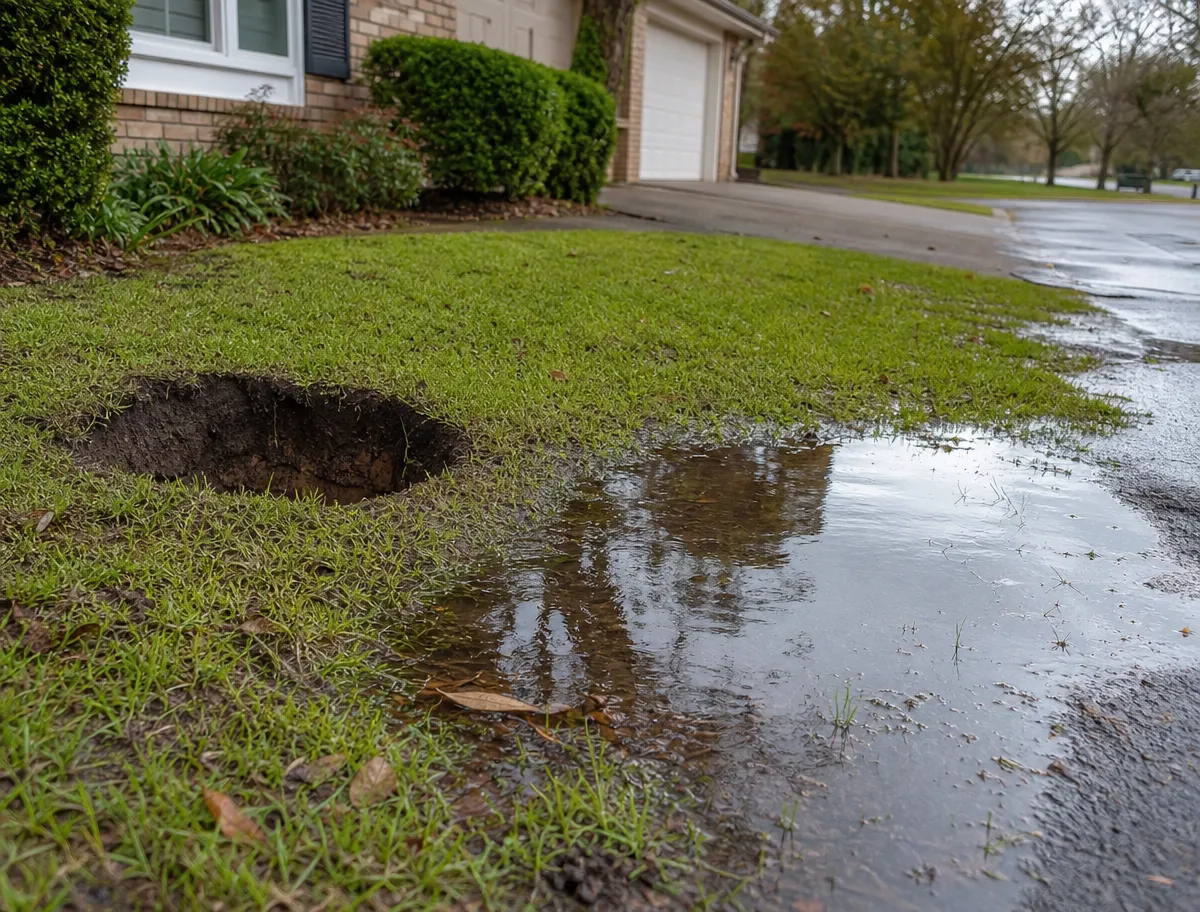 What a failing line looks like above ground
 A camera inspection answers this question before we ever discuss repair options. We run a scope through every line first, then move forward trenchlessly wherever pipe condition allows it. That order matters: guessing at a fix wastes money, and digging blind wastes your yard.
Most property owners come to us dreading the same outcome. A torn-up lawn, a wrecked driveway, a backhoe parked where the garden used to be. Our trenchless-first approach exists specifically to counter that fear. When the pipe qualifies, we clear it, verify the damage on camera, then repair it using CIPP pipe lining or targeted spot repair instead of excavation.
How do we know a line qualifies for lining instead of digging?
Root intrusion is the clearest signal. Mature trees push roots into aging sewer joints as the pipe settles and cracks over decades. That pattern shows up constantly on camera in established neighborhoods. Because CIPP lining creates a jointless, seamless pipe inside the old one, it eliminates the entry points roots exploit in the first place.
Other signs point the same direction:
Cracks or offset joints without a full structural collapse
Root intrusion concentrated at joints rather than along the whole run
A pipe that still holds its general shape and slope
Corrosion or interior scaling on an otherwise intact host pipe
When does excavation still make sense?
Collapsed sections, severe bellies, or pipes crushed out of round usually rule out lining. Camera footage settles the question fast. We'll tell you plainly which category your line falls into before any work begins.
How Does the Pipe Bursting Process Actually Work?
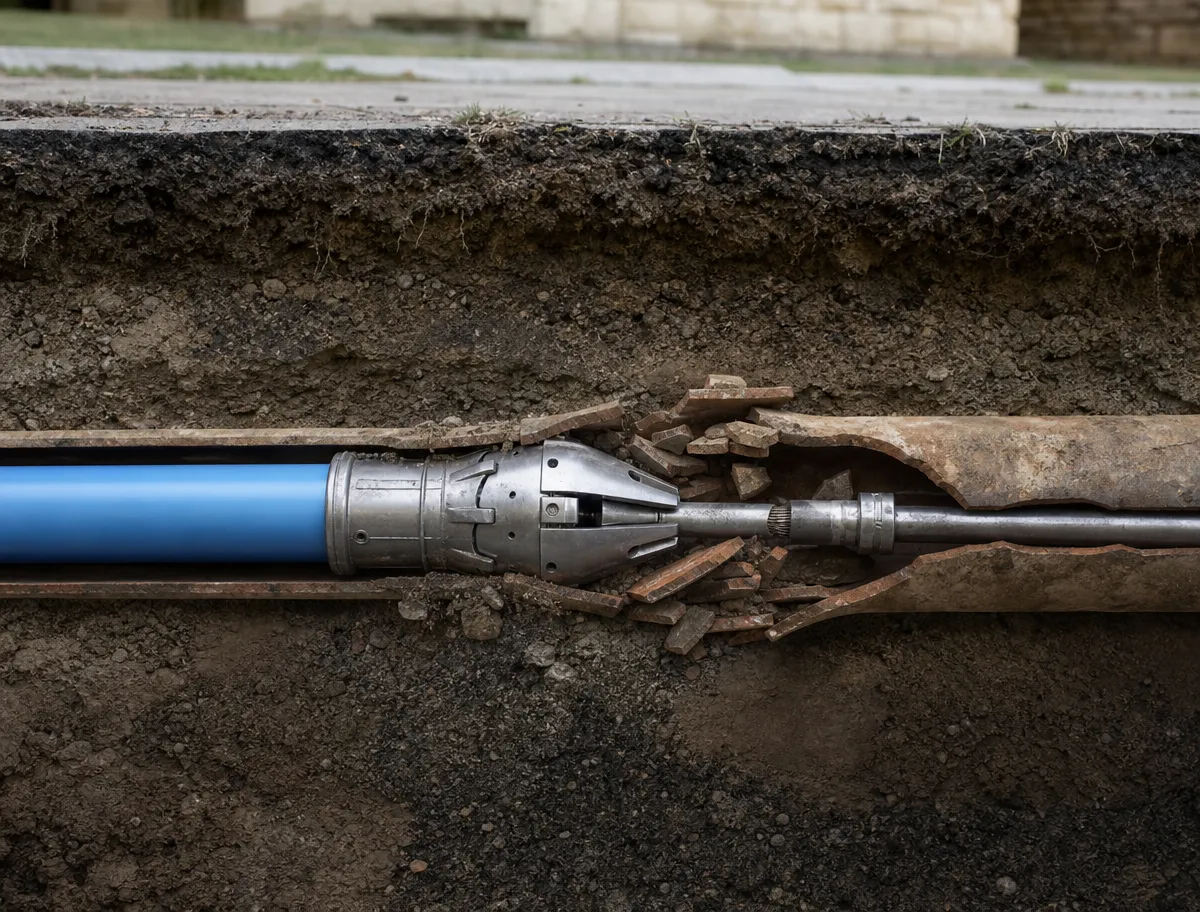 The bursting head, mid-pull
 A bursting tool splits the damaged pipe open and forces the fragments outward into the surrounding soil. That's the entire mechanical principle behind the pipe bursting process. It's why we can replace a failing sewer line without tearing up a yard, driveway, or parking lot, a method detailed in the EPA's pipe bursting fact sheet.
We start by feeding a hydraulic or pneumatic expansion head into the old pipeline, pulled through by a cable and winch anchored at the far end. As the head advances, it splits the old pipe apart while dragging new pipe in directly behind it. The old material stays in the ground, pushed outward, while the replacement line takes its place in one continuous pull. No open trench, no exposed pipeline running the length of the property — just two small access pits.
Compare that to traditional dig-and-replace repair, which requires excavating along the entire pipeline route, hauling out the old pipe, and laying new pipe in an open trench before backfilling everything. That approach tears up landscaping, driveways, and sometimes hardscaping that takes months to restore. Our crews handle every step of the pipe bursting service in-house, from access-pit excavation to final tie-in.
Pipe Bursting vs. Dig-and-Replace
| Method | Excavation | Pipe Removal |
|---|---|---|
| Pipe bursting | Two small access pits | Fragmented and pushed outward, stays in ground |
| Dig-and-replace | Full-length trench | Fully removed and hauled away |
What pipe conditions call for pipe bursting?
We see the strongest candidates in older homes running clay or cast-iron laterals, materials that crack and let roots intrude as they age. Once a line reaches that stage, bursting gives us a trenchless replacement option instead of digging up the whole yard.
Does the old pipe need to be removed first?
No — removal isn't necessary. The bursting tool fractures the old pipe in place. The fragments get displaced into the surrounding soil as new pipe follows directly behind the expansion head.
📞 Ready to Get Started?
Not sure if your sewer line qualifies for trenchless replacement? Contact Rhino Rooter for a free camera inspection and pipe bursting quote in Weber County, UT.
When Does Excavation Still Win Out?
Excavation remains the right call when a pipe's condition, location, or material rules out a trenchless fix. We weigh those same four factors on every job: condition, location, material, and how much cost and disruption an owner can absorb. When one of those factors breaks the wrong way, digging is still the more honest recommendation. Industry guidance from NASSCO's pipe bursting standards outlines the same decision factors we use on every job.
Property owners generally face two paths once a line fails. One is open-top excavation, the traditional dig-and-replace approach. The other is a trenchless method such as pipe bursting. A bursting tool fractures the old pipe outward while pulling a new one into place. We don't default to either option; we let the pipe's own condition make the call.
Why wouldn't a contractor use trenchless replacement on every job?
Trenchless replacement depends on having a workable host pipe and a clear path for the bursting head to travel. A severely collapsed line, a shifted alignment, or an obstruction that blocks the tool's path can force a return to open trenching. Location matters too: a line running under a structure or through congested utilities sometimes leaves excavation as the more practical route.
Pipe material plays into that decision heavily. Growth areas that mix new subdivisions with older farmsteads often have two very different sewer profiles side by side, newer PVC in recent construction and aging clay or cast-iron laterals on older lots. We camera-inspect first and match the repair to what we actually find, rather than applying one method across every property:
PVC laterals in newer builds usually handle trenchless methods well
Aging clay or cast-iron lines may need excavation if deterioration is too advanced
Material-specific repair keeps the fix matched to the pipe, not the calendar
How Much Time and Disruption Will Each Method Save?
Timelines favor trenchless methods in nearly every comparison we've run. Homeowners lose weeks of driveway access, landscaping, and daily routine when a crew has to trench the full length of a sewer line. Our trenchless replacement approach requires less time, fewer resources, and only minimal disruption to the property compared with excavation.
The lining stage itself moves fast. For most jobs, the application finishes in about 24 hours, and post-repair finishing tacks on at most a day to a day and a half. That means a typical residential lining job wraps in under 48 hours from start to finish.
Traditional excavation doesn't move at that pace. Full digging and pipe replacement stretch these projects out over multiple days, sometimes longer. Crews have to remove landscaping, break up concrete or asphalt, expose the entire pipe run, then restore everything afterward.
How much faster is trenchless repair than digging up the yard?
Trenchless repair finishes in roughly a quarter of the time excavation requires, based on typical job timelines. A lining job that closes out in a day and a half often takes traditional crews four to five days once digging, replacement, and restoration are added up. Fewer days on site means fewer days without full use of a driveway, yard, or parking area.
We've built our own track record around that speed advantage. Across roughly 27,000 completed jobs throughout an entire county, our crews have treated excavation as a last resort rather than a default. That volume of trenchless-first work reflects a simple standard: dig only when the pipe's condition truly leaves no other option.
Which Method Fits Your Sewer Line Situation?
Pipe condition drives our recommendation, not preference for one method over another. We've spent 23 years serving Weber County as a family-run, trenchless-first sewer and drain company, and that experience spans nearly every pipe condition a homeowner or property manager can face. What works for a hairline crack rarely works for a collapsed clay lateral.
We lean on camera inspection before recommending anything. A camera run through the line remains the fastest way to confirm which sewer profile we're actually dealing with. Skipping that step invites guesswork we don't allow on our jobs.
How do we decide between lining and bursting?
Lining suits pipes that still hold their shape but have cracks, root intrusion, or interior corrosion. Bursting suits pipes that are collapsed, badly offset, or too narrow for current flow needs. The pipe bursting process replaces the pipe's diameter entirely rather than coating the interior.
Which Fix Fits Which Pipe
| Pipe Condition | Better Fit |
|---|---|
| Cracked but round, roots present | Lining |
| Collapsed or crushed | Bursting |
| Undersized for current use | Bursting (trenchless replacement) |
| Minor corrosion, structurally sound | Lining |
Either path skips excavation across your yard or parking lot. Both methods are typically finished in a day or two, cost less than full excavation, and add decades of service life. And every trenchless job we complete carries a 10-year warranty, so you're getting a permanent fix, not a temporary patch.
Pipe Bursting at a Glance
The pipe bursting process replaces old sewer lines by splitting them outward while pulling new HDPE pipe into place, using only two small access pits.
Pipe bursting beats excavation when a line is collapsed, severely offset, or needs a larger diameter, and when protecting a driveway, yard, or hardscape matters.
Trenchless replacement typically finishes in a day or two, compared with four to five days for full open-trench excavation.
Every trenchless job comes with a 10-year warranty, so it's a permanent fix rather than a temporary patch.
Next step: Schedule a free camera inspection to find out if your Weber County sewer line qualifies for pipe bursting.
About Rhino Rooter
Rhino Rooter is a family-owned, trenchless-first sewer and drain company that has served Weber County, UT, for 23 years. Our technicians specialize in pipe bursting, CIPP pipe lining, camera-verified diagnostics, and drain cleaning, helping homeowners and property managers avoid unnecessary excavation whenever a trenchless repair will do.
Contact the crew →Frequently Asked Questions
When does pipe bursting beat excavation for pipe replacement?
Pipe bursting wins when a full-diameter or upsized replacement sits under a driveway, sidewalk, or landscaped yard, avoiding the destruction open-top excavation causes. It replaces collapsed, misaligned, or undersized lines in a day or two.
What does the pipe bursting process actually involve?
A bursting tool splits the damaged pipe and forces fragments outward into the soil while dragging new pipe in behind it. This requires only two small access pits instead of an open trench along the entire route.
How does pipe bursting compare to traditional dig-and-replace excavation?
Traditional excavation requires digging along the entire pipeline route, hauling out old pipe, laying new pipe in an open trench, then backfilling. Pipe bursting skips that process entirely, preserving yards, driveways, and parking lots from backhoe damage.
What pipe conditions signal it's time for trenchless replacement?
Collapsed sections, severe bellies, clay laterals with heavy root intrusion, and pipes that have lost their full diameter typically point to pipe bursting rather than lining or spot repair. A camera inspection confirms which category a line falls into before work begins.
How much does pipe bursting cost compared to traditional excavation?
Pipe bursting typically costs less than full open-trench excavation because it requires only two small access pits instead of digging along the entire pipeline route. Projects also finish in a day or two instead of the four to five days many excavation jobs take, which lowers labor and restoration costs.
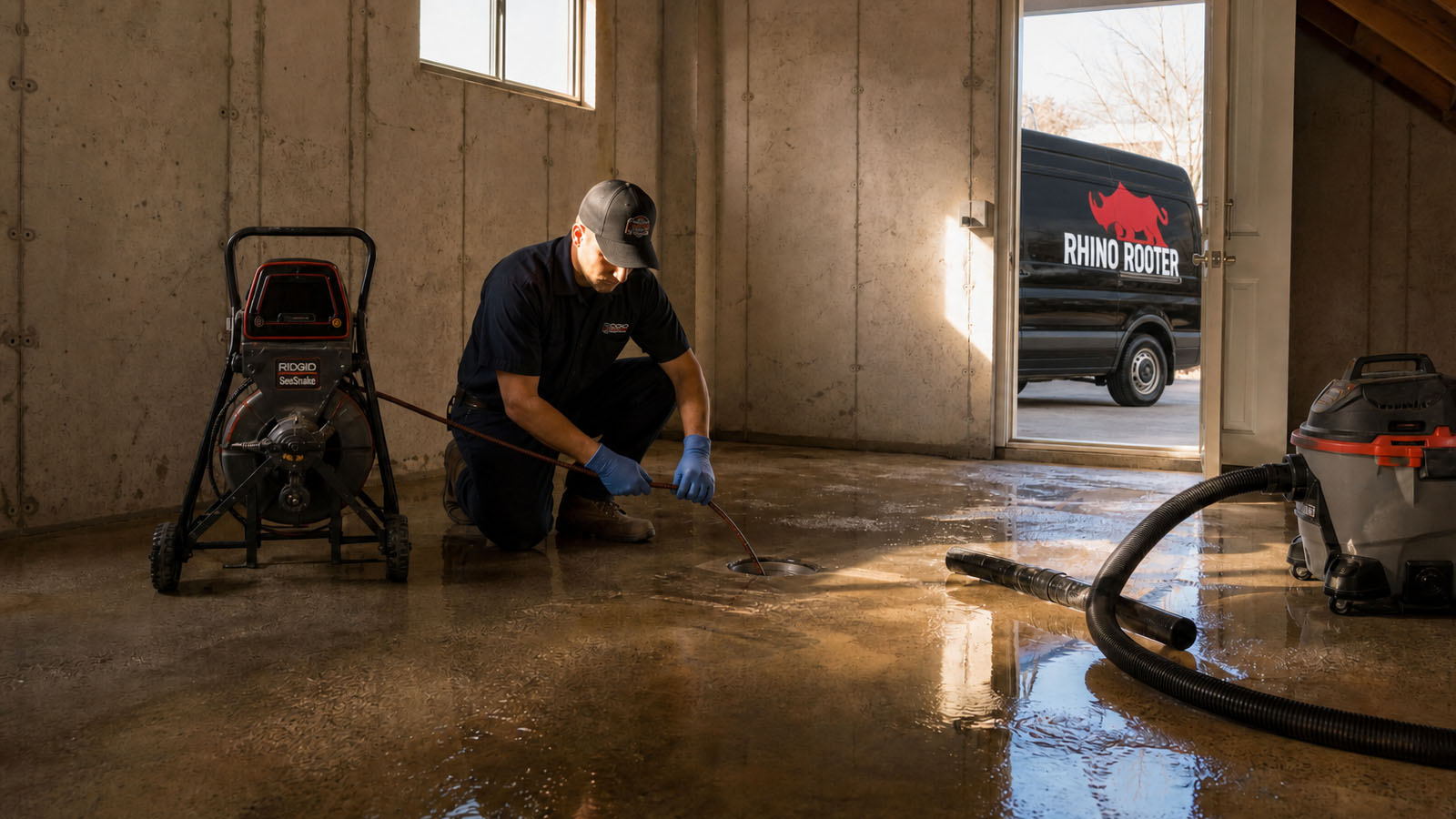
Get a Free Pipe Bursting Quote in Weber County
Pipe bursting protects your yard, driveway, and hardscape from the destruction of full excavation, while still delivering a durable, code-compliant replacement pipe with decades of service life. Rhino Rooter's trenchless-first crews have completed thousands of pipe bursting and CIPP lining projects across Weber County without unnecessary digging. Contact Rhino Rooter today for a free, no-obligation pipe bursting quote.