
When CIPP Lining Fits
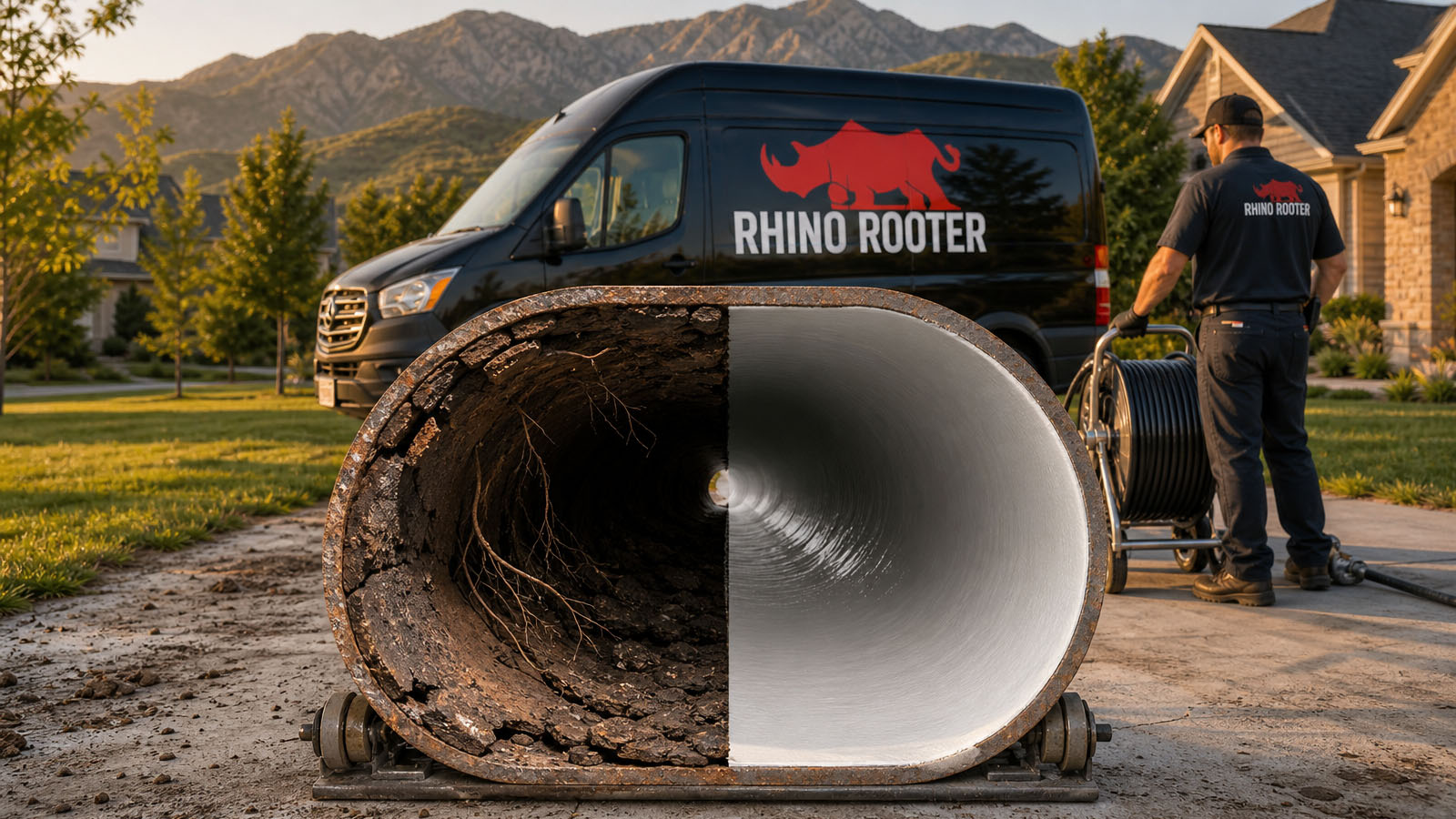
The right call for most cracked, root-infiltrated, or corroded lines where the host pipe is still intact enough to hold a liner. A camera inspection confirms the pipe can carry a liner before we quote the work.
When a sewer line fails, you have two paths: rebuild it from the inside with CIPP lining, or dig it up and replace it. Here’s how they compare for northern-Utah homes.
Last updated: June 13, 2026
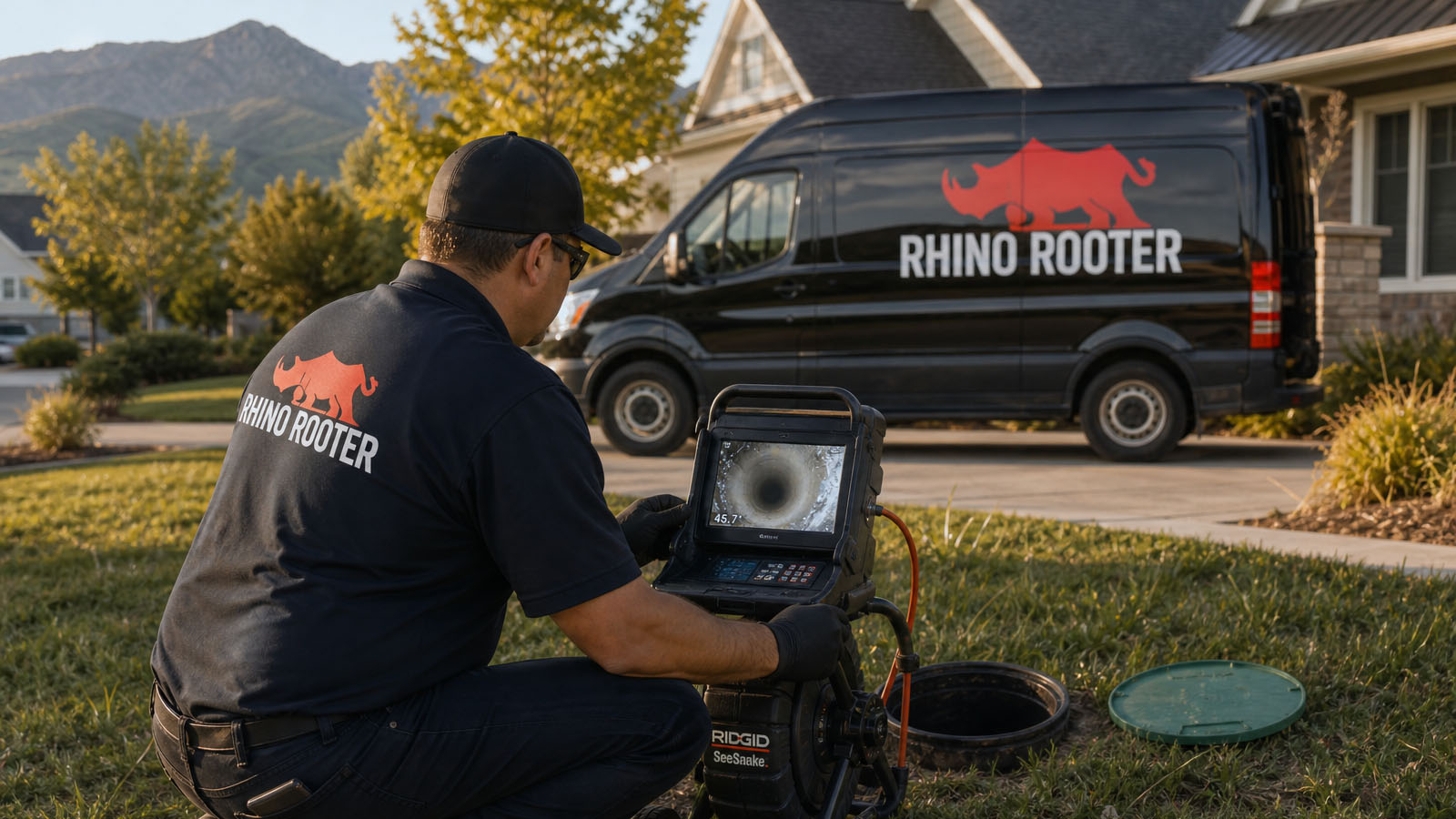
We camera first Both fixes get you back to a working sewer line — they just get there very differently. Trenchless CIPP lining rebuilds the pipe from the inside without excavation, while open-cut replacement digs the old line out and lays a new one. Rhino Rooter is a trenchless specialist: we line and spot-repair rather than pipe-burst or open-cut replace, and we camera every line first so the recommendation matches what is actually in the ground.
| Factor | CIPP lining (trenchless) | Open-cut excavation |
|---|---|---|
| Excavation | None — works through cleanouts | Trench across yard / driveway |
| Disruption | Most jobs done quickly | Days of work plus restoration |
| Landscaping / hardscape | Preserved | Often torn up and rebuilt |
| Lifespan | ~50-year liner, jointless | Depends on new pipe material |
| Root resistance | High — no joints to exploit | Joints can admit roots over time |
| Warranty | 10-year workmanship | Varies by contractor |
CIPP lining is the right call for most cracked, root-infiltrated, or corroded lines where the host pipe is still intact enough to hold a liner, which a camera inspection confirms. Full excavation is reserved for lines that have completely collapsed or lost shape, where no liner can be installed. Rhino Rooter focuses on trenchless rehabilitation and does not pipe-burst or open-cut replace.
The right call for most cracked, root-infiltrated, or corroded lines where the host pipe is still intact enough to hold a liner. A camera inspection confirms the pipe can carry a liner before we quote the work.
Full excavation is reserved for lines that have completely collapsed or lost their shape, where no liner can be installed. Because Rhino Rooter focuses on trenchless rehabilitation, we will tell you plainly if a line is past lining.
For most failures, yes. CIPP creates a new, jointless pipe inside the old one with a ~50-year life, without the excavation and restoration a replacement requires.
Not always per foot, but it usually wins on total cost once you add excavation, landscaping, and hardscape restoration to a dig job.
Only when a line has fully collapsed or lost its shape so a liner can’t be installed. A camera inspection tells us which situation you’re in.
Yes. The liner is jointless, so it removes the joints that tree roots typically exploit.
Most CIPP jobs are completed quickly through existing cleanouts, while excavation typically takes several days plus restoration time.
We camera the line, confirm whether it can take a liner, and quote the right fix in writing — no guesswork, no upsell to digging.