

What Are the Signs You Need Sewer Line Replacement?
Quick Answer: The clearest signs you need sewer line replacement include multiple backups within a year, tree root intrusion confirmed by camera, a pipe belly holding standing waste, structural collapse visible on inspection footage, pipe age of 40 years or more in clay or cast iron lines, cracks or offsets at multiple points along the line, and repair costs that approach or exceed full replacement. A camera inspection confirms which apply before any digging begins, and most trenchless jobs finish in a single day using CIPP lining or pipe bursting.
Every sewer line eventually reaches a point where repair no longer makes sense. Some failures are obvious — a sewage backup in the basement, a sinkhole opening near the lateral — while others build quietly for months before the pipe finally gives out. Utah’s aging clay, cast-iron, and Orangeburg lines are especially prone to this slow failure pattern, and homeowners along the Wasatch Front who catch the warning signs early save real money by choosing trenchless replacement over emergency excavation.
What to Know About Trenchless Sewer Line Replacement
What Warning Signs Point to Sewer Line Failure?
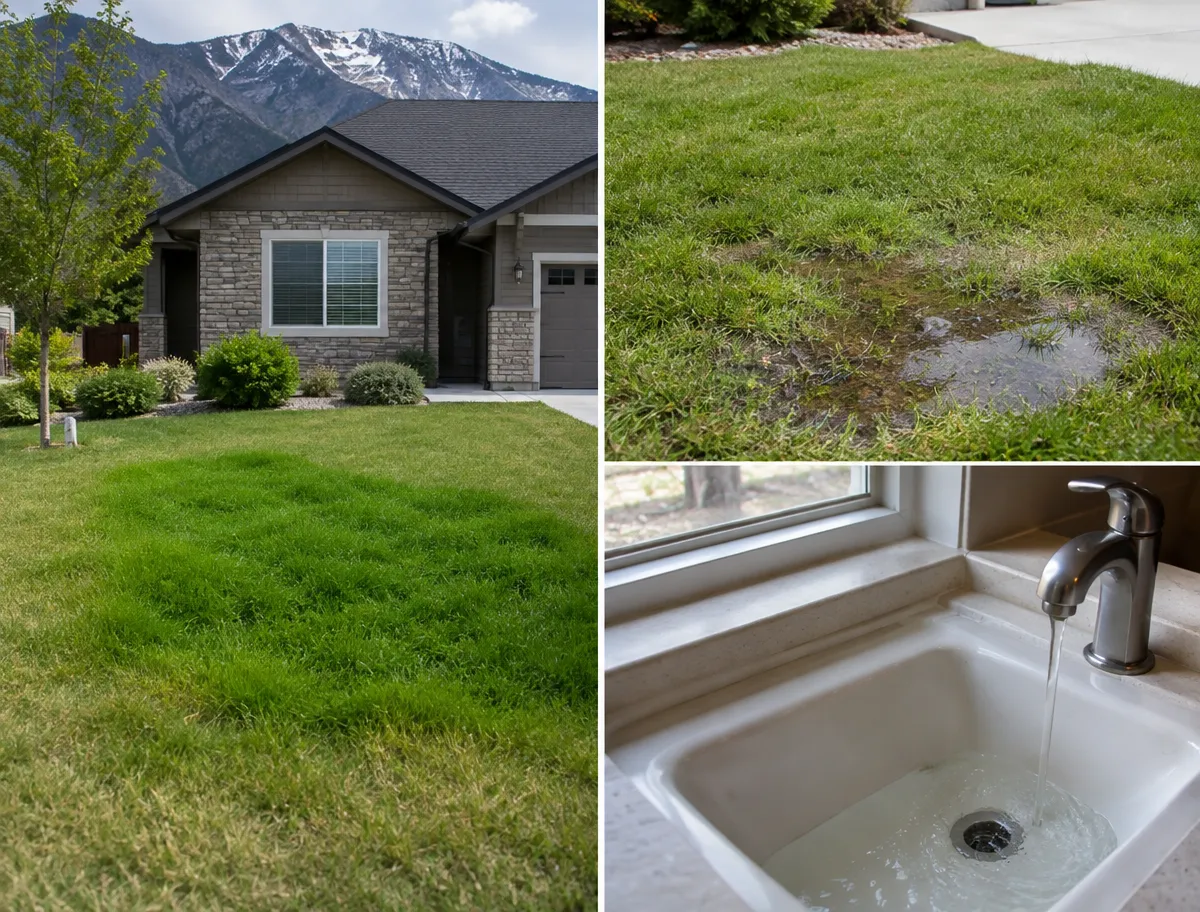 What a failing lateral looks like above ground
 Cracked pipe, root intrusion, a collapsed section, and a line too deteriorated for cleaning make up the four most common causes behind failing sewer lines in Utah homes, and they place real strain on the wastewater conveyance systems that carry waste away from a property (see the USGS overview of wastewater treatment and water use for background on how these systems work). We never treat a damaged sewer line as something a Utah homeowner can put off. Every one of these problems worsens the longer it sits underground. A slow drain today becomes a backed-up basement next month. By then the repair bill has grown right along with the damage.
Not every failure announces itself the same way. Some signs you need sewer line replacement show up fast and unmistakable. Others creep in slowly, hiding beneath the surface of an older Wasatch Front property until the pipe finally gives out.
What are the most common causes of sewer line failure in Utah homes?
Aging clay, cast-iron, and Orangeburg lines across Utah counties fail for a handful of predictable reasons. We see the same culprits repeatedly on service calls:
Cracked pipe from ground shifting, freeze-thaw cycles, or age-related brittleness
Root damage, where tree roots find hairline gaps and force their way into the line
Collapsed sections, often the endpoint after years of unnoticed cracking or corrosion
Deterioration beyond cleaning, where the pipe walls have broken down so badly that hydro jetting or snaking no longer restores flow
Can a sewer line problem be sudden instead of gradual?
Yes. Some failures hit without warning — a sudden collapse, a burst joint, sewage backing up overnight. Others build for months, starting as an occasional gurgle or a faint odor near a floor drain before escalating into a full blockage. Either pattern points to the same underlying reality: the line has moved past the point where minor maintenance fixes it.
Once a Utah sewer line reaches that stage, trenchless repair addresses cracked, corroded, or root-filled sections from the inside, frequently within a single day, without trenching the yard or driveway.
Which Symptoms Confirm You Need a Replacement?
Certain warning signs separate a routine drain cleaning from a full sewer overhaul. Recurring backups, persistent sewer odor in the yard, and sinkholes near the lateral line all point toward structural failure rather than a simple clog. Not every sewer problem calls for the same fix, though. We offer a range of repair and replacement options across Utah, matching the solution to what the pipe actually needs rather than pushing the most expensive path by default.
How do we confirm a pipe actually needs replacement?
We never guess based on symptoms alone. Every Utah job starts with a camera inspection. Our technicians see the exact condition of the pipe before recommending any work. That footage shows whether we’re dealing with a minor crack, root intrusion, or a line that’s collapsed beyond saving.
The signs you need sewer line replacement typically show up together, not in isolation. Here are the seven we check for on every camera inspection:
Multiple backups within a year — repeated backups within weeks of a professional cleaning, or more than one sewage backup in a 12-month span, signal that cleaning alone is no longer solving the underlying problem.
Tree root intrusion confirmed by camera — root intrusion visible on inspection footage, where tree roots have found hairline gaps and forced their way into the line.
A pipe belly holding standing waste — a sagging, bellied section of pipe that traps standing wastewater between uses instead of draining flat, often showing up as soggy patches or unusually green grass tracing the pipe route.
Structural collapse visible on camera — visible pipe collapse or offset joints on camera footage, along with sewage odor near the foundation or in the yard after rain.
Pipe age of 40 years or more in clay or cast iron lines — older clay, cast-iron, or Orangeburg laterals common across Utah neighborhoods that have simply reached the end of their service life.
Cracks or offset joints at multiple points — damage in more than one location along the run, rather than a single isolated crack a targeted repair could fix.
Repair costs that approach or exceed replacement cost — when the cumulative cost of repeated spot repairs and cleanings starts closing in on what a full trenchless replacement would cost, replacement becomes the more economical choice.
Does a bad sign always mean the whole line has to come out?
Not necessarily. Isolated cracks or a single offset joint often respond well to a targeted repair instead of a full replacement. When camera footage confirms widespread deterioration, corrosion, or root damage running the length of the line, replacement becomes the more reliable long-term fix.
For homes and businesses that do need full replacement, trenchless methods restore or replace the damaged line through small access points. This avoids digging a trench across the entire yard, driveway, or landscaping — a real advantage for Utah properties with mature trees, finished hardscaping, or limited excavation space.
How Does Trenchless Sewer Replacement Actually Work?
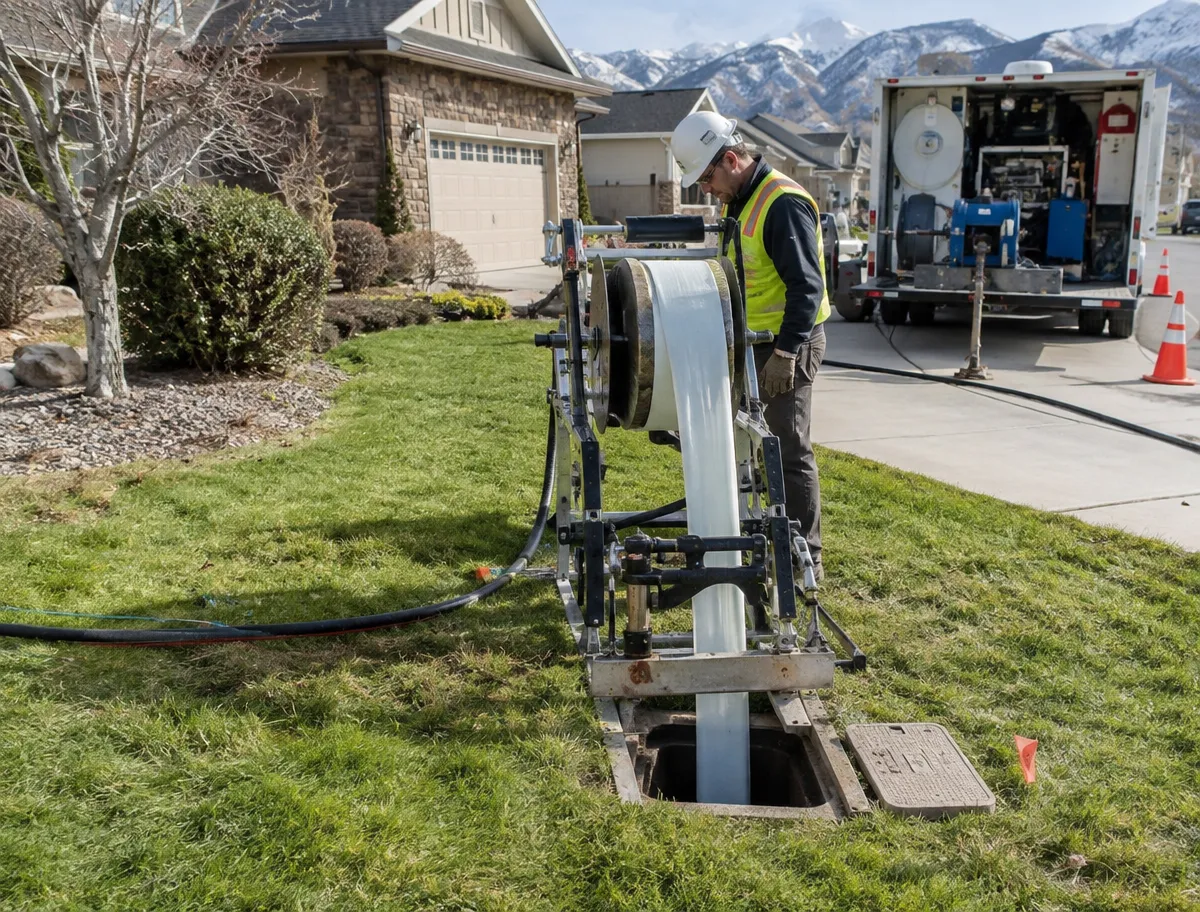 A CIPP liner going in through one small access point
 Two proven methods handle most Utah sewer replacements, and neither one requires digging a trench across the yard. We rely on cured-in-place pipe lining and pipe bursting, choosing whichever fits the pipe’s condition and the property layout. Both approaches share one goal: rebuild a failing line without tearing up driveways, landscaping, or finished basements across Northern Utah and the Wasatch Front.
Cured-in-place lining rebuilds the existing pipe from the inside out. We don’t pull out the old line at all. Instead, we insert a resin-saturated liner through the damaged pipe and cure it in place, forming a smooth new pipe within the old one.
Pipe bursting works differently. This method fractures the deteriorated pipe outward while simultaneously pulling a new HDPE pipe into the exact same path (the EPA’s water technology fact sheet on pipe bursting covers the method in more technical detail). It suits Utah homes with severely collapsed or misaligned clay and cast-iron laterals, where lining alone won’t solve a structural failure.
What access points does trenchless repair require?
Most jobs need only one or two small access points, not a trench spanning the property. That’s the core advantage over conventional excavation, which cuts through lawns, driveways, and parking lots along the entire pipe run — work that comes with its own safety requirements, as OSHA’s trenching and excavation safety guidance makes clear. Homeowners and property managers across Weber, Davis, Box Elder and Cache counties avoid weeks of restoration work as a result.
How do we prepare the line before installing a liner?
Our process starts with a camera inspection to confirm the pipe’s condition. We then clean and descale the line using hydro jetting, clearing roots, scale, and debris. Once the pipe is clear, we install a CIPP liner and cure it into a new, jointless pipe inside the old one, restoring flow without excavation.
| Method | How It Works | Best For |
|---|---|---|
| CIPP lining | Rebuilds pipe from inside | Cracked, root-filled lines still structurally round |
| Pipe bursting | Fractures old pipe, pulls new HDPE pipe through | Collapsed or badly misaligned pipe |
📞 Ready to Get Started?
If you’re seeing any of the seven signs above, don’t wait for a minor problem to become a collapsed line. Schedule a camera inspection with Rhino Rooter and get a written, no-surprise quote for CIPP lining or pipe bursting before any work begins.
Request your free estimate →Why Choose Trenchless Over Traditional Excavation?
Trenchless technology saves Utah yards, driveways, and mature landscaping that traditional digging destroys. Conventional sewer replacement usually means cutting a trench the full length of the damaged line, tearing through sod, sprinkler systems, and hardscaping in the process. We rebuild or replace failing pipes through one or two small access points instead, avoiding that wide-scale disruption altogether.
Homeowners across the Wasatch Front often assume a collapsed or root-filled line means months of reconstruction. That’s rarely true anymore. Broken, cracked, or fully collapsed sewer lines get replaced without trenching the lawn, tearing up the driveway, or wrecking landscaping that took years to establish.
We rely on two proven methods for this work:
Pipe bursting — a new pipe gets pulled through the old one, fracturing the damaged pipe outward as it goes.
CIPP lining (cured-in-place pipe) — a resin-saturated liner cures inside the existing line, forming a seamless replacement pipe within the old one.
Is trenchless repair available everywhere in Utah?
Both approaches replace a failing sewer line without opening a trench across the property, and both hold up well against Utah’s freeze-thaw soil movement. Coverage extends across four northern Utah counties — Weber, Davis, Box Elder and Cache — inside a 75-mile radius of our West Haven base. Whether a property sits in a dense Ogden neighborhood or a growing suburb near the mountains, trenchless access points work the same way. See all our service areas.
Does trenchless work fit older Utah homes?
Yes. Aging clay, cast-iron, and Orangeburg laterals common in older Utah neighborhoods, often 40 years old or more, respond well to pipe bursting and CIPP lining. Both methods rebuild the line from the inside without depending on the yard’s condition.
What Should Utah Homeowners Do Next?
Utah homeowners facing recurring clogs, slow drains, or persistent sewer odors should schedule a camera inspection before agreeing to any repair. A clear diagnosis comes first; guesswork costs money later. Watching for the signs you need sewer line replacement early — backups, soggy patches in the yard, or gurgling pipes — gives us room to plan a trenchless fix instead of a full dig.
How much will a trenchless repair cost?
We quote every trenchless job in writing, and only after the camera inspection confirms what’s happening underground. That written quote arrives before any excavation or lining work starts, so homeowners across Utah know the scope and cost upfront, with no surprise line items once the crew is on site. If ongoing repair costs are starting to add up, that written quote also makes it easy to compare against the cost of full replacement — our trenchless sewer repair cost guide sets out the ranges we work from.
Is trenchless repair worth it for older Utah homes?
Utah homeowners consistently report high satisfaction with trenchless methods, and Rhino Rooter holds a 4.82-star average across 144 Google reviews. Combined with upfront pricing set before work begins, trenchless repair offers a predictable path for aging clay and cast-iron lines common across the state.
Sewer Line Replacement at a Glance
Seven signs point to sewer line replacement: repeat backups, camera-confirmed root intrusion, a pipe belly, structural collapse, pipe age 40+ years in clay or cast iron, multiple cracks or offsets, and repair costs nearing replacement cost.
A camera inspection is the only reliable way to confirm which sign applies before any work starts.
Trenchless methods — CIPP pipe lining and pipe bursting — rebuild or replace a failing line through one or two small access points instead of a full trench.
Most trenchless jobs finish in a single day, and our CIPP lining carries a 10-year workmanship warranty.
Rhino Rooter has completed roughly 27,000 jobs across Ogden and Weber County over 23 years.
Next step: Schedule a free camera inspection with Rhino Rooter to confirm which sewer line signs apply to your property.
About Rhino Rooter
Rhino Rooter is a family-run, trenchless-first plumbing company that has served Ogden and Weber County, Utah for 23 years, completing roughly 27,000 jobs across the region. The owner-operated team dispatches from West Haven across a 75-mile radius, specializing in CIPP pipe lining, pipe bursting, and camera-verified sewer diagnostics. Contact Rhino Rooter today for a free camera inspection estimate.
Request your free estimate →Frequently Asked Questions
What are the seven warning signs of sewer line failure?
The seven signs are multiple sewage backups in a year, tree root intrusion confirmed by camera, a pipe belly that holds standing waste, structural collapse visible on inspection footage, pipe age of 40 years or more in clay or cast iron lines, cracks or offset joints at multiple points, and repair costs that approach or exceed replacement cost.
How is trenchless sewer line replacement performed in Utah?
Trenchless replacement uses CIPP lining or pipe bursting to fix cracked, corroded, and root-filled lines, restoring Utah sewer laterals in a single day with minimal digging and no destruction of lawns or driveways.
How do technicians diagnose a failing sewer line before replacement?
Technicians diagnose sewer line problems with a camera inspection, identifying cracked pipe, root damage, collapsed sections, or deterioration beyond cleaning before recommending replacement or repair.
How old does a sewer line have to be before it needs replacement?
Clay and cast iron sewer lines installed more than 40 years ago are the most likely candidates for replacement, since the pipe material has typically corroded, cracked, or shifted enough that lining or spot repairs no longer hold. A camera inspection confirms the pipe’s actual condition rather than relying on age alone.
Is it cheaper to repair or replace a sewer line?
A targeted repair costs less than replacement when damage is limited to a single crack or offset joint. Once camera footage shows widespread deterioration, multiple problem areas, or a pipe belly, repeated repair costs can approach or exceed the cost of trenchless replacement, making full replacement the more economical choice long term.
Get a Free Sewer Line Replacement Quote
Recognizing these seven warning signs early lets you address a failing sewer line before it turns into a costly emergency. Trenchless replacement preserves your lawn, driveway, and landscaping while delivering a durable, long-term fix, with our CIPP lining backed by a 10-year workmanship warranty. Contact Rhino Rooter today for a free, no-obligation quote.