
Pipe Lining vs Pipe Bursting: Which Trenchless Method Does Your Weber County Sewer Need?
Quick Answer: Pipe lining vs pipe bursting comes down to your pipe's condition: choose CIPP lining when the host pipe is still round and structurally sound but cracked, corroded, or root-damaged, since a resin-saturated liner cures inside it to form a new structural pipe. Choose pipe bursting when the line has collapsed, sagged, or narrowed too much for a liner to fix, since bursting fractures the old pipe apart while pulling a new HDPE pipe through the same path. Rhino Rooter confirms which method fits with a camera inspection before recommending either option for Weber County homes.
Weber County sewer repairs call for pipe lining when the host pipe holds its shape, using MaxLiner CIPP to seal out root intrusion in aging clay and cast iron lines. We recommend pipe bursting for collapsed or severely offset pipe. Both methods skip excavation, restoring service through existing cleanouts in a day or two.
What Are the Key Takeaways for Weber County Homeowners?
What Separates Pipe Lining From Pipe Bursting?
 Rebuild from the inside, or replace outright
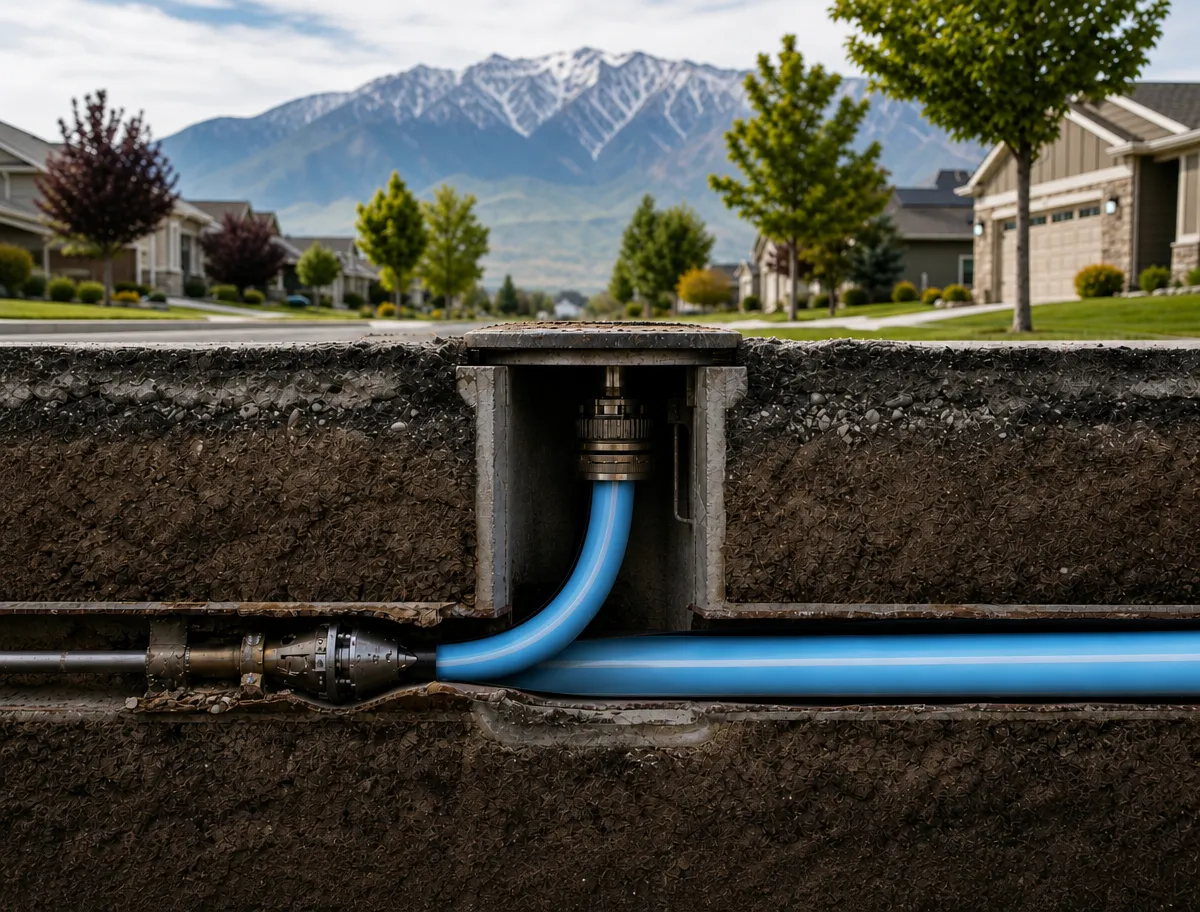
 Two access points into the same failing pipe, two very different outcomes. Pipe lining vs pipe bursting comes down to whether we build a new pipe inside the old one or replace it entirely along the same path. Both methods reach the line through existing cleanout access, so Weber County yards, driveways, and finished basements from Ogden to Roy stay untouched.
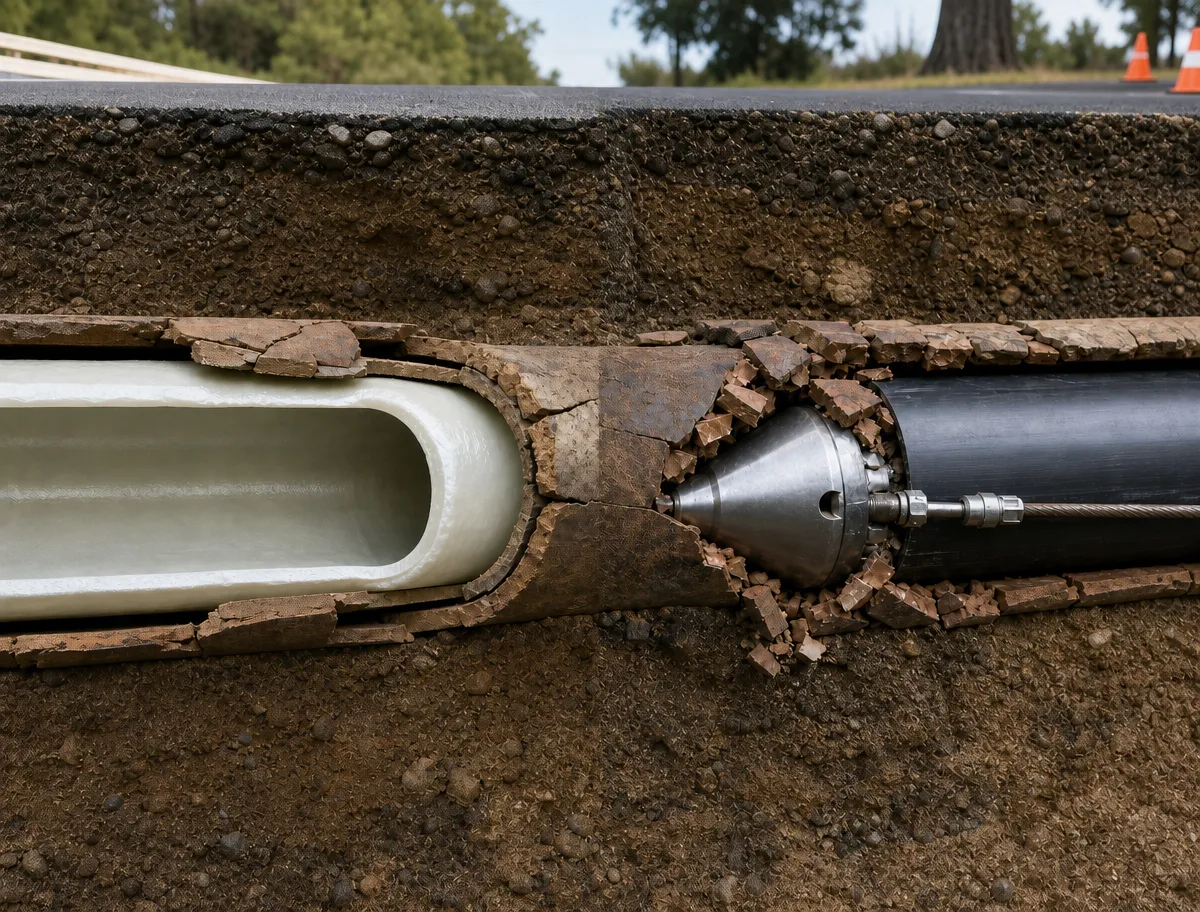
CIPP (Cured-In-Place Pipe) lining threads a resin-saturated liner through the damaged section and cures it into a jointless, structural pipe within the host pipe, per the cured-in-place pipe (CIPP) definition from NASTT. Pipe bursting works differently: a bursting head fractures the old pipe outward while pulling a new one through in its place. One rebuilds from the inside; the other replaces outright.
| Choose Lining If… | Choose Bursting If… |
|---|---|
| Pipe is still round and structurally intact | Pipe has collapsed or is severely offset |
| Damage is limited to cracks, corrosion, or root intrusion | Pipe has narrowed too much for a liner to pass through |
| You want to preserve the original pipe diameter | Full diameter capacity needs to be restored |
| Budget favors a lighter-touch structural rebuild | The old pipe must be replaced outright, not resurfaced |
Are these methods actually reliable, or just newer alternatives?
Trenchless repair isn't experimental technology anymore. Both lining and bursting have track records as proven, established methods for restoring failed sewer lines under Weber County's mix of clay, iron, and older PVC, backed by EPA's retrospective evaluation of CIPP performance in municipal wastewater systems. Property owners get a permanent structural fix, not a temporary patch.
How much disruption should we expect?
Less than most homeowners assume. Trenchless jobs typically wrap up in a day or two, cost less than full excavation, and add decades of service life to the pipe.
No trenching across landscaping or hardscape
Work completed through existing cleanouts
Structural repair, not a temporary liner or coating
We don't guess which method fits a given line. Rhino Rooter runs a camera inspection first, confirms the pipe's condition and layout, then recommends lining or bursting based on what the footage actually shows.
When Does Pipe Lining Fit Weber County Pipes?
Cured-in-place pipe, or CIPP lining, works best on sewer lines that are still structurally round but weakened by cracks, root intrusion, or corrosion. We line the failing pipe with a resin-saturated MaxLiner sleeve or place a sectional spot repair through existing cleanouts, rebuilding the pipe wall with no excavation across Ogden and the rest of Weber County. That distinction matters most when we're weighing pipe lining vs pipe bursting for a specific property, since lining preserves the pipe's original path and diameter rather than replacing it outright.
Not every damaged line qualifies, though. Trenchless pipe repair fixes broken or deteriorated sewer lines without tearing up a Weber County yard, driveway, or foundation, but the pipe still needs enough intact structure to accept a liner. Severely offset joints or collapsed sections often push a job toward bursting instead.
How do we know if a Weber County line can be lined?
We run a recorded camera inspection down the line first. That inspection identifies roots, cracks, bellies, and pipe material, and it pinpoints exactly where the defect sits before any liner goes in. Skipping this step risks curing resin over a problem the liner can't actually solve, like a sagging belly that needs regrading.
Pipe lining tends to fit best when Weber County properties show:
Root intrusion through joints in aging clay pipe
Hairline cracks or corrosion in cast iron without full collapse
A round, mostly intact pipe shape confirmed by camera
Limited access points where excavation would disturb mature landscaping
Rhino Rooter has served Ogden and the surrounding Weber County area as a trenchless-first sewer and drain company for 23 years, matching each line's condition to the right method before recommending a fix.
📞 Ready to Get Started?
Not sure whether your Weber County line needs lining or bursting? Contact Rhino Rooter today for a camera inspection and a free, no-obligation quote on the right trenchless fix for your home.
Request your free quote →When Is Pipe Bursting The Right Trenchless Choice?
 Two small pits, not a trench across the yard
 Pipe bursting earns its place when a Weber County sewer line has collapsed, sagged, or shrunk so badly that a liner can't restore proper flow. We reach for this method when the old pipe itself has to go, not just get resurfaced from within. The choice between pipe lining vs pipe bursting shapes the yard, the budget, and the repair timeline more than most Weber County property owners expect going in.
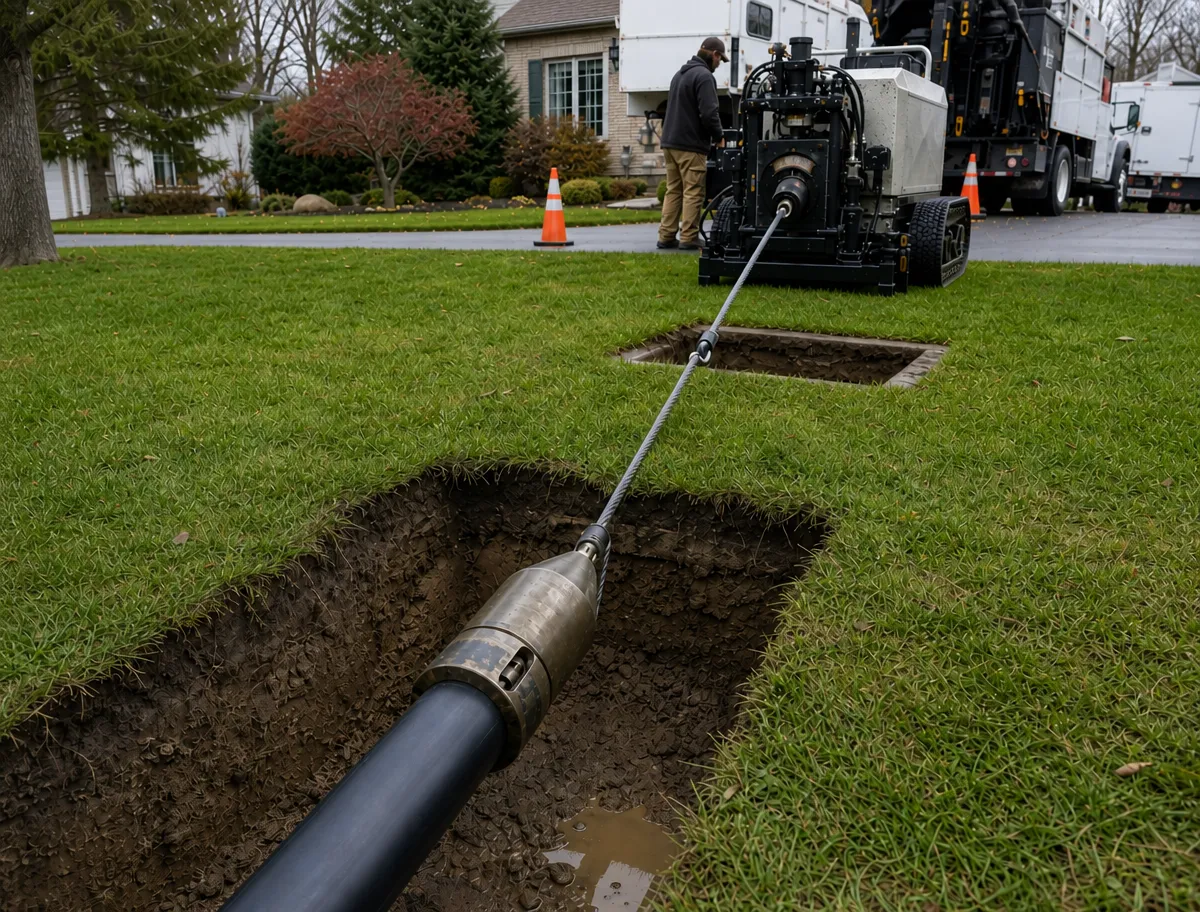
Homeowners across Weber County often picture a cracked line as an automatic backhoe job, complete with a torn-up lawn and a multi-day driveway shutdown. Trenchless technology changes that math. We can now replace a badly damaged section of pipe with far less digging than a traditional dig-and-replace job requires, using small access pits instead of a full trench.
What actually happens during pipe bursting?
We pull a new high-density pipe through the existing line while a bursting head fractures and pushes the old pipe outward into the surrounding soil. This works especially well on Weber County properties with older clay or cast iron lines that have narrowed from scale, offset joints, or root intrusion. Unlike lining, bursting replaces the pipe's diameter entirely rather than reducing it slightly with an interior sleeve.
Is pipe bursting always better than lining?
Not always — the right call depends on pipe condition, not preference. Understanding how bursting differs from lining helps a Weber County homeowner ask sharper questions before crews ever break ground.
Pipe bursting fits best when:
The pipe has collapsed sections or severe misalignment
Root intrusion has repeatedly damaged the line
Full diameter capacity needs restoring, not just structural support
How Do Cost And Disruption Compare Locally?
Excavation costs Weber County homeowners more than money. It costs mature trees, sprinkler systems, and driveway concrete that never look the same after backfill. We favor trenchless methods precisely because they skip that damage — and because open trenching carries real jobsite risk, covered under OSHA's trenching and excavation safety guidelines. Choosing between pipe lining vs pipe bursting comes down to how much disruption a property can absorb versus how much structural rebuild the pipe actually needs.
Most residential trenchless jobs across our service area wrap up in a single day, with no landscaping torn out in the process. That single detail changes the math for homeowners weighing a repair against a full yard replacement. Our crews clear the line, verify the damage with camera inspection, then repair using NASSCO-recognized pipe rehabilitation standards for CIPP lining or a targeted spot repair instead of digging a trench across the property.
Which Method Costs Less For A Weber County Home?
Cost depends on pipe condition more than pipe age. A line with isolated cracks or root intrusion often qualifies for lining or a spot repair, which limits labor and material use. A collapsed or severely offset pipe usually needs bursting, since lining can't rebuild structure that's already gone.
How Far Does Coverage Reach Across The County?
We dispatch from West Haven across a 75-mile radius, covering Roy, North Ogden, and the rest of Weber County. Our crews have completed roughly 27,000 jobs throughout this region under owner John Larsen. That track record means we've seen nearly every clay, cast-iron, and root-intrusion scenario Weber County properties present — and priced accordingly.
How Should Weber County Homeowners Decide?
Sewer camera diagnostics settle the question before we ever discuss a repair method. We camera the line first, then quote the fix — no guessing, no upsell based on assumptions about what's underground. Weber County properties sit on a mix of aging clay, cast iron, and Orangeburg pipe, and each material fails differently, so the diagnosis has to come before the decision.
The choice between pipe lining vs pipe bursting almost always traces back to what the camera shows. A line with intact structure but root intrusion or cracking often lines well. A line that's collapsed, badly offset, or too narrow for a liner usually needs bursting instead. We don't sell one method over the other; we match the method to the pipe's actual condition.
What Does a Sewer Inspection in Weber County Actually Include?
Every inspection we run includes a full explanation of what caused the failure, paired with a written quote for the repair. Homeowners see the footage, hear the diagnosis in plain language, and get pricing before committing to anything. This removes the guesswork that leads to repeat repairs or mismatched fixes.
Who Should Call for a Camera Inspection First?
Any homeowner in Ogden or elsewhere across Weber County dealing with a sewer backup, slow drains, or a persistent odor should start with a camera call. Root intrusion, bellied pipe, and corroded joints all look similar from inside the house but require different fixes underground.
Quick decision points worth remembering:
Cracked but structurally sound clay pipe: lining is typically the faster, less invasive route.
Collapsed or severely offset sections: bursting replaces the pipe entirely.
Uncertain cause of a recurring backup: camera inspection first, always.
Pipe Lining vs Pipe Bursting at a Glance
CIPP pipe lining rebuilds a structurally sound but damaged pipe from the inside using a resin-saturated liner.
Pipe bursting replaces a collapsed, severely offset, or too-narrow pipe by fracturing it while pulling a new pipe through.
Both methods work through existing cleanouts, so Weber County yards, driveways, and basements stay untouched.
Camera inspection determines the right method before any work begins — Rhino Rooter never guesses.
Most trenchless jobs across Weber County wrap up in a day or two.
Next step: Schedule a camera inspection with Rhino Rooter to find out which trenchless method fits your Weber County sewer line.
About Rhino Rooter
Rhino Rooter has served Ogden and the greater Weber County area for 23 years, specializing in trenchless sewer repair, CIPP pipe lining, pipe bursting, and camera inspection services. Contact us today for a free, no-obligation quote.
Contact the crew →Frequently Asked Questions
What's the main difference between pipe lining and pipe bursting?
Pipe lining builds a new jointless pipe inside the old one using resin-saturated CIPP. Pipe bursting fractures the old pipe outward and pulls a new pipe through the same path.
How does Rhino Rooter decide which method a Weber County line needs?
Rhino Rooter runs a camera inspection first to confirm the pipe's condition and layout, then recommends lining or bursting based on what the footage shows.
Will trenchless repair tear up a Weber County yard or driveway?
No, both methods work through existing cleanouts, so yards, driveways, and finished basements stay untouched, with most jobs completing in a day or two.
How long does pipe lining or pipe bursting take to complete?
Most Weber County trenchless jobs, whether lining or bursting, finish in a day or two once the camera inspection confirms scope, since crews work through existing access points instead of digging a trench.
Is pipe lining or pipe bursting more affordable?
Cost depends on pipe condition, not preference. Lining or a spot repair typically costs less when damage is limited to cracks or root intrusion, while a collapsed or severely offset pipe usually needs bursting instead.
Get a Free Trenchless Repair Quote
Both pipe lining and pipe bursting are modern trenchless solutions that eliminate the need for extensive excavation in Weber County sewer repairs. Your choice depends on pipe condition, budget, and project scope — pipe lining works best for structural damage within an intact pipe, while pipe bursting suits complete pipe replacement. Either approach delivers long-term reliability and minimal disruption to your property, and a professional camera inspection is the first step toward the right fix. Contact Rhino Rooter today for a free, no-obligation quote.