Blisters · Deforms · Collapses
Orangeburg
Bituminized fiber that blisters and deforms over time and can collapse with little warning. If it hasn't fully collapsed, we can usually line it.

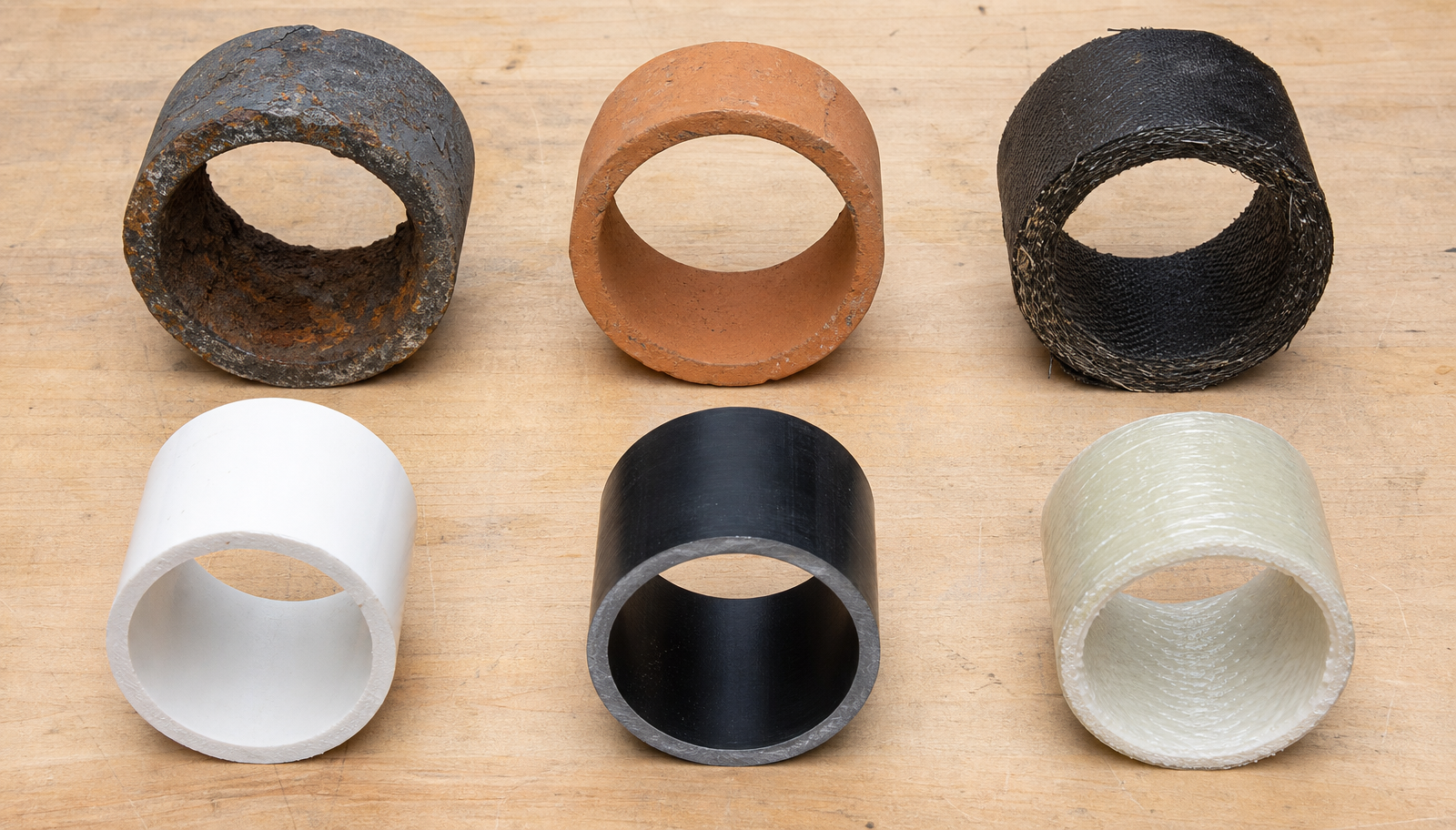
Northern-Utah homes hide a range of sewer pipe materials, each of which fails differently. Here's how to recognize what you have and how Rhino Rooter repairs it trenchlessly.
Last updated: June 13, 2026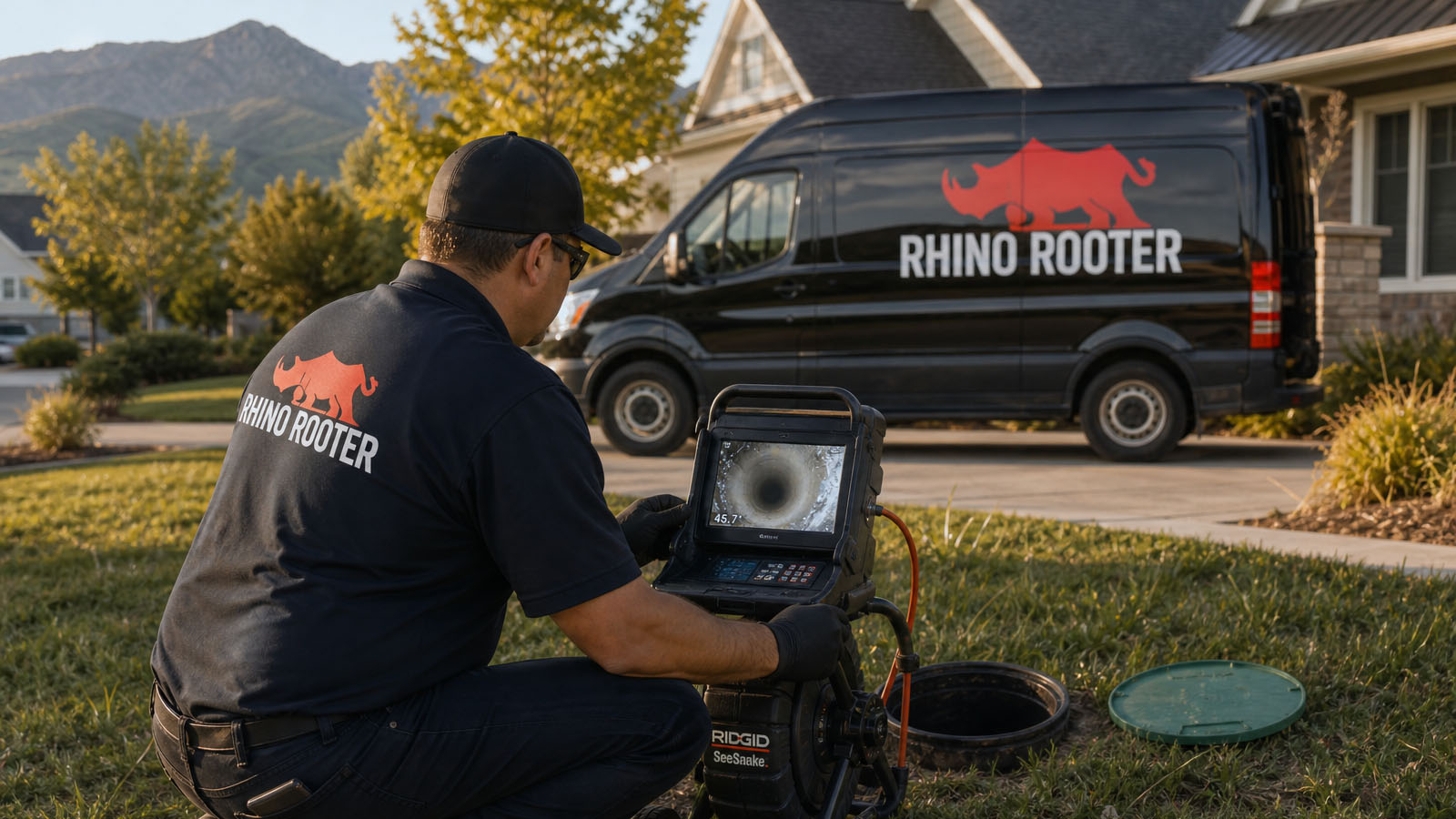 Identified on camera
 Rhino Rooter identifies the material on camera, then rehabilitates it with MaxLiner CIPP lining or a spot repair — no excavation. Identifying what's actually in the ground is the first step to fixing it the right way, and a camera inspection tells you the material and its condition before any work begins.
| Material | How it fails | Trenchless repair |
|---|---|---|
| Orangeburg (bituminized fiber) | Blisters, deforms, collapses | CIPP lining if not fully collapsed |
| Cast iron | Corrodes, scales, cracks | Descale + CIPP lining |
| Clay | Cracked / offset joints, roots | CIPP lining (jointless) |
| Reinforced concrete | Joint cracks, offsets | CIPP lining / spot repair |
| Transite (asbestos-cement) | Becomes brittle, cracks | CIPP lining |
| PVC / ABS | Joint separation, crushing | Spot repair or lining |
Rhino Rooter identifies the material on camera, then rehabilitates it with MaxLiner CIPP lining or a spot repair, no excavation. Pricing follows our CIPP 4-inch rate of $135–$200 per linear foot, or $3,900–$5,000 for a localized spot repair.
Bituminized fiber that blisters and deforms over time and can collapse with little warning. If it hasn't fully collapsed, we can usually line it.
We descale the line and install a CIPP liner, restoring a smooth interior without digging out the cast iron.
Clay typically fails at the joints, where it cracks and admits roots. A jointless CIPP liner bridges those joints.
Concrete pipe fails at the joints, where it cracks and offsets. A continuous CIPP liner or a targeted spot repair restores the run.
Transite is asbestos-cement and is handled carefully. Lining it trenchlessly avoids breaking it up, which is part of why CIPP is well suited to it.
Depending on the failure, joint separations and isolated cracks are often handled with a spot repair or liner.
A camera inspection identifies it immediately. Ogden-area homes built before the 1980s commonly have cast iron, clay, or Orangeburg laterals.
Yes. Orangeburg is bituminized fiber that blisters and deforms over time and can collapse with little warning. If it hasn't fully collapsed, we can usually line it.
Often, yes. We descale the line and install a CIPP liner, restoring a smooth interior without digging out the cast iron.
Clay and concrete typically fail at the joints, where they crack and admit roots. A jointless CIPP liner bridges those joints.
Transite is asbestos-cement and is handled carefully. Lining it trenchlessly avoids breaking it up, which is part of why CIPP is well suited to it.
Yes, depending on the failure. Joint separations and isolated cracks are often handled with a spot repair or liner.
It's priced like our 4-inch CIPP lining at $135–$200 per linear foot, or $3,900–$5,000 for a spot repair; we confirm after a camera inspection.
Yes. A continuous CIPP liner removes the joints and cracks that roots exploit, so root intrusion stops at the repaired section.
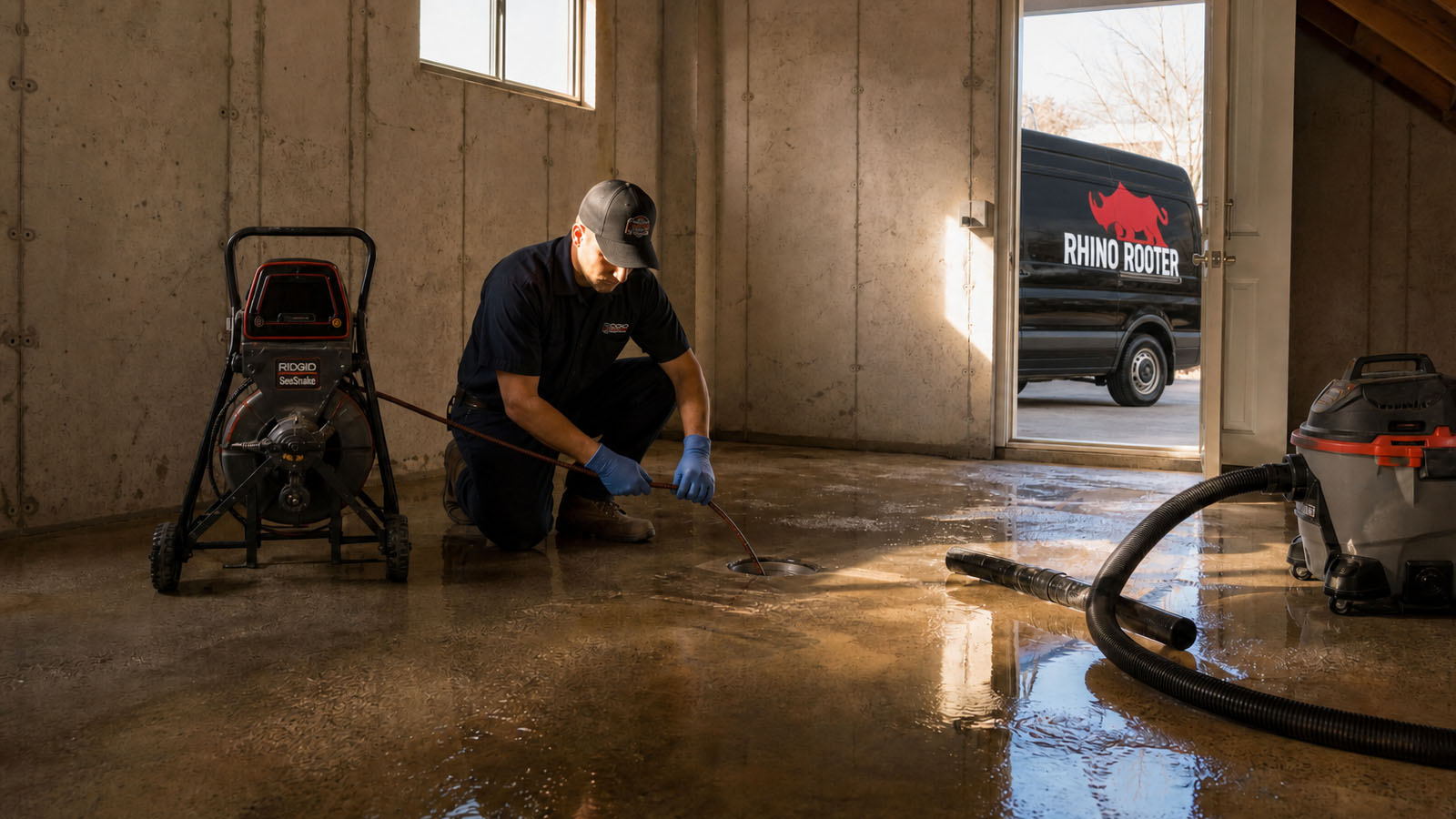
We identify the pipe on camera, then rehabilitate it with MaxLiner CIPP lining or a spot repair — no excavation.