
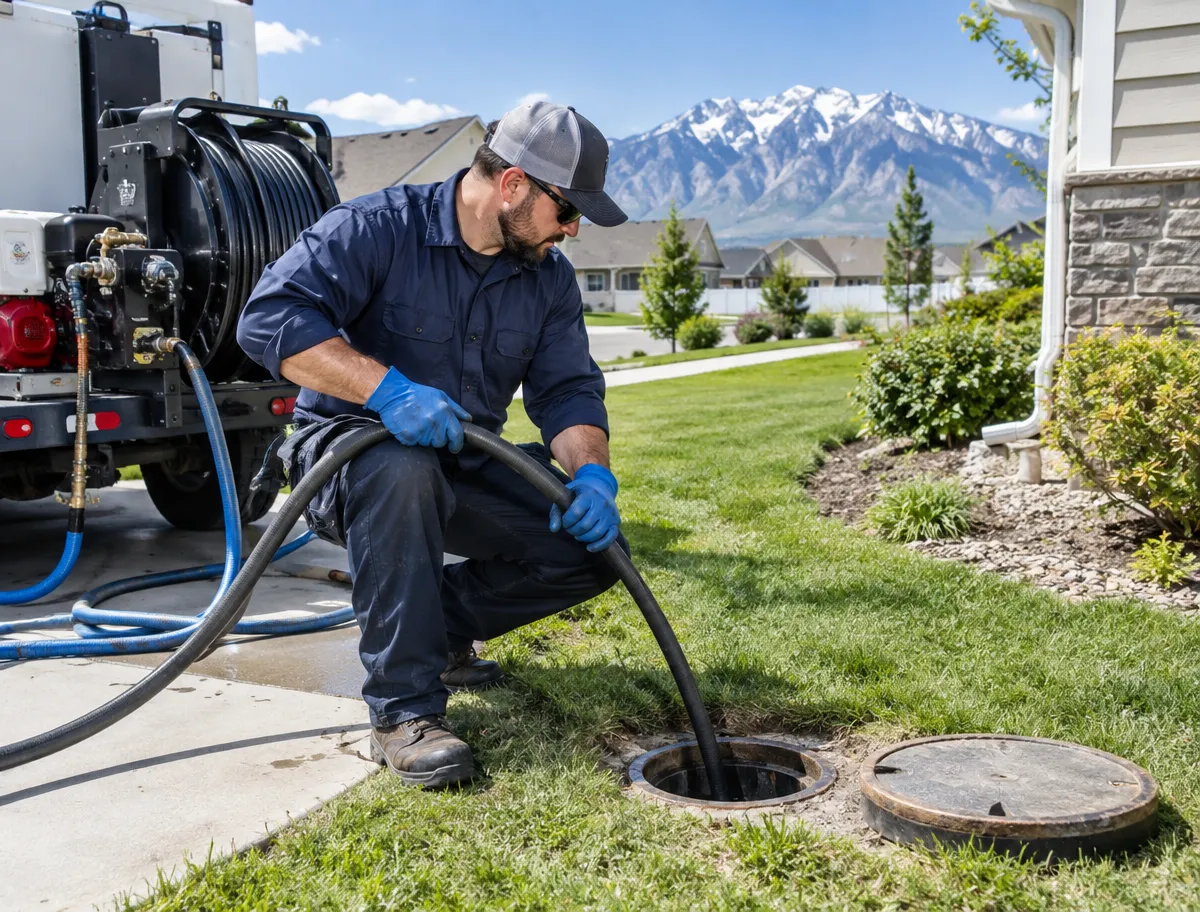
Can Hydrojetting in Plain City, UT Reach Every Inch of Your Drain Line?
Quick Answer: Hydrojetting in Plain City, UT uses high-pressure water, commonly up to around 4,000 psi, to scour grease, sludge, scale, and root buildup from the full diameter of a drain or sewer line instead of just punching a hole through the clog. Rear-facing nozzle jets pull the hose down the pipe, so it can reach well along the longer sewer runs found on many larger Plain City lots. Rhino Rooter inspects the line with a camera first to confirm jetting suits the pipe, then checks the results afterward.
Our hydro jetting service clears grease, sludge, and root intrusion from sewer lines in Plain City, Utah using pressurized water, commonly up to around 4,000 psi. We camera-inspect lines before and after jetting to check that blockages have been cleared rather than pushed downstream, and we can walk you through the warranty coverage that applies to completed drain work.
Why Does Snaking Fail on Stubborn Clogs?
Cable snaking punches a hole through a blockage instead of clearing the pipe wall. That narrow path reopens flow for a while, but the clog often returns because grease, scale, and root fragments stay stuck to the pipe surface. For a Plain City homeowner watching a kitchen sink or main line back up for the third time in a year, that cycle means repeat service calls and repeat frustration instead of a real fix. Our breakdown of hydro jetting vs. snaking covers the differences in more detail.
We treat snaking as a diagnostic step, not a cure-all. Our technicians inspect and evaluate the line first, confirming what’s actually causing the backup before recommending anything further. Only after that evaluation do we decide whether hydrojetting is the right next move for your Plain City, UT home, rather than defaulting to it for every call.
Why does mechanical cleaning struggle with certain clogs?
Cable tools handle simple residential clogs well, especially isolated hair or debris jams. They lose effectiveness once grease, sludge, or heavy scale coats the pipe interior. The cable cuts a channel without scouring the walls.
What makes high-pressure jetting different?
Jetting uses pressurized water to scour the entire pipe diameter at once, not just a path through the clog. Compared with mechanical snaking, this approach is often more effective against:
Hardened grease and sludge buildup
Root intrusion coating pipe walls
Hard debris such as scale or grout residue (fully cured concrete may need specialized cutting tools)
Municipal crews use the same pairing of cleaning and inspection; the EPA fact sheet on sewer cleaning and inspection covers hydraulic cleaning methods such as jetting alongside routine line inspection. That full-diameter cleaning is why we inspect first, then jet only when the line actually needs it.
Why Do Longer Plain City Sewer Lines Call for Hydrojetting?
Many Plain City homes sit on larger, more rural lots, so the sewer line running from the house to the street or main can be noticeably longer than in denser neighborhoods, often 50 to 100 feet or more. A clog, grease deposit, or root intrusion can form anywhere along that run, not just near the cleanout.
That length matters because cable machines lose reach and cutting power the farther they travel. Commercial-grade jetters typically carry long hose reels, often 200 feet or more, and their nozzles use rear-facing jets that pull the hose down the line while scouring the walls as it goes. Wastewater professionals have long recognized the method; the Florida Water and Pollution Control Operators Association calls jetting a sewer cleaning game-changer for collection systems.
What helps jetting work on a long line:
Accessible cleanouts, so the hose can enter close to the problem area
A camera inspection to map the line’s length, material, and trouble spots
Pressure and nozzle choices matched to the pipe’s age and condition
A follow-up camera pass to check the full run after cleaning
Jetting can’t fix a pipe that’s cracked, sagging, or collapsed, so a sewer camera inspection comes first on long rural runs.
What Does High-Pressure Jetting Actually Do?
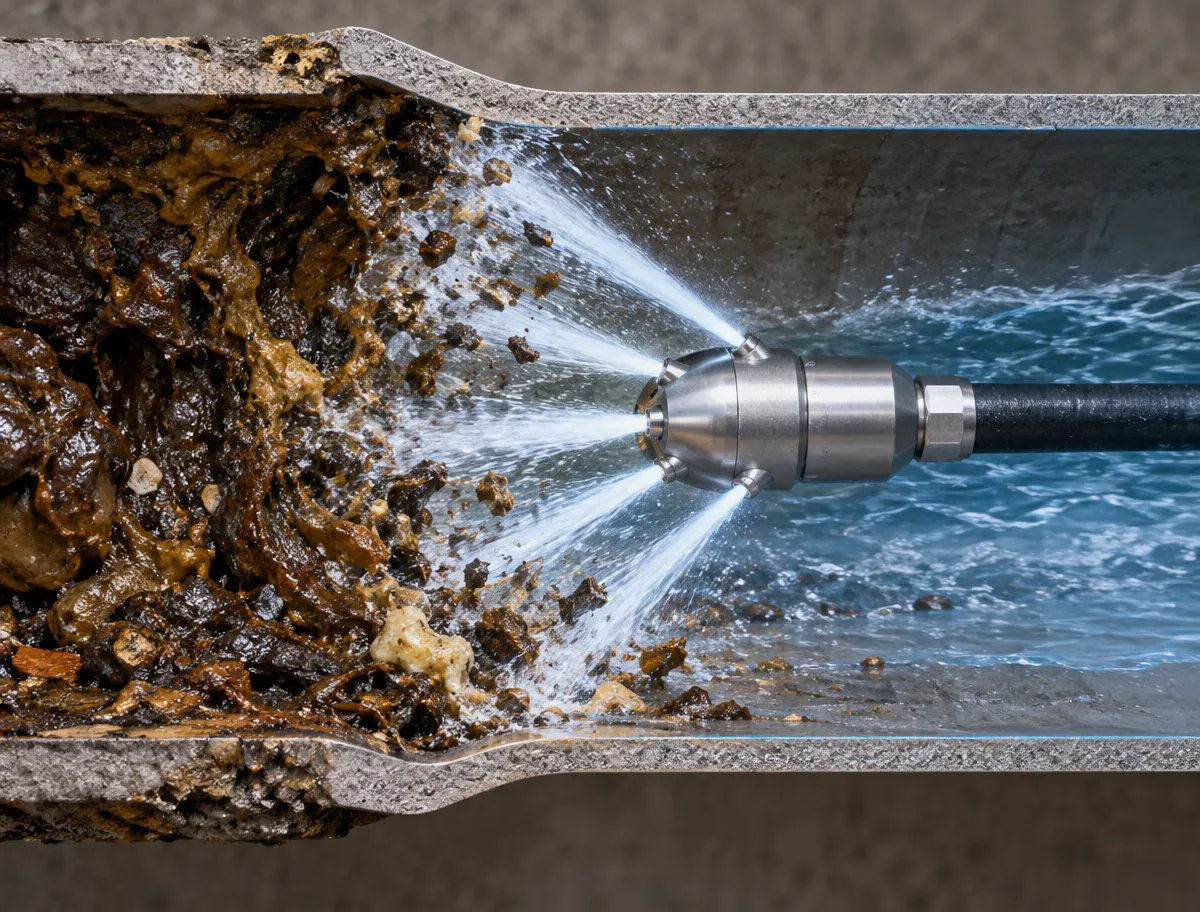 Rear-facing jets scour the wall and pull the hose down the line
High-pressure water jetting clears sewer and drain lines by force rather than patching symptoms. We treat it as a longer-lasting solution for Plain City homes and properties dealing with recurring clogs, rather than a temporary fix that lets the problem creep back next season.
Our process starts with inspection, not guesswork. We evaluate the condition of the line first, confirming what’s actually causing a backup before deciding whether hydrojetting is the right move for that specific pipe. Older clay or cast-iron laterals, found in some older Plain City properties, don’t always tolerate aggressive jetting well, so this step matters. Industry groups such as NASSCO publish sewer pipe cleaning specification guidelines for utilities and contractors, and we take the same care to match equipment and technique to each line.
Once we confirm jetting is appropriate, the cleaning sequence works in stages:
Identify the blockage type and location inside the line
Clear the pipe and target the exact buildup restricting flow
Flush loosened grease, sludge, and debris out of the line
Verify restored flow before closing out the job
Does jetting work on every type of clog?
Not automatically. Jetting is designed to restore flow safely, which means we match pressure and technique to the pipe’s actual condition rather than applying one setting to every job. A line with root intrusion or deteriorating pipe walls needs a different approach than a grease-choked kitchen stack.
Why inspect before jetting?
Skipping inspection risks pushing water into a pipe that can’t handle it. Checking first protects the line and tells us whether jetting solves the problem or whether a different repair comes first.
📞 Ready to Get Started?
If the same Plain City drain keeps backing up, it’s time to look deeper than another snaking. Contact Rhino Rooter to schedule a camera inspection and find out whether hydrojetting is the right fix for your line.
Schedule a camera inspection →Which Plain City Homes Need Hydrojetting?
Plain City homes are good candidates for hydrojetting when warning signs move past a single stubborn clog. Recurring kitchen sink backups, main line stoppages, slow drains throughout the house, and heavy grease or sludge buildup all point toward a line that cable snaking alone may not fix. We treat these symptoms as a pattern, not isolated nuisances. A drain that keeps backing up or never fully clears has likely moved beyond what routine cleaning can solve.
How do I know my drain needs more than a standard cleaning?
A single slow drain usually responds to basic drain cleaning. When several fixtures slow down at once, or the same line clogs month after month, the blockage is likely deeper in the system. We look for these combined signs before recommending jetting over cabling.
Does hydrojetting work for Plain City rental and commercial properties?
Yes. Property owners and managers running rentals, barns, or small commercial buildings in Plain City can benefit from scheduled jetting that helps head off blockages before they disrupt tenants or daily operations. The method is used on commercial, industrial, and municipal sewer lines, not just single-family household drains. Larger Plain City properties get the same thorough approach.
Kitchen sink clogs — that return within weeks
Main line backups — affecting multiple fixtures
Slow drainage — across the whole house, not one sink
Visible buildup — grease, sludge, or mineral deposits in cleanouts
We evaluate each Plain City line before recommending this approach.
How Does Rhino Rooter Handle the Job?
Rhino Rooter starts every Plain City service call with a camera inspection, not a guess. We trace the blockage, explain what caused it, and put the recommended fix in writing before touching a pipe. Plain City homeowners get a clear picture of the problem and a written plan before work begins.
Hydrojetting in Plain City, UT sits inside our standard sewer and drain lineup, paired with drain cleaning, sewer camera inspection, and trenchless sewer repair. We dispatch from our West Haven shop across a 75-mile radius that reaches Plain City along with the rest of Weber County, plus Box Elder, Davis, and Cache county markets. Property managers juggling multiple Plain City addresses get the same process on every visit.
What does a hydro jetting visit in Plain City actually include?
We inspect the line first to confirm jetting is the right call for the pipe’s age and material. From there we pair jetting with camera inspection and, when roots or collapsed sections turn up, trenchless repair options.
Our Plain City process generally follows this order:
1. Camera inspection — to locate the blockage and assess pipe condition
2. Written explanation — of the cause and proposed fix
3. Hydro jetting or drain cleaning — matched to what the camera shows
4. Trenchless repair — if structural damage or root intrusion requires it
This sequence keeps Plain City property owners informed at every step instead of guessing what’s happening underground.
Why Choose Rhino Rooter for Plain City?
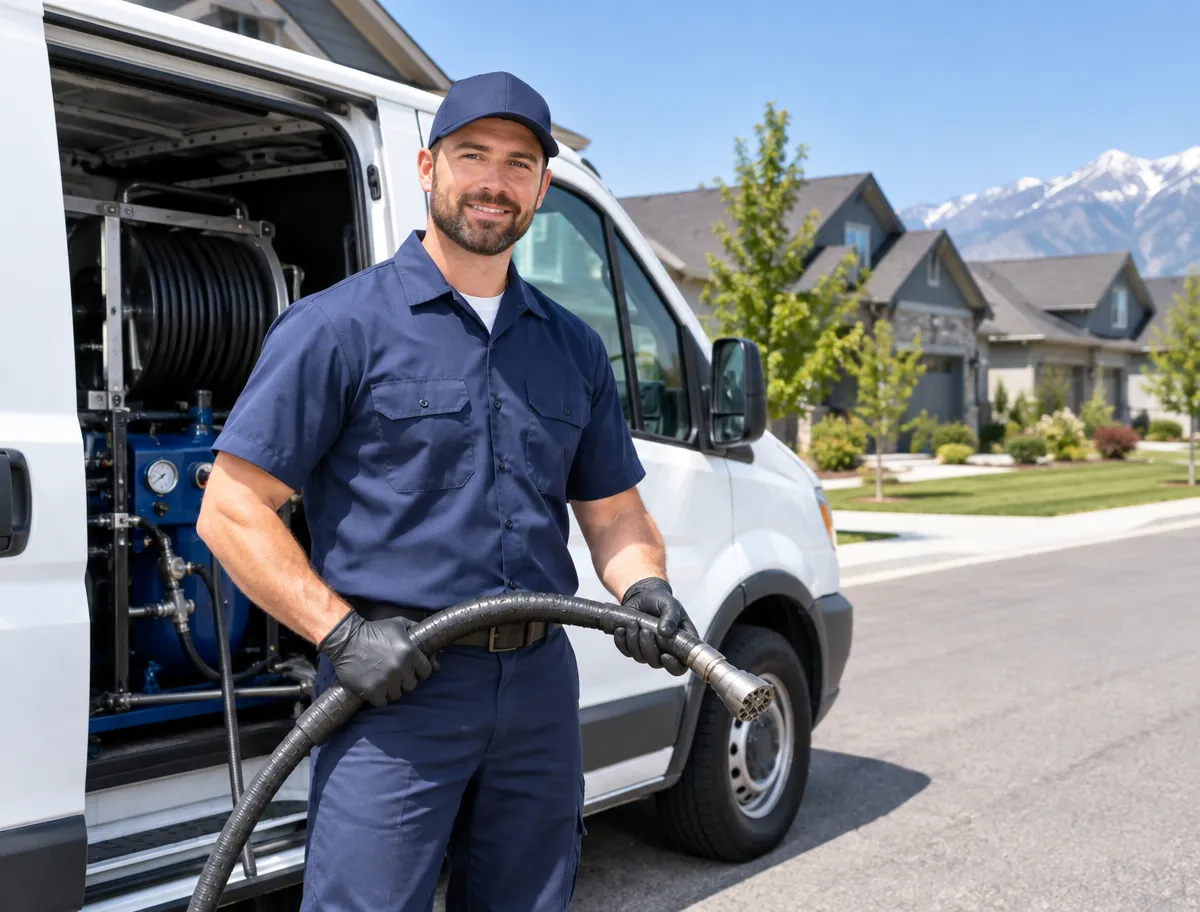 Jetting is standard kit on the van, not a specialty call-out
Rhino Rooter brings regional pipe experience to Plain City homes and properties, backed by a dispatch radius built to reach western Weber County. Skipping proper diagnosis costs property owners more than money. It costs time wasted on guesswork and repeat clogs that never get properly diagnosed.
Our roots run deep in this part of Utah. We also serve Brigham City in Box Elder County, clearing, inspecting, and repairing sewer lines with trenchless methods. That same regional know-how travels straight to Plain City. Our West Haven shop dispatches across a 75-mile radius covering Ogden, Roy, North Ogden, and the broader Weber County area alongside Box Elder, Davis, and Cache county markets.
What happens during a Plain City service call?
We inspect the line first and explain the cause before any work begins. Quotes are provided in writing after that diagnosis, so homeowners know what to expect before work starts.
Hydrojetting is part of our standard toolkit for Plain City property owners, not a specialty add-on. Our lineup includes:
Drain cleaning — for kitchen, bath, and main lines
High-pressure jetting — for grease, sludge, and root buildup
Sewer camera inspection — to verify the actual cause
Trenchless sewer repair — and material-specific pipe fixes
That combination means fewer guesses and fewer repeat visits for Plain City households.
Hydrojetting in Plain City at a Glance
High-pressure water jetting, commonly at up to around 4,000 psi, scours stubborn grease, sludge, and root buildup from the full pipe diameter.
Rear-facing nozzles pull the hose down the line, which helps on the longer sewer runs found on many larger Plain City lots.
Matched to the pipe’s condition, jetting cleans residential, commercial, and industrial lines with less risk of mechanical damage than cutting tools.
Rhino Rooter camera-inspects first, explains the cause in writing, and checks results after cleaning.
Rhino Rooter serves Plain City and the surrounding Weber County, Box Elder, Davis, and Cache county area from its West Haven shop.
Next step: Contact Rhino Rooter to schedule a camera inspection and hydrojetting quote for your Plain City property.
About Rhino Rooter
Rhino Rooter provides drain cleaning, hydro jetting, sewer camera inspection, leak detection, and trenchless sewer repair from its West Haven shop, serving Plain City, Ogden, Roy, North Ogden, and communities across Weber County, Box Elder, Davis, and Cache counties in Northern Utah.
Request your free estimate →Frequently Asked Questions
How much pressure does hydrojetting use?
Hydrojetting commonly uses pressurized water at up to around 4,000 psi to clear grease, sludge, and root intrusion, scouring the full pipe diameter instead of just punching a path through the clog. Technicians adjust pressure and nozzle choice to the pipe’s material and condition rather than running maximum pressure on every line.
Why do technicians inspect the line before jetting?
Technicians evaluate the line first to confirm the actual cause of the backup. Older clay or cast-iron laterals, found in some older Plain City properties, don’t always tolerate aggressive jetting well, and a camera inspection shows whether jetting is safe or whether a repair should come first.
How do you know the clog is actually cleared?
A follow-up camera inspection after jetting shows whether the blockage has been cleared from the pipe walls rather than pushed farther downstream. Ask Rhino Rooter about the warranty coverage that applies to your completed drain work.
Can hydrojetting reach the far end of a long Plain City sewer line?
In many cases, yes. Commercial-grade jetters typically carry long hose reels, and rear-facing nozzle jets pull the hose down the line, so they can travel much farther than most hand-held cable tools. Actual reach depends on cleanout access, pipe condition, and the line’s layout.
Is hydrojetting safe for older pipes?
Hydrojetting is generally safe for pipes in sound condition when pressure is matched to the pipe. Lines that are cracked, sagging, or badly root-damaged may need a repair, such as trenchless lining, before or instead of jetting, which is why inspection comes first.
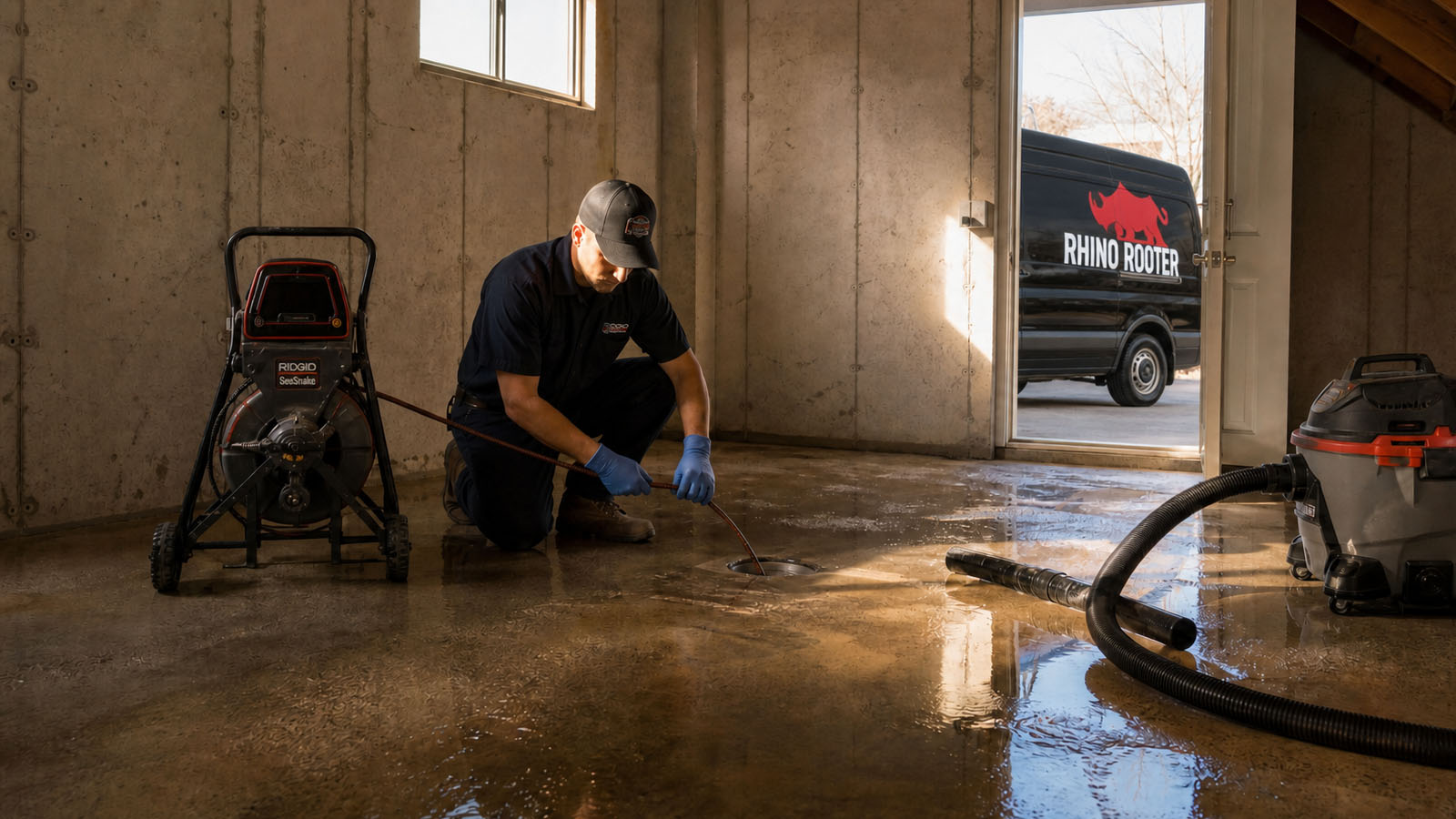
Get a Free Hydrojetting Quote in Plain City
Hydrojetting addresses the buildup behind recurring drain problems rather than masking symptoms with temporary fixes. Plain City property owners who start with camera-verified diagnosis and matched pressure cleaning can break the cycle of repeated clogs and costly emergency calls. Contact Rhino Rooter today for a free, no-obligation quote.