
Sewer Line Repair vs Replacement: Should Weber County Homeowners Choose Lining or Pipe Bursting?
Quick Answer: The right call in sewer line repair vs replacement usually comes down to how much of the pipe is actually damaged, not a fixed rule of thumb. CIPP pipe lining rebuilds a structurally sound pipe that has cracks, root intrusion, or minor offset joints by curing a resin liner inside it. Pipe bursting fully replaces a collapsed, undersized, or severely deteriorated line by fracturing the old pipe while pulling a new one into its exact path. Both methods work through existing cleanouts, so Weber County yards, driveways, and foundations avoid a full trench either way.
Trenchless sewer solutions in Weber County depend on pipe condition: CIPP lining rebuilds cracked or root-filled clay, cast-iron, and Orangeburg lines from the inside without trenching. Pipe bursting replaces fully collapsed or undersized pipe. We camera-inspect and hydro jet every line first, then recommend the method matching your pipe’s actual damage.
What Are the Key Benefits of Trenchless Sewer Repair in Weber County?
Why Are Weber County Homeowners Skipping the Backhoe?
 The backhoe stays parked
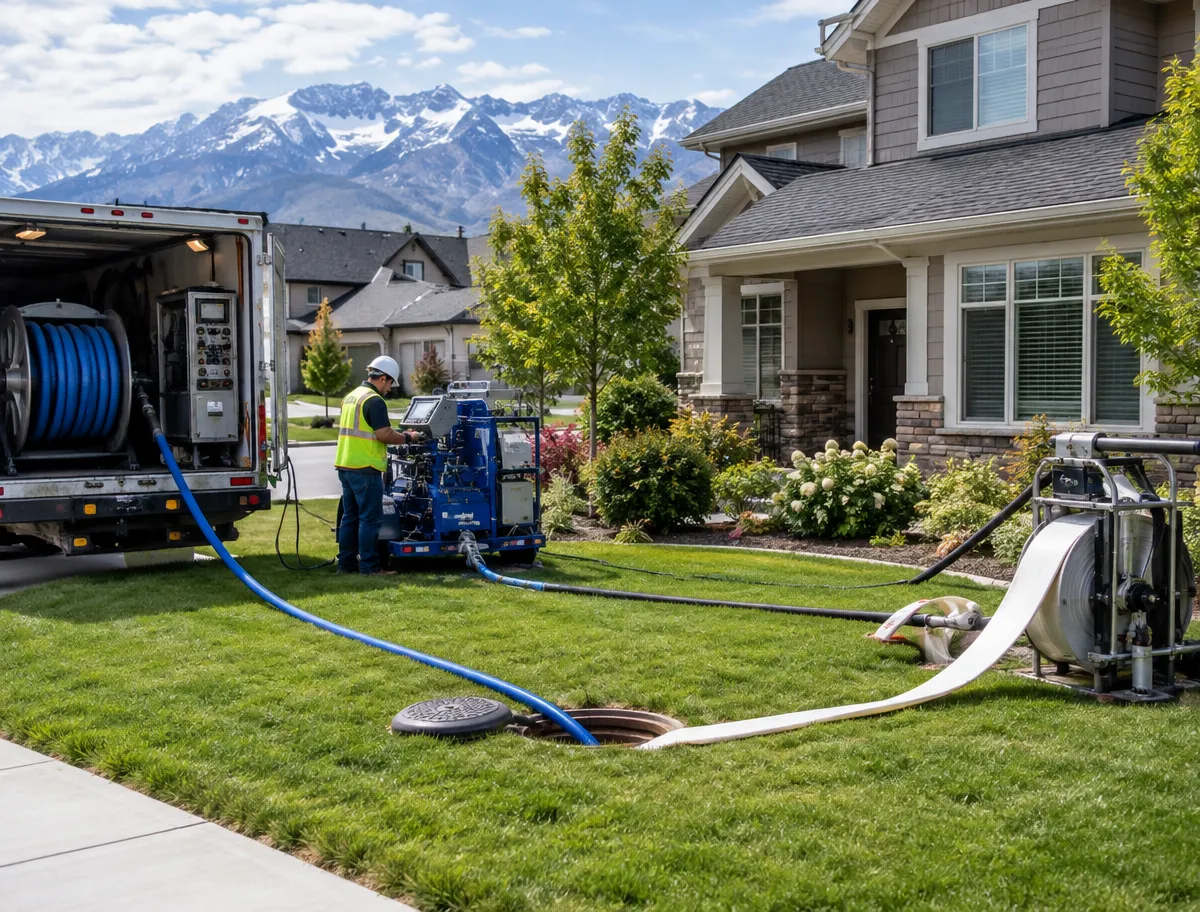
 Weber County homeowners bypass excavation because trenchless pipe repair fixes broken or deteriorated sewer lines without digging up the yard, driveway, or foundation. A cracked lateral under a Roy driveway or a root-choked line beneath an Ogden lawn typically requires less time for repairs compared to traditional methods. We fix broken sewer lines throughout Ogden and the surrounding county with minimal to no excavation and no mess left behind.
Rhino Rooter has served Ogden and Weber County as a family-run, trenchless-first company for 23 years. That history matters. We’ve watched trench-and-replace jobs turn a single afternoon of digging into a week of restoring sod, sprinklers, and concrete. Our crews build repairs around avoiding that outcome entirely.
Does the repair method really change the cost and timeline?
Yes — the method chosen affects the yard, the budget, and the project timeline more than most homeowners expect. Choosing between lining an existing pipe or replacing it changes how long crews stay on site and how much restoration work follows. A property manager in Clearfield weighing repair against replacement should factor in both the pipe’s condition and how much disruption the property can absorb.
What trenchless work protects on a Weber County property:
Mature trees and root systems near the sewer line
Driveways, sidewalks, and stamped concrete
Underground sprinkler systems and landscaping beds
Interior slab foundations on older Ogden and Roy homes
We access the line through existing cleanouts, assess the damage, and recommend the approach that fits the pipe’s actual condition rather than defaulting to full excavation.
What’s the Real Difference Between Lining and Bursting?
 One rebuilds the pipe, the other replaces it
 Lining rebuilds a pipe from within; bursting replaces it entirely by destroying the old one as a new pipe takes its place. Both methods reach the damaged sewer through existing cleanout points, so Weber County properties from Ogden bungalows to Roy commercial buildings avoid a trench across the lawn or parking lot. That access point is where the similarity ends, though. What happens next depends on which condition the pipe is actually in.
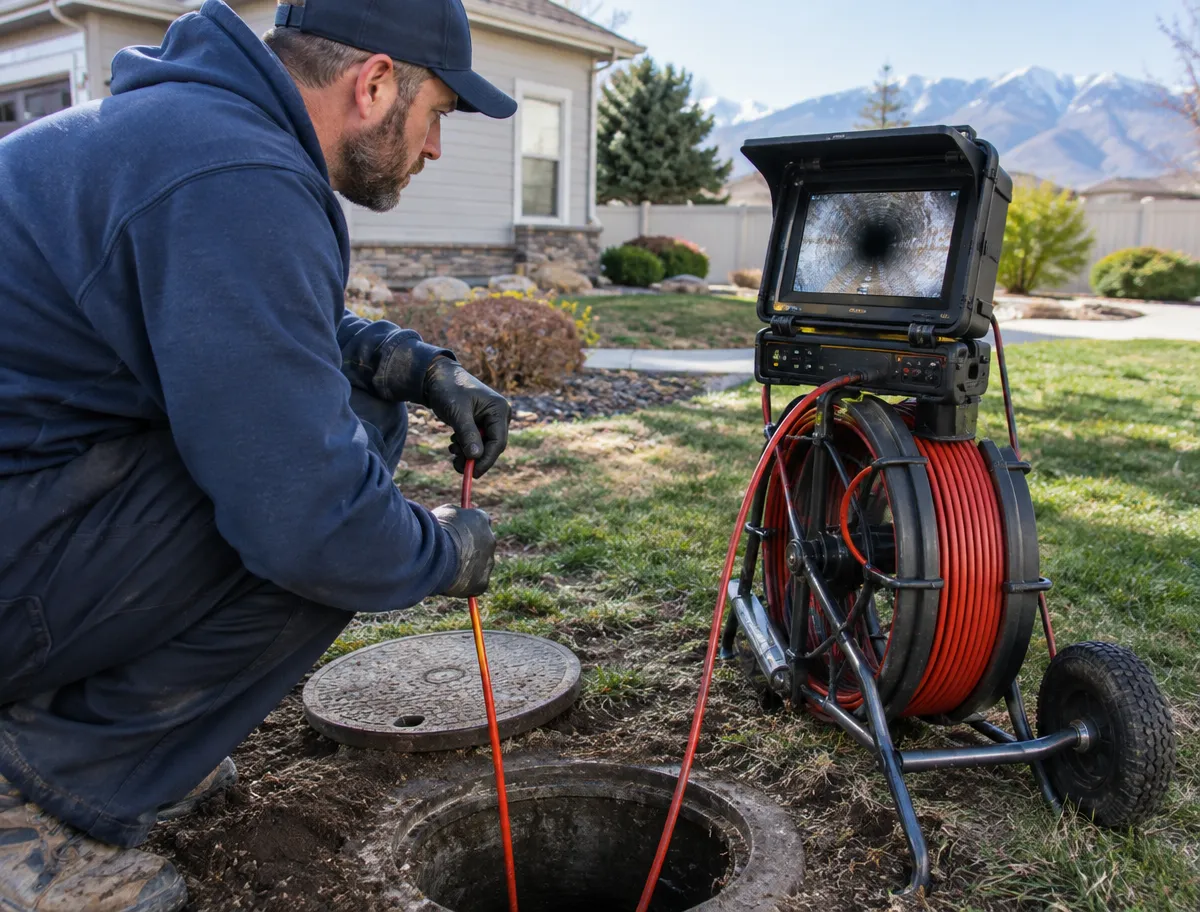
For cured-in-place pipe (CIPP) lining, our crews camera the line first to map every crack, root intrusion, and offset joint common in Weber County’s aging clay and cast-iron laterals. We then clean and descale the pipe using hydro jetting, stripping away grease, scale, and root fragments. A resin-saturated liner goes in next and cures in place, forming a new jointless pipe inside the old one. The original pipe becomes a shell; structural strength comes entirely from the cured liner. Rhino Rooter’s CIPP pipe lining crews handle this process start to finish.
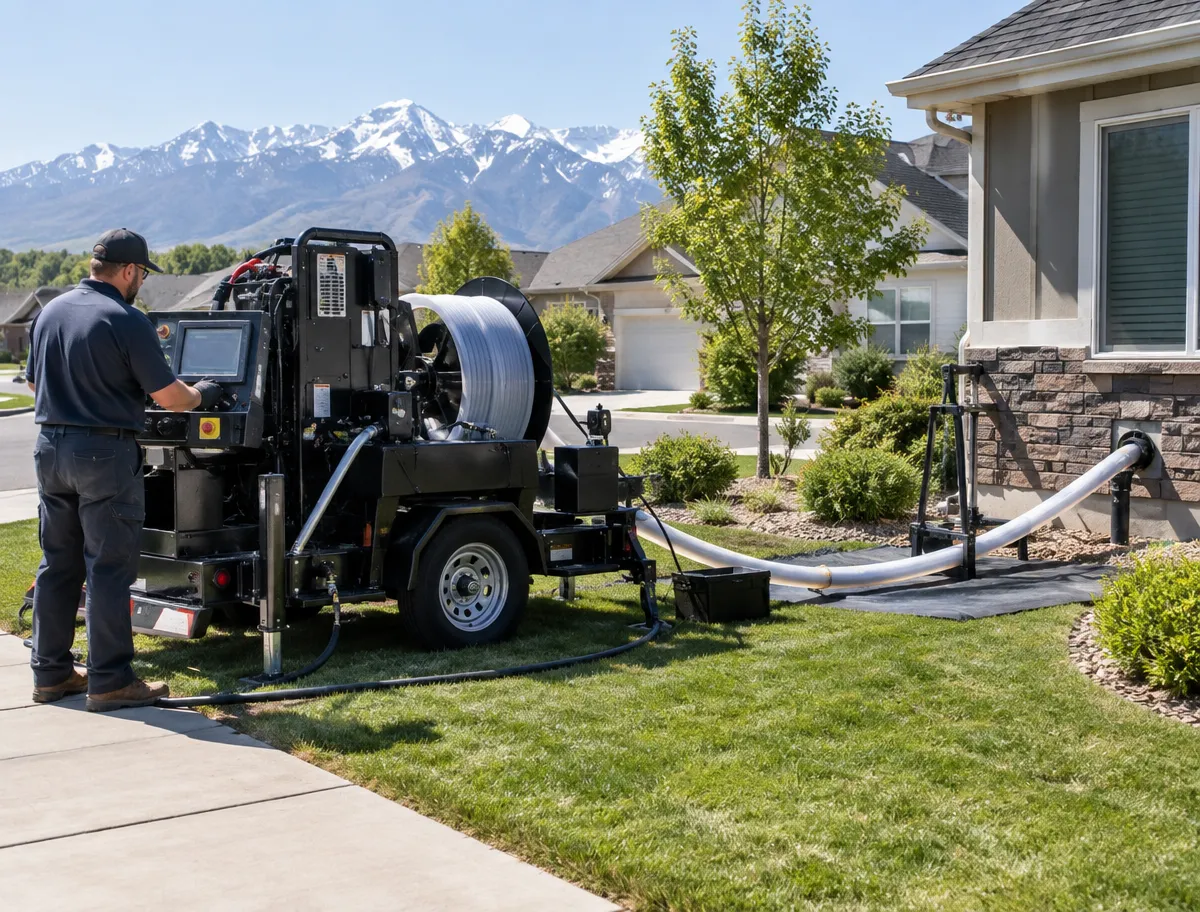
Pipe bursting works differently. A bursting head fractures the deteriorated pipe outward while pulling a new pipe of equal or larger diameter directly behind it. Nothing gets reused. The old line is destroyed piece by piece, and a brand-new pipe takes its exact path underground. The EPA’s pipe bursting fact sheet and NASSCO’s guidelines for pipe bursting technology both document this as an established trenchless method, and it’s the approach behind Rhino Rooter’s pipe bursting service.
Which Method Keeps More of the Original Pipe?
Lining preserves the existing pipe as a host structure and builds a new one inside it. Bursting eliminates the old pipe completely, replacing it rather than reinforcing it.
| Factor | CIPP Lining | Pipe Bursting |
|---|---|---|
| Original pipe | Stays in place as a shell | Destroyed and removed |
| Diameter | Slightly reduced | Same or larger |
| Best for | Structurally sound pipe, cracks, root intrusion | Severely collapsed or undersized pipe |
Both remain proven trenchless approaches for Weber County’s aging sewer infrastructure, and choosing correctly starts with an honest camera inspection, not a guess.
Sewer Line Repair vs Replacement: Which Fits Your Pipe?
Sewer line repair vs replacement hinges on four factors: pipe condition, location, material, and the expected cost and disruption involved. No single answer works for every home in Ogden, Roy, or Clearfield. A cracked clay lateral under a mature landscape calls for a different fix than a collapsed line under a driveway slab.
We start every job the same way: with a camera. That inspection determines if a trenchless fix is viable based on the pipe’s structural integrity.
When does repair make sense instead of replacement?
Repair fits situations where damage sits at one point in the line rather than spread across its full length. A sectional spot repair patches that single failure without touching the rest of the pipe, saving both time and yard disturbance. This works well for a localized crack, a small root intrusion, or a joint separation caught early.
When does a Weber County home need full pipe replacement?
Replacement becomes the answer once a sewer line has outlived its useful life or suffered damage too extensive for a simple patch. Pipe bursting handles this scenario by breaking apart the failing pipe while pulling a new one into place, sized the same or larger. It suits sewer lines, water lines, and storm lines that repair alone can no longer save.
Weighing the two options often comes down to scope:
| Factor | Repair Fits | Replacement Fits |
|---|---|---|
| Damage extent | Single point | Full-length deterioration |
| Pipe age | Recently installed | Outlived useful life |
| Method | Sectional spot repair | Pipe bursting |
| Disruption | Minimal | Still trenchless, larger scope |
We diagnose first, then match the fix to what the camera shows.
📞 Ready to Get Started?
Skip the guesswork on sewer line repair vs replacement. Request a free camera inspection estimate from Rhino Rooter and know exactly what your pipe needs before any work begins.
Request your free estimate →How Much Yard Disruption Should You Really Expect?
Yard damage stays minimal with trenchless methods. For most Weber County properties, it stays limited to a couple of small access points. Deciding between sewer line repair vs replacement often comes down to exactly this question: how much of the lawn, driveway, or landscaping has to go?
Pipe bursting needs only a few small access holes to break apart the old line while pulling a new one into place, rather than the open trench that traditional excavation requires along the full pipe run — the kind of deep trench work OSHA’s construction trenching and excavation safety guidance flags as a leading cause of jobsite injury. For a homeowner in Roy or Clearfield with mature trees or a finished driveway over the line, that difference matters.
CIPP lining works even less invasively. We camera-verify the pipe, then insert and cure a new liner inside the existing one — no excavation at all for most spot repairs or full relines.
Will trenchless work ruin my lawn?
Most Utah residential trenchless jobs, including those we handle around Ogden, wrap up in a single day with no landscaping damage. Access points get restored quickly, and sod or driveway sections rarely need replacing.
| Method | Yard Impact | Typical Timeline |
|---|---|---|
| Traditional dig-and-replace | Full trench along pipe run | Multiple days |
| Pipe bursting | Few small access points | 1–2 days |
| CIPP lining | Minimal to no digging | Often a single day |
Trenchless repairs cost less than full excavation and add decades of service life to the pipe. We prioritize the option that protects Weber County yards while solving the underlying problem for good.
How Do You Choose a Trenchless Provider Locally?
Local coverage matters more than a flashy website. We dispatch from West Haven across a 75-mile radius, reaching Ogden, Roy, North Ogden, and every corner of Weber County. A crew that already knows the clay soils and aging laterals common to this region gets to the job faster and diagnoses problems with fewer surprises. Contact our team to check coverage for your address.
Experience counts too. Owner-operated for years, our team has completed roughly 27,000 jobs across Weber County and the Ogden area. That volume of repeat work means we’ve seen nearly every pipe failure a Weber County property can produce, from root intrusion to corroded cast iron.
What should I ask before hiring a trenchless crew?
Ask whether the provider actually services your neighborhood or just claims a broad territory on paper. Confirm response time, since sewer backups rarely wait for a convenient afternoon. We tell every Weber County homeowner with a sewer or drain problem the same thing: call us and request a camera inspection before recommending any fix.
How does knowing the repair method affect my choice of provider?
Understanding the difference between sewer line repair vs replacement approaches — pipe bursting versus pipe lining — helps homeowners ask sharper questions before digging starts. A provider who explains which method fits a specific pipe condition, rather than defaulting to one option, earns more trust than one who doesn’t.
Sewer Line Repair vs Replacement at a Glance
CIPP pipe lining rebuilds structurally sound pipes with cracks or root intrusion by curing a resin liner inside the old pipe.
Pipe bursting fully replaces collapsed, undersized, or severely deteriorated lines by fracturing the old pipe and pulling in a new one.
Both methods work through existing cleanouts, so Weber County yards, driveways, and foundations avoid a full trench.
Most residential trenchless jobs in Ogden, Roy, and the surrounding county wrap up in a single day.
A camera inspection — not a guess — is what determines which method actually fits your pipe.
Next step: Contact Rhino Rooter today for a free camera inspection estimate before choosing between repair and replacement.
About Rhino Rooter
Rhino Rooter is a family-run, trenchless-first plumbing company that has served Ogden and Weber County, Utah for 23 years, completing roughly 27,000 jobs across the region. The owner-operated team dispatches from West Haven across a 75-mile radius, specializing in CIPP pipe lining, pipe bursting, and camera-verified sewer diagnostics. Contact Rhino Rooter today for a free camera inspection estimate.
Request your free estimate →Frequently Asked Questions
What’s the difference between pipe lining and pipe bursting?
Pipe lining rebuilds a pipe from within using a resin-saturated liner that cures into a new jointless pipe, while pipe bursting replaces the pipe entirely by destroying the old one as a new pipe takes its place.
Why do Weber County homeowners skip excavation for sewer repairs?
Trenchless pipe repair fixes broken or deteriorated sewer lines without digging up yards, driveways, or foundations, protecting mature trees, sprinkler systems, landscaping, and interior slab foundations on older Ogden and Roy homes.
How do crews determine which trenchless method to use?
Crews camera-inspect and hydro jet the line first, mapping cracks, root intrusion, and offset joints, then recommend the method that matches the pipe’s actual condition rather than defaulting to excavation.
How much does sewer line repair vs replacement typically cost?
CIPP lining generally costs less than pipe bursting because it reuses the existing pipe as a host rather than replacing it outright, and a single sectional spot repair costs less than either full-length option. Pipe condition, not price alone, determines which method actually applies, so an accurate number follows a camera inspection.
Can pipe bursting increase the size of my sewer line?
Yes, pipe bursting can pull a new pipe of the same diameter or larger through the old pipe’s path, which helps when a line was undersized for current household demand. CIPP lining, by contrast, slightly reduces the interior diameter since the liner cures inside the existing pipe.
Get a Free Camera Inspection Quote
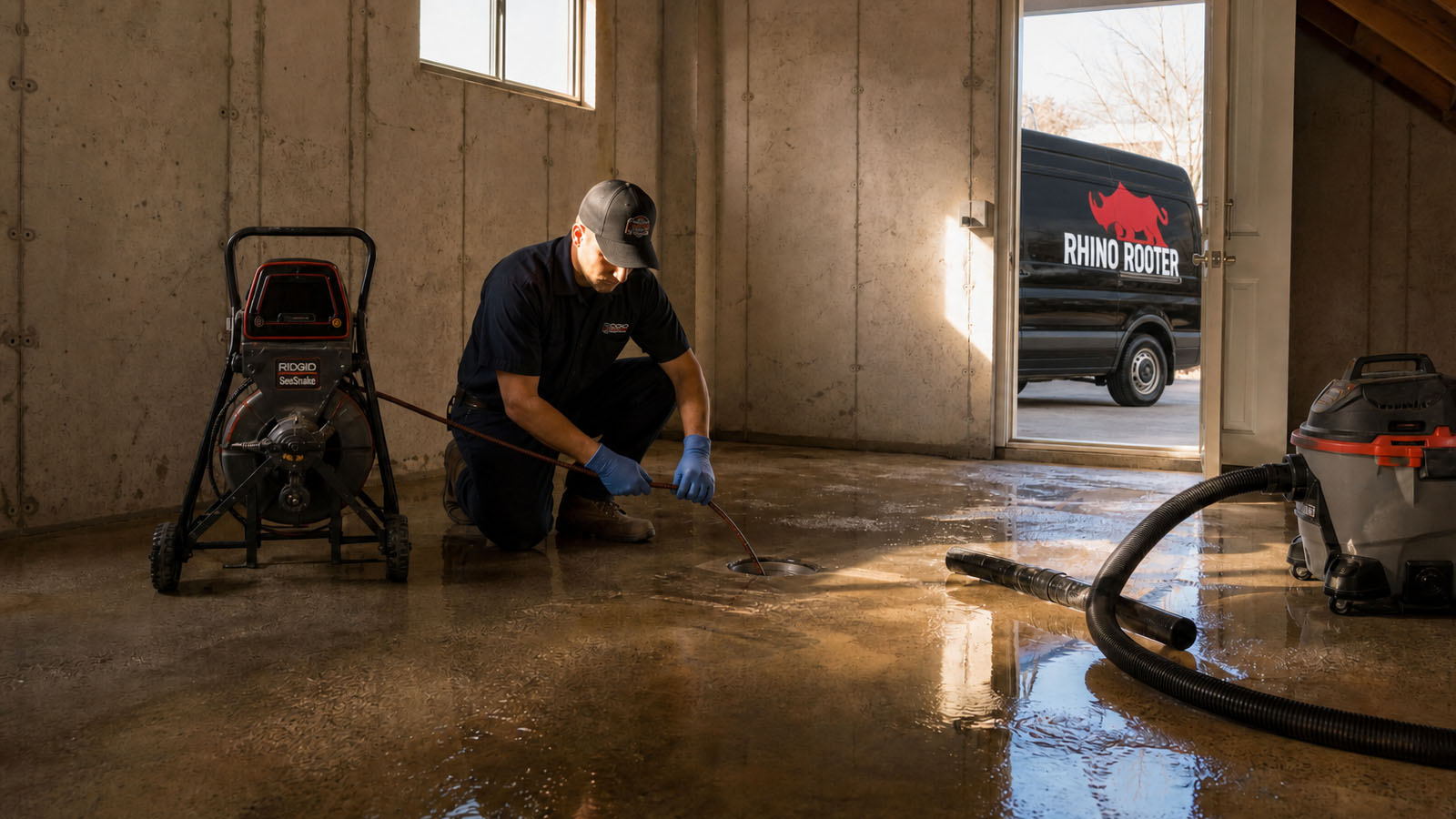
Choosing between sewer line repair vs replacement doesn’t have to be a guess. Rhino Rooter’s camera-verified diagnostics show exactly what condition your pipe is in before any work starts, so you only pay for the method your line actually needs. Contact Rhino Rooter today for a free, no-obligation quote.