
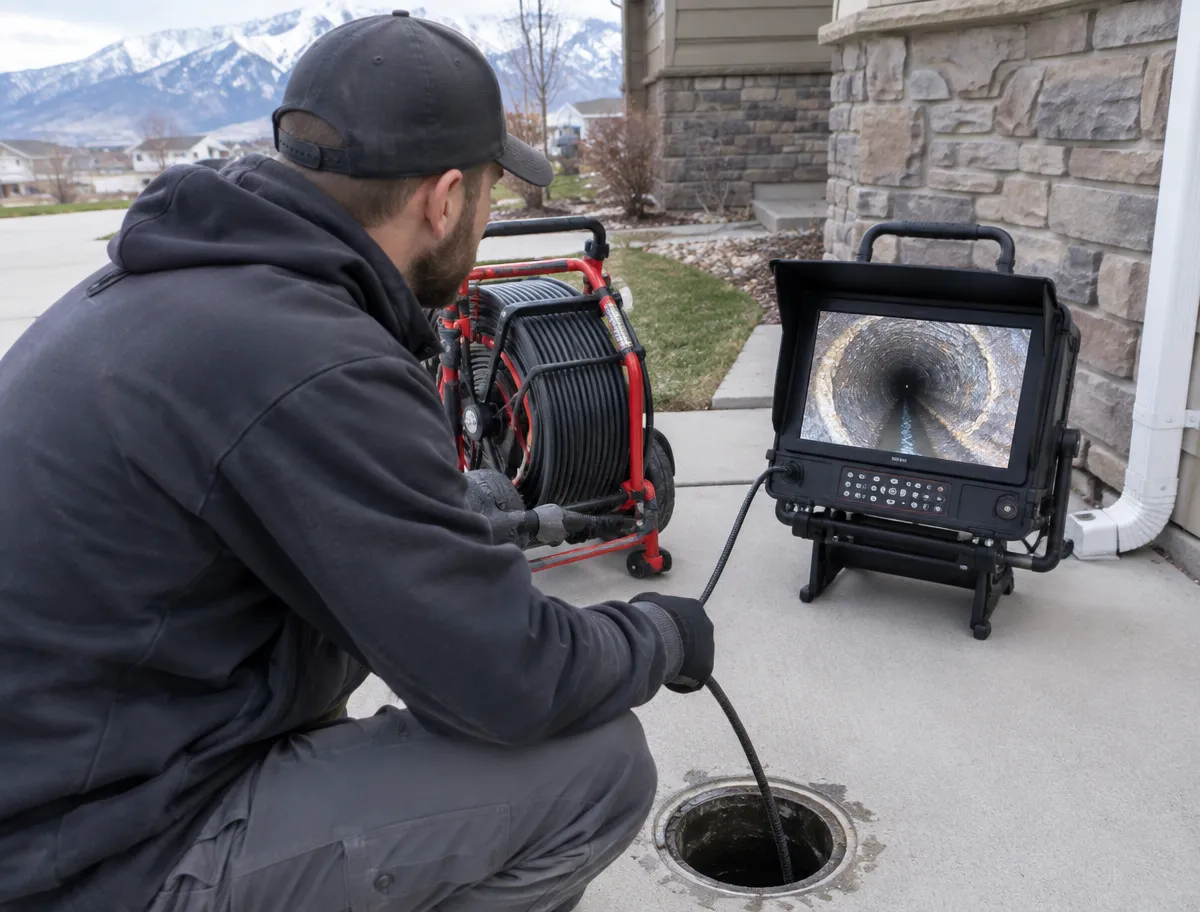
How Much Does a Sewer Camera Inspection Cost in Northern Utah?
Quick Answer: A recorded sewer camera inspection costs $250 to $300 at Rhino Rooter, in Weber County and the Ogden area. Nationally, HomeGuide puts the typical range at $125 to $500 with an average of $280, drawn from 1,991 reported projects. That price covers the whole run on camera, the defect located and marked, and a recorded report you keep. These figures are general guidance only and can change.
Cleanout access, how long the line is, how many bends it takes, and what you get afterward are what move the number. Below: how Northern Utah compares with the national picture, what the price does and doesn’t include, and the four moments worth booking a scope for.
What Should You Know About Sewer Camera Inspection Cost?
How Much Does a Sewer Camera Inspection Cost?
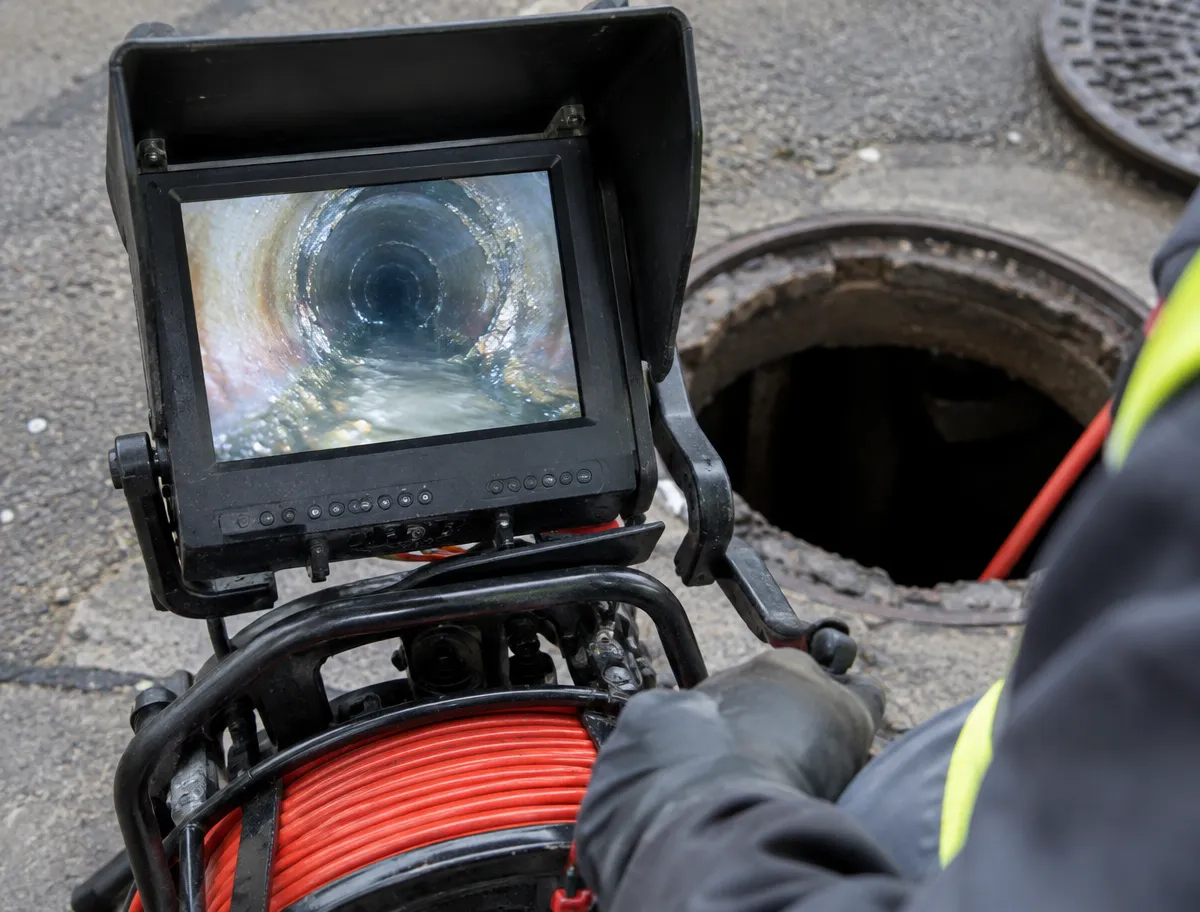 What $250 to $300 buys: the whole run, recorded
Nationally, HomeGuide reports a typical range of $125 to $500 and an average of $280, based on 1,991 reported projects. Rhino Rooter charges $250 to $300 for a standard recorded inspection or diagnostic across Weber County and the Ogden area, which puts the local price inside the national range and within a few dollars of the national average.
That covers a straightforward scope through an existing cleanout. Where a job drifts toward the top of the range, it is almost always access: HomeGuide puts a home with a cleanout at $125 to $500 and one without at $175 to $750, because the plumber has to pull a toilet to get the camera in and put it back.
Is a $250 to $300 sewer scope really worth it?
It is one of the highest-return steps in sewer work. A camera inspection is what tells you whether a line needs cleaning, a spot repair, or lining – and what it rules out. Rhino Rooter’s published figures for the repairs a scope leads to start at $250 to $450 for a drain cleaning and run to $9,500 to $12,000 for a typical 60-foot CIPP lining project; a full line replacement is quoted per job after a camera inspection. Spending $250 to $300 to find out which of those you are actually facing is the cheapest part of the whole exercise.
Why do prices vary between homes?
Cleanout access matters most. A home without an accessible exterior cleanout needs extra setup time, which raises the cost. Pipe material, the length of the run, and the number of bends also change how long the pass takes and what equipment the job needs. On older homes where the cleanout is buried, Rhino Rooter confirms the access situation before work starts rather than after.
| Scenario | National (HomeGuide) | Rhino Rooter |
|---|---|---|
| Standard residential inspection | $125–$500 (avg $280) | $250–$300 |
| Home with an accessible cleanout | $125–$500 | $250–$300 |
| Home with no cleanout access | $175–$750 | Access confirmed before work starts |
| Pre-purchase sewer scope | $100–$250 added to a home inspection | $250–$300, recorded report included |
| DIY camera rental, per day | $120–$225 | Not recommended; rentals reach 150–200 ft |
What Does the Price Include?
A standard sewer camera inspection at Rhino Rooter covers three things, and they are bundled rather than billed separately:
The whole run, recorded — High-definition footage of the full line rather than a live look you cannot keep.
Narration as the camera moves — The technician calls out pipe material, grade changes, root intrusion, and scaling while the camera is in the line, and that narration is recorded alongside the footage.
Locating and marking — A sonde in the camera head and a surface locator mark the depth and position of any defect, so a repair is targeted instead of exploratory.
You get a recorded report at the end, not a verbal summary. That file is what makes the inspection useful later – for an insurance claim, a warranty, a real estate negotiation, or simply comparing a second opinion against the first.
What Costs Extra?
Less than most people expect. Three things buyers often assume are add-ons are already in the price, and one genuinely is extra:
Locating – included — Marking the defect is performed together with the $250 to $300 inspection. A standalone locate, with no camera inspection, is the one case quoted by the job.
The report – included — The recorded report comes with every inspection; there is no separate charge for the footage.
The re-camera after a repair – included in the repair — Every repair method – hydro jetting, CIPP lining, a spot repair, pipe bursting, a full replacement – ends with a verification pass on camera, and that pass is part of the repair rather than a second inspection fee.
After-hours work – genuinely extra — The drain cleaning cost guide lists a $100 to $150 after-hours surcharge on top of the service price, so an off-hours call costs more than a scheduled visit.
There is also a case where the inspection costs nothing: Rhino Rooter lists a free camera inspection with any drain clearing service on its specials page. If the line needs clearing anyway, that covers the diagnosis. The coupon can’t be combined with other offers. The inspection cost is also often credited toward a repair if you go ahead with the same company.
📞 Want a Clear Price for Your Line?
Rhino Rooter quotes every scope on your access point and pipe length, not guesswork. Request a camera inspection and get narrated footage you can keep.
Request a camera inspection →What Makes One Inspection Cost More Than Another?
Pipe length, access, and what the camera runs into are the three variables. No two homes present the same combination, which is why two quotes that look different may not be comparable in the first place.
Why does a belly in the line raise the price?
A bellied lateral – a low spot where waste pools instead of draining flat – needs a slower, more careful pass than a straight run. Finding it on camera is also what stops a homeowner paying for repeated cleanings that never fix the low spot causing the backup.
What else shows up during the scope?
The camera reveals pipe material, blockage type, root intrusion points, and structural damage along the full run. Those findings are what separate a simple scope from one that needs extra time. Industry condition coding for exactly this is set out in NASSCO’s pipeline assessment standards.
Does the city connection matter?
It sets how much line there is to inspect. A scope runs from the cleanout down to the city tap, so a long mainline run simply takes more footage, more narration, and more technician time than a short lateral. Ogden City’s sewer utility information covers where municipal responsibility begins.
When Should You Schedule a Sewer Scope?
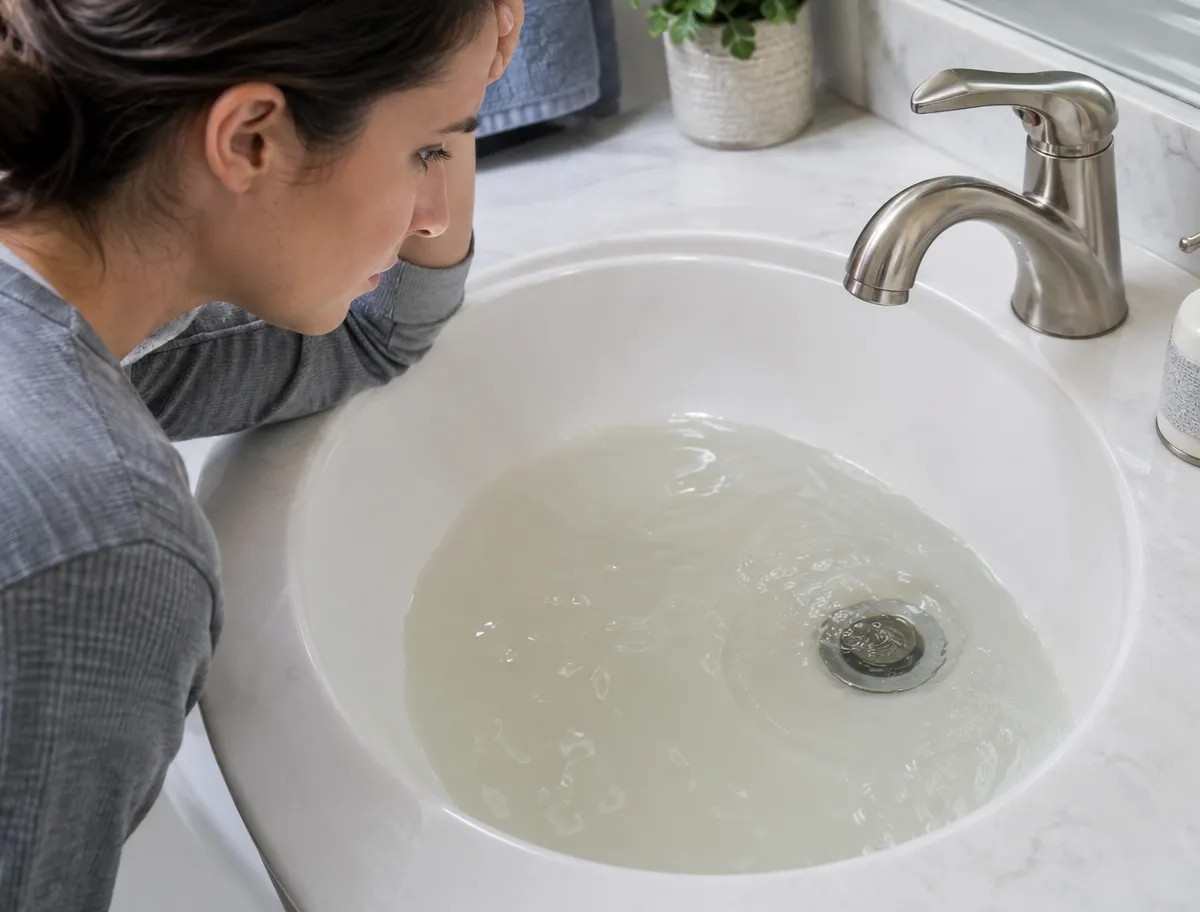 A drain that keeps backing up is the first of the four triggers
Four situations call for one: slow drains, a pending purchase, a pending sale, and a check a year or two after new construction. Without footage, every decision about cleaning, repair, or replacement is a guess – and guesswork is what leads to repeated cleanings that never fix the underlying problem.
Slow or recurring backups — If a clog keeps returning after a professional cleaning, something in the pipe is causing it.
Before you buy — A standard home inspection never checks the buried lateral. Our pre-purchase sewer scope guide covers what a scope finds before closing and which findings are worth negotiating.
Before you list — Scoping ahead of a sale lets you disclose the line’s condition upfront instead of renegotiating after a buyer’s inspection.
One to three years after a new build — New construction is not immune. Improper grade or leftover construction debris shows up on camera long before symptoms reach the fixtures.
Sewer Camera Inspection Cost at a Glance
A recorded residential scope is $250 to $300 at Rhino Rooter, against a $125 to $500 national range and a $280 national average (general guidance; actual prices vary).
Access is the biggest variable: nationally a home with a cleanout runs $125 to $500, one without $175 to $750.
Locating, the narration, and the recorded report are all included; the re-camera that verifies a repair is part of that repair.
The one genuine add-on is the $100 to $150 after-hours surcharge, and the inspection is free with any drain clearing service.
Book a scope for recurring backups, before buying, before listing, and a year or two after a new build.
Next step: Request a camera inspection quote from Rhino Rooter.
About Rhino Rooter
Rhino Rooter is a Northern Utah drain and sewer specialist with 23 years of camera-first diagnostics across Weber County and surrounding communities. Services include sewer camera inspection, drain cleaning, hydro jetting, CIPP pipe lining, and pipe bursting. Contact Rhino Rooter to schedule an inspection.
Request your free estimate →Frequently Asked Questions
How much does a sewer camera inspection cost in Northern Utah?
Rhino Rooter charges $250 to $300 for a standard recorded inspection or diagnostic in Weber County and the Ogden area. Nationally, HomeGuide reports a typical range of $125 to $500 with an average of $280. These figures are general guidance only and can change at any time.
What does a basic sewer camera inspection include?
High-definition footage of the full pipe run, narration from the technician explaining what the camera sees, and locating and marking so the defect’s position is known before any digging begins. You keep the recorded report.
Why do sewer camera inspection prices vary between homes?
Cleanout access, pipe length, pipe material, and the number of bends all affect how long the inspection takes and what equipment it needs. A home with no accessible cleanout takes the most extra time, which is why the national range for one runs $175 to $750 against $125 to $500 for a home with one.
Is a sewer camera inspection worth it before buying a home?
Yes. A scope is $250 to $300, while the repairs it can find range from a $250 to $450 drain cleaning up to a $9,500 to $12,000 lining project, and a full replacement is quoted per job. A standard home inspection does not check the buried main line, so a camera inspection is the only way to see its condition before closing.
Do I get to keep the sewer inspection footage?
Yes. Rhino Rooter provides a recorded report with every inspection, so you can keep it for repairs, resale, or a real estate negotiation.
Get a Free Sewer Camera Inspection Quote
A camera inspection replaces guesswork with footage you can watch and keep, before you spend anything on a repair. Contact Rhino Rooter today for a free, no-obligation quote on a sewer camera inspection in Northern Utah.