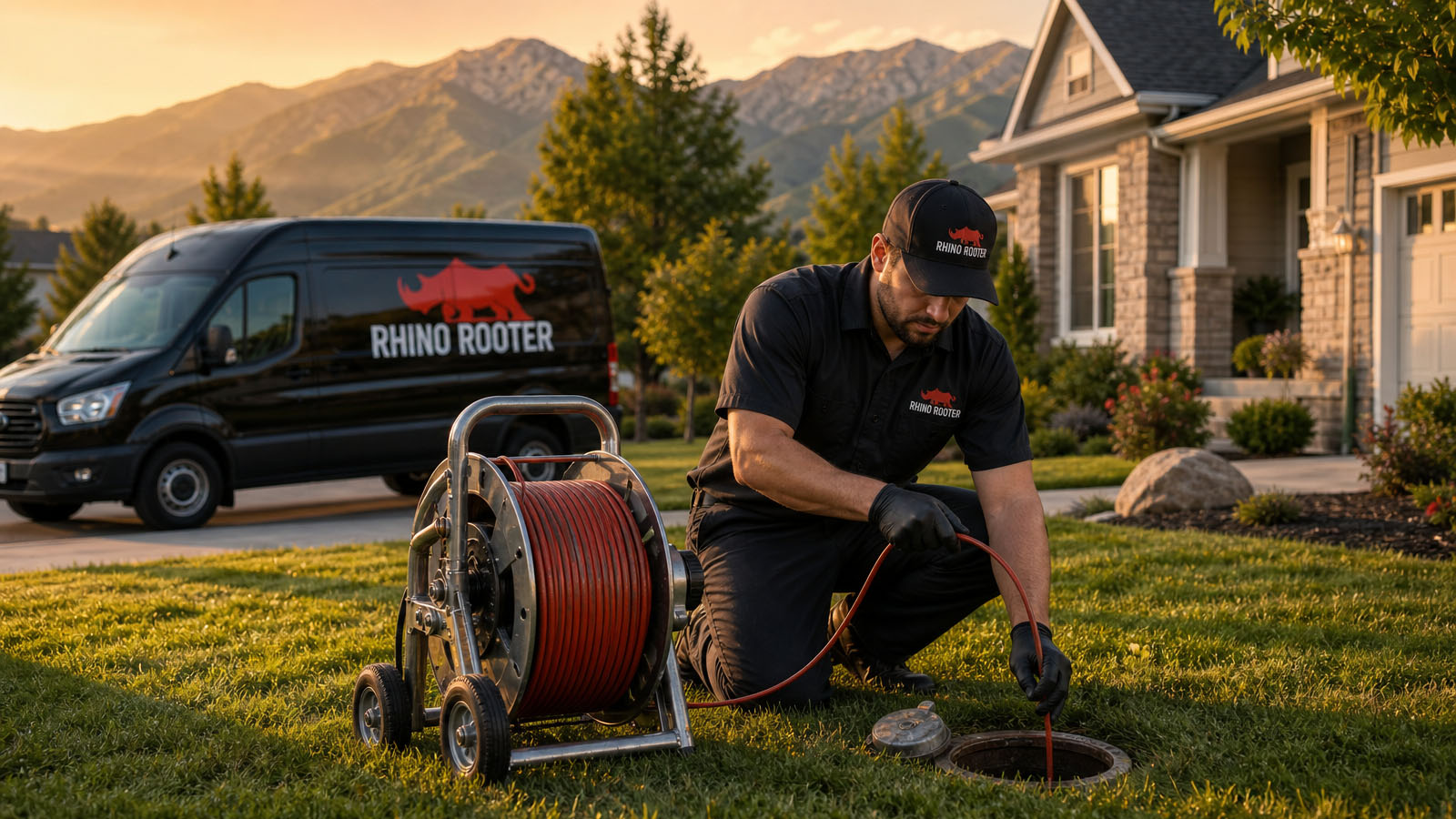
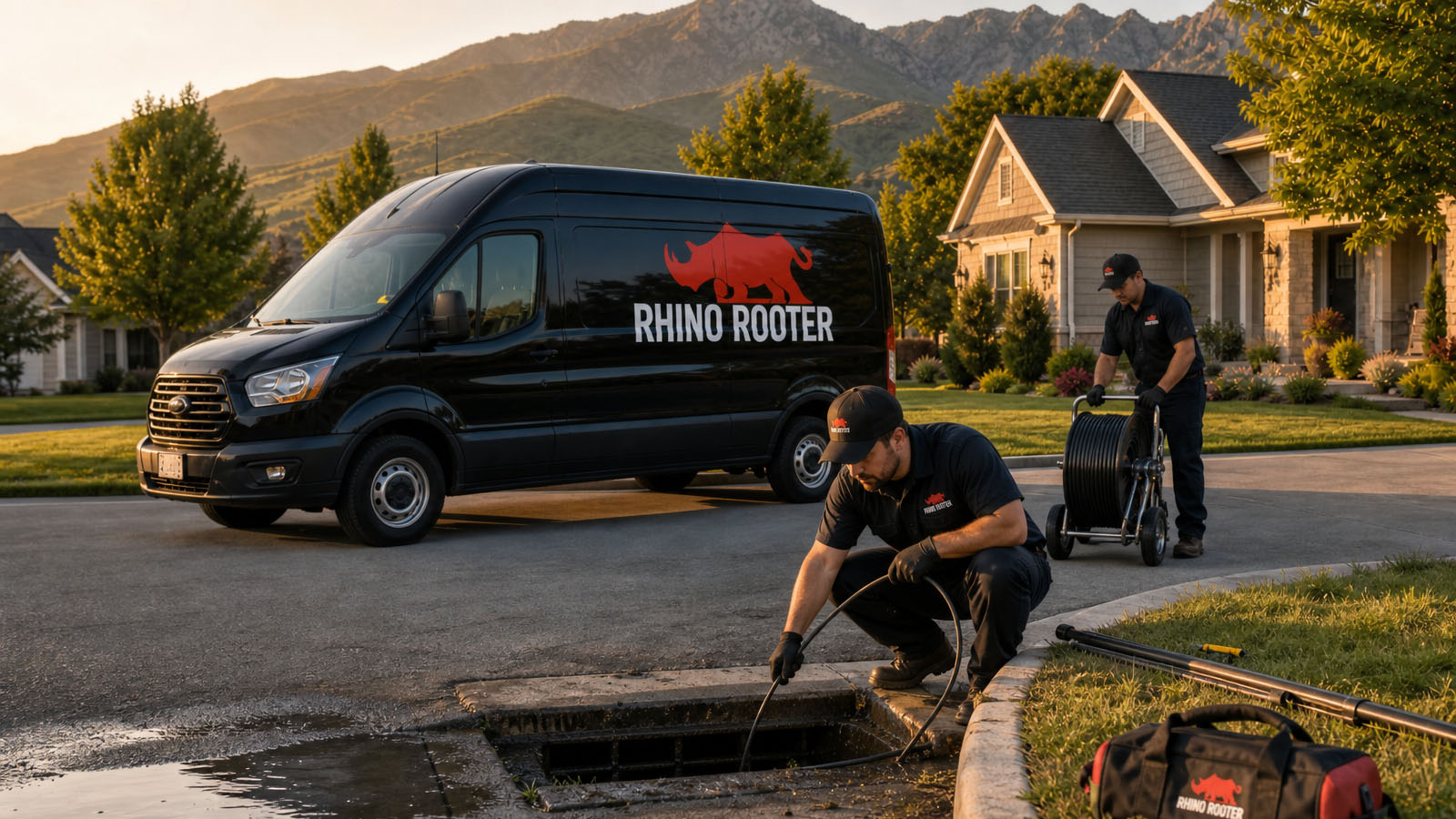
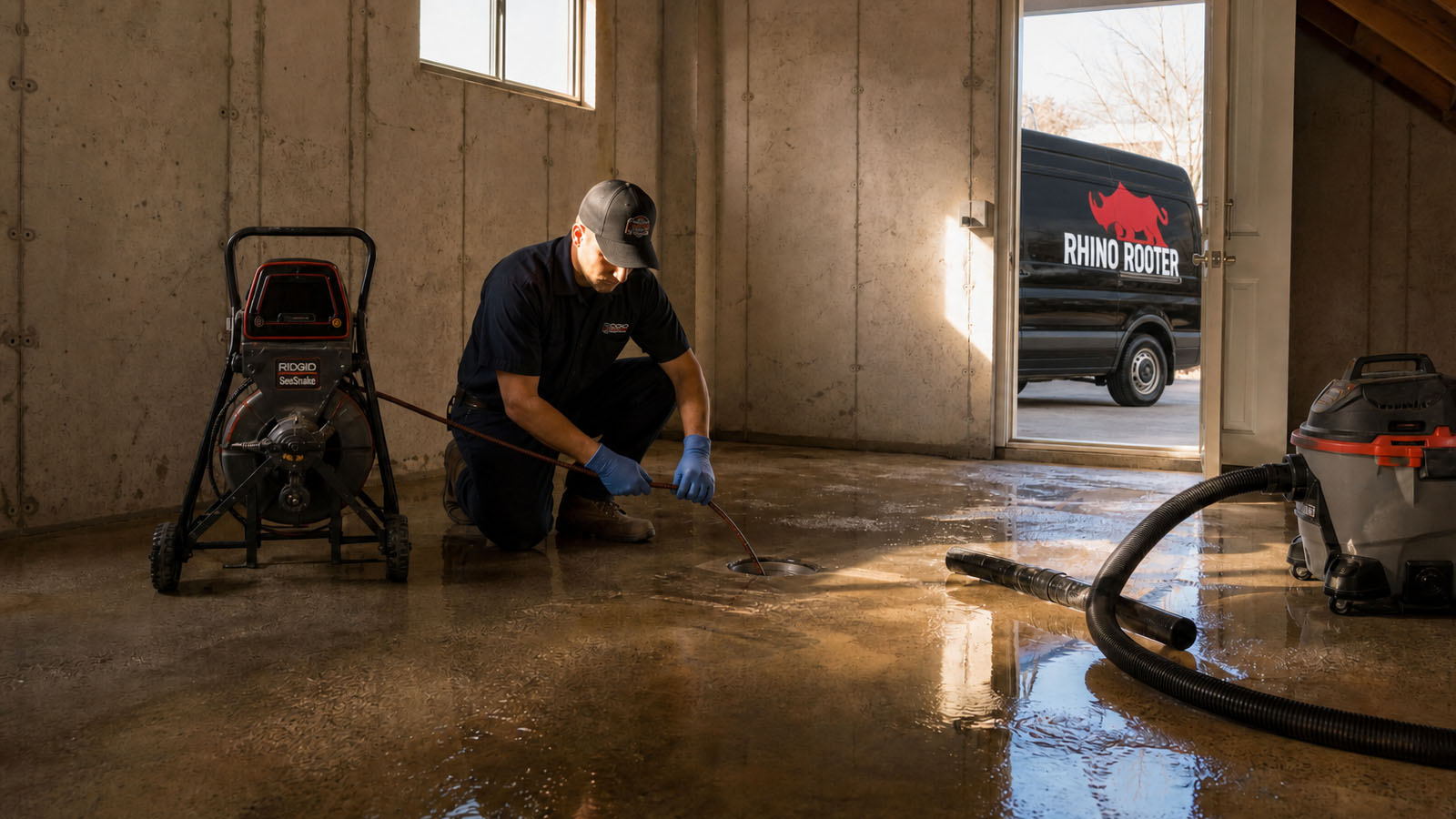
Quick Answer: Tree roots in a sewer line enter through cracked pipe joints or open seams, then grow until they cause slow drains, gurgling toilets, recurring backups, or sewage odors in your yard. The only reliable way to confirm root intrusion is a sewer camera inspection. Once confirmed, the fix depends on how far the damage has progressed: hydrojetting clears active roots, CIPP lining seals the pipe and prevents re-entry, and pipe bursting or excavation handles collapsed or severely damaged lines. In Weber County, cottonwoods, box elders, and elms are the most common culprits.

If you live in an Ogden or Weber County neighborhood with mature trees — and most do — tree root intrusion is one of the most common sewer problems you’ll face. Weber County’s established neighborhoods are lined with cottonwoods, box elders, and elms: beautiful trees whose root systems actively seek moisture. Your sewer lateral, carrying warm, nutrient-rich wastewater underground, is exactly what those roots are looking for.
The problem rarely announces itself dramatically. Instead, it builds gradually — a drain that runs a little slower each season, a toilet that gurgles at odd times, a recurring backup that the plumber clears but that comes back a year later. Many Weber County homeowners deal with these symptoms for years without connecting them to the trees in their yard.
This guide walks through how roots get into sewer pipes, the warning signs that indicate intrusion is already happening, the risks of leaving it unaddressed, and how to choose the right fix for your situation — whether that’s a one-time hydrojetting, CIPP lining, or a more involved repair. Because the right call depends entirely on what a camera inspection reveals about your pipe’s actual condition.
How Do Tree Roots Get Into a Sewer Line in the First Place?
Roots don’t punch through solid pipe. They exploit weaknesses that already exist — and in Weber County, those weaknesses are everywhere. Most homes built before 1970 in Ogden, Roy, and South Ogden have clay tile sewer laterals. Clay pipe is porous and was installed in short sections with bell-and-spigot joints that were sealed only with oakum and mortar. Over decades, the ground shifts with Utah’s freeze-thaw cycles, those mortar seals crack and the joints separate — often by just a fraction of an inch.
That tiny gap is all a root needs. Fine root tips — sometimes called root hairs — detect the moisture and warmth escaping from even a hairline crack. Once inside, the root finds an abundant food and water source and grows rapidly. As it expands, it widens the entry point further, inviting more roots and accelerating the damage cycle.
The connection point between your private lateral and the city main sewer is another common entry point. That junction often has imperfect sealing, and it’s where Rhino Rooter’s camera inspections most frequently find first-entry root masses in Ogden-area homes.
Pro tip: The tree causing your sewer problem doesn’t have to be directly above the pipe. Cottonwood and willow root systems routinely extend two to three times the width of the tree’s canopy — meaning a large cottonwood on one side of your property can reach your sewer lateral on the opposite side.
What Are the Warning Signs of Tree Root Intrusion?
Root intrusion follows a predictable progression. Knowing which stage you’re in helps you act before it becomes a full sewer emergency.

Multiple Drains Running Slowly at the Same Time
A single slow drain is almost always a localized clog — hair, grease, or debris in that specific fixture. But when two or more drains throughout the house are slow at the same time — the kitchen sink, the bathtub, and the laundry drain all sluggish together — the obstruction is almost certainly in the main sewer line, not any individual fixture. Root intrusion restricts the pipe diameter progressively, and the first symptom is usually reduced flow across the entire system.
Gurgling Sounds from Toilets or Drains
When roots partially block a sewer line, water has to push past the obstruction. That process traps air, and the air escapes through the nearest open fixture — usually a toilet or floor drain — producing a gurgling or bubbling sound. If you hear this after flushing or running water elsewhere in the house, it’s worth scheduling a camera inspection.
Recurring Backups That Keep Coming Back
This is one of the clearest indicators that roots — not a one-time clog — are the problem. A standard snake clears the immediate obstruction and restores flow, but if the root mass is still in the pipe and the entry point is still open, regrowth starts immediately. Most homeowners with untreated root intrusion see backups return within 6 to 18 months of a mechanical clearing.
Lush Green Patches or Soggy Ground Over the Sewer Line
If your yard has a patch of grass that’s noticeably greener, taller, or lusher than the surrounding lawn — especially during dry periods — sewage may be leaking from a compromised pipe and feeding the roots and surrounding soil. Soft or spongy ground that doesn’t dry out normally is another outdoor indicator. In severe cases, ground settlement or small sinkholes can appear as soil erodes around a leaking joint.
Persistent Sewer Odors in the Yard or Near Floor Drains
A healthy sewer line is a closed system — no smell should escape under normal conditions. When roots crack pipe walls or widen joints enough for sewage to seep out, sewer gas escapes with it. If you smell sewage near a floor drain, in a crawl space, or in a specific area of your yard, root damage to the line is a likely cause.
Which Trees in Weber County Are Most Likely to Invade Your Sewer?
Not every tree poses equal risk. Species with aggressive, moisture-seeking root systems are the most common culprits in Northern Utah sewer problems. Based on what Rhino Rooter’s camera inspections consistently find in Ogden, Roy, Clearfield, and surrounding Weber County communities, these are the trees to know:
- Cottonwood: The number-one sewer offender in Weber County. Cottonwoods grow fast, reach massive size, and push roots two to three times the width of the canopy. Mature cottonwoods near the Weber River and in older Ogden neighborhoods are responsible for more root intrusions than any other species we see.
- Box elder (Acer negundo): Extremely common in established Weber County neighborhoods, box elders have wide-spreading, shallow roots that readily find sewer pipe joints. Their rapid growth makes them particularly problematic near older clay laterals.
- Elm: Weber County’s older neighborhoods have many mature elms, including Siberian elms that were widely planted as windbreaks. Elm roots grow aggressively toward water sources and are a frequent find in camera inspections of pre-1970 sewer lines.
- Willow: Any willow species near your sewer line should be treated as a serious risk. Willows are among the most water-aggressive trees in existence and their roots will find even pinhole moisture sources.
- Silver maple: Common in residential yards throughout Northern Utah, silver maples have shallow, wide-spreading root systems that frequently interfere with sewer and water lines.
Local note: Weber County’s clay-heavy soil expands during wet seasons and contracts through dry summers, putting additional stress on underground pipe joints with every seasonal cycle. That movement — combined with Utah’s freeze-thaw winters — means even pipes in relatively good condition develop the hairline joint gaps that invite root entry over time.
What Risks Come With Leaving Root Intrusion Unaddressed?
Root intrusion is a progressive problem. The risks get significantly worse the longer it goes without treatment.
In the early stages, roots slow drainage and cause occasional backups. That’s inconvenient but manageable. As the root mass grows, it catches toilet paper, grease, and debris, building a denser obstruction that causes more frequent and more severe backups.
As roots expand, they exert outward pressure on the pipe walls. In clay tile pipe — already brittle after decades in the ground — that pressure causes additional cracking and joint separation. What started as a small entry point becomes a structurally compromised section of pipe, and the problem escalates from root clearing to pipe repair or replacement.
In the most serious cases, the pipe collapses partially or completely. At that point, excavation is usually the only option — an outcome that costs significantly more than a CIPP lining job would have at an earlier stage.
There’s also a public health dimension. The EPA identifies tree root intrusion as the second most common cause of sanitary sewer overflows nationally, after grease buildup. When sewage escapes from a compromised sewer line into soil or groundwater, it carries bacteria, viruses, and pathogens that pose genuine health risks to household members and neighbors.
What Are Your Options for Fixing Root Intrusion?
The right fix depends on what a camera inspection reveals about the extent of root growth and the condition of the pipe itself. There is no universal answer — choosing a fix without a camera inspection is guesswork.

Hydrojetting — For Early-Stage or Active Root Blockages
Hydrojetting uses high-pressure water (typically 3,000 to 4,000 PSI) to blast through the root mass, cut roots back to the pipe wall, and flush the debris out of the line. It’s the most thorough mechanical clearing method available and leaves the pipe significantly cleaner than snaking alone.
When it works best: root intrusion is early-stage, the pipe structure is largely intact, and the entry points are limited. Hydrojetting restores full flow quickly and is often done the same day as the camera inspection.
The limitation: hydrojetting doesn’t seal the pipe. Roots that entered through open joints will begin regrowing immediately. For pipes with documented joint failures or cracks, hydrojetting is most valuable as a preparation step before lining — it clears the pipe so the liner can bond properly.
CIPP Pipe Lining — For Cracked Pipes With Intact Structure
Cured-in-place pipe lining is the gold-standard trenchless solution for sewer lines with root entry points, cracked joints, or moderate pipe damage. A flexible liner saturated with epoxy resin is inserted into the cleaned pipe, expanded against the walls, and cured — creating a seamless, jointless new pipe inside the old one. That smooth, continuous surface has no joints for roots to exploit, effectively ending root intrusion at any section that’s been lined.
When it works best: the pipe has root damage at joints or cracks but the overall pipe alignment is still sound and the pipe hasn’t collapsed. CIPP lining is completed with minimal surface disruption — typically through an existing cleanout — and is often done within one to two days.
Cost context: CIPP lining for residential laterals typically runs $80 to $250 per linear foot depending on pipe diameter, length, and access conditions. For a 40 to 60 foot lateral — a typical run from house to city main — expect a project cost in the range of $4,000 to $10,000. That’s more than a single clearing, but significantly less than excavation, and it carries a warranty.
Pipe Bursting — For Severely Damaged Lines
When a pipe has collapsed sections, severe misalignment, or multiple failure points that make lining impractical, pipe bursting replaces the old pipe without a full open trench. A hydraulic head is pulled through the existing line, fracturing the old pipe outward while simultaneously pulling a new high-density polyethylene (HDPE) pipe into position. Two access pits are required, but the trench excavation associated with traditional replacement is avoided.
Traditional Excavation Replacement — For Collapsed Lines
When camera inspection reveals a collapsed pipe or severe structural failure, excavation and full replacement is the only viable option. This is the most disruptive and expensive approach but sometimes the only correct one. Rhino Rooter’s camera inspection will identify when this is genuinely necessary versus when a less invasive method would achieve the same result.
How Do You Choose the Right Fix for Your Situation?
The camera inspection drives this decision. Here’s how the findings typically map to the right repair approach:
| What the Camera Shows | Recommended Fix | Why |
|---|---|---|
| Root mass, pipe structurally intact | Hydrojetting | Clears roots; pipe doesn't need structural repair |
| Root entry at cracked joints, pipe alignment intact | Hydrojet + CIPP lining | Seals entry points permanently; no excavation needed |
| Root entry at multiple points, pipe partially collapsed | CIPP lining or pipe bursting | Depends on collapse location and severity; camera determines which |
| Pipe fully collapsed or severely misaligned | Excavation and replacement | No structural host for lining; pipe must be replaced |
| Recurring backups, camera shows same root growth yearly | CIPP lining after clearing | Annual clearing is a short-term band-aid; lining solves the entry point |
TL;DR — Tree Roots in Your Sewer Line at a Glance
- Roots enter through cracked joints and open seams — not solid pipe. In Weber County, clay pipe joints in pre-1970 homes are the most common entry point.
- Warning signs: multiple slow drains, gurgling toilets, recurring backups, lush green patches over the sewer line, or sewage odors in the yard.
- The most common offenders in Weber County: cottonwood, box elder, elm, willow, and silver maple.
- Hydrojetting clears roots but doesn’t seal the pipe. CIPP lining seals the pipe and permanently eliminates root entry points — it’s the long-term fix for most damaged clay laterals.
- A camera inspection is the only way to know which fix is right. Never commit to a repair approach without seeing what the pipe actually looks like inside.
- Call Rhino Rooter for a sewer camera inspection in Weber County — we’ll tell you exactly what’s in your pipe and what it will take to fix it for good.
Frequently Asked Questions
How did tree roots get in my sewer line if the pipe isn’t cracked?
Roots don’t need a visible crack — they enter through imperfect pipe joints, slightly offset sections, or the connection point where your lateral meets the city main. Older clay sewer pipes common in Weber County’s pre-1970 neighborhoods have bell-and-spigot joints that shift over time, creating small gaps roots exploit long before a visible crack develops. If your home is more than 50 years old, the joints are likely compromised whether or not there’s visible damage.
Will cutting down the tree fix the root problem in my sewer line?
Not on its own. Roots already inside the pipe continue to exist after the tree is removed — they decompose slowly and can still trap debris and cause backups for months. The pipe entry points also remain open. Removing the tree prevents future root growth from that tree, but you still need to clear the existing roots and seal the pipe to fully resolve the problem.
How often do roots grow back after hydrojetting?
In most cases, roots regrow within 1 to 3 years after hydrojetting alone. Hydrojetting clears the blockage thoroughly but doesn’t seal the entry points roots used to get in. If your pipe has cracked joints or open seams — which is common in Weber County clay laterals — roots will find the same pathway again. CIPP lining after hydrojetting is the only way to permanently close those entry points.
Is CIPP pipe lining worth the cost compared to snaking every year?
For most Weber County homeowners with clay sewer lines and documented root intrusion, yes. Annual snaking typically costs $150 to $400 per visit and provides only temporary relief. CIPP lining costs more upfront but seals the pipe against future root entry and typically carries a 10 to 25 year warranty. Over five years, repeated snaking on a pipe with open joints almost always costs more than a one-time lining job — and the lining actually solves the problem.
How can I tell which tree is causing the sewer problem?
A sewer camera inspection shows exactly where in the line root intrusion is occurring and how far from your cleanout. From that distance measurement, you can identify which trees are in that area. In Weber County, cottonwoods, box elders, and elms near the sewer lateral are the most frequent culprits. Rhino Rooter provides the inspection footage and distance measurements so you know precisely what you’re dealing with.
Related Guides
- Sewer Camera Inspection in Weber County
- Hydro Jetting Services — Rhino Rooter
- CIPP Pipe Lining in Northern Utah
- Pipe Bursting for Severely Damaged Sewer Lines
- Drain Cleaning Services — Rhino Rooter
Suspect Tree Roots in Your Weber County Sewer Line? Here’s What to Do Next
The signs are often subtle at first — a drain that runs a little slower, a toilet that gurgles occasionally. But in Weber County’s neighborhoods full of mature cottonwoods, elms, and box elders sitting above aging clay sewer pipes, root intrusion is one of the most common problems we find. And it only gets more expensive the longer it goes unaddressed.
Rhino Rooter serves Weber County with same-day sewer camera inspections and the full range of root intrusion solutions — from hydrojetting to CIPP lining to pipe bursting. We show you the footage, explain your options clearly, and recommend only what your pipe actually needs.
Contact Rhino Rooter for a free consultation today: https://rhinorooter.net/contact-us/
About Rhino Rooter | Rhino Rooter is a Northern Utah sewer and drain specialist serving Weber County, including Ogden, Roy, Clearfield, South Ogden, and surrounding communities. From sewer camera inspections to CIPP pipe lining and hydrojetting, Rhino Rooter brings honest diagnosis and lasting solutions to Northern Utah homeowners.