
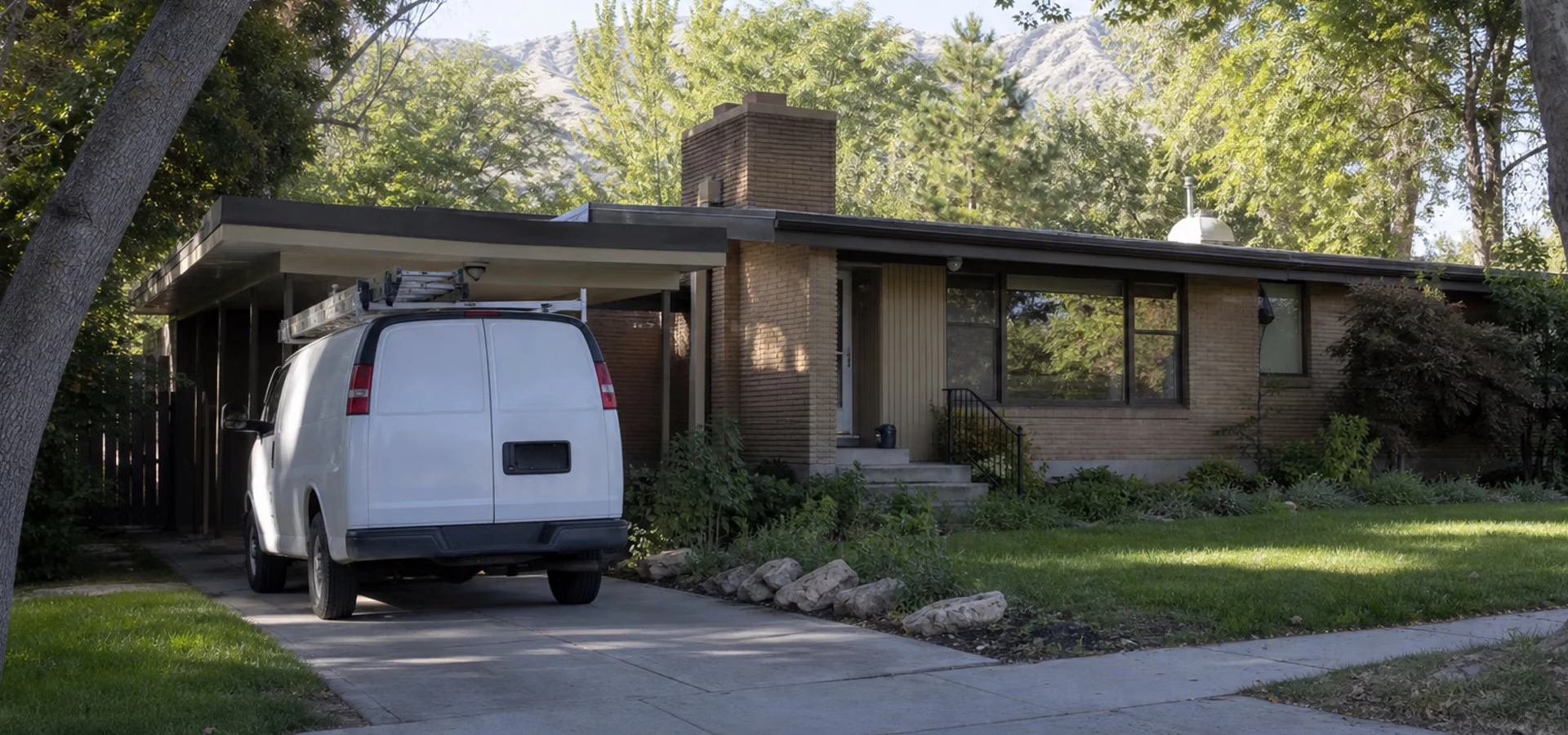
Slow Drains in an Older Ogden Home? Here's Why
If you own a pre-1980 home in Ogden and your drains have been getting slower for months rather than clogging all at once, five things are almost always the reason: cast iron or clay pipe corrosion narrowing the pipe's interior, tree root intrusion at failed joints, a bellied section of pipe that traps waste, grease buildup clinging to rough corroded walls, or offset joints from decades of soil settlement. Each one leaves a slightly different pattern, and each one has a specific fix — here's how to tell them apart.
The Pattern That Matters Most
The pattern that matters most: constant vs. seasonal vs. isolated-to-one-section. Corrosion and grease tend to be constant and gradual, roots are seasonal, and bellies or offsets tend to be isolated to the exact same spot every time — that pattern alone gets you most of the way to the right diagnosis before a camera even goes in the line.
What Are the Key Takeaways for Slow Drains in Older Homes?
Why This Is So Common in Older Ogden Homes
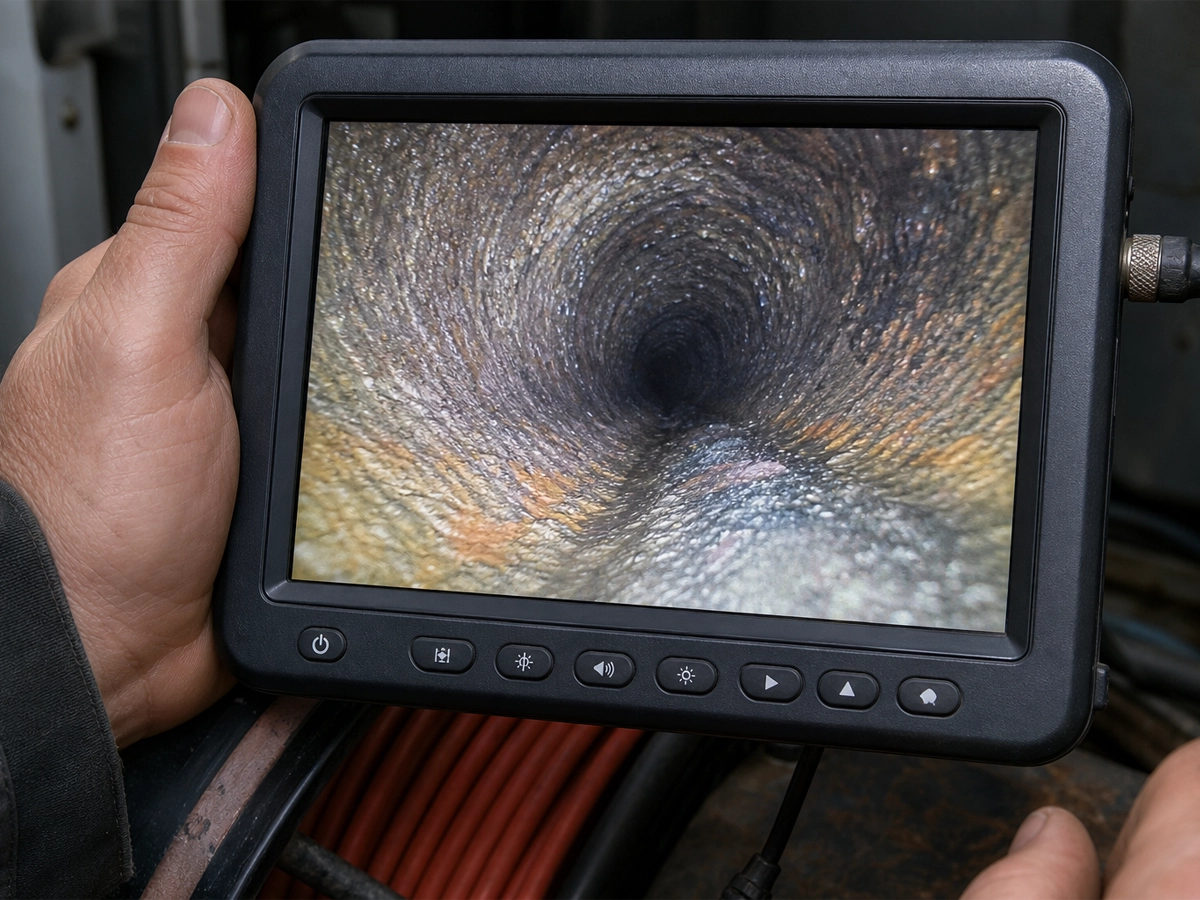 Corrosion on camera
 Homes built before 1980 in Ogden, Roy, and North Ogden's older neighborhoods were typically plumbed with cast iron and clay sewer laterals — durable materials, but not permanent ones. Cast iron sewer pipe averages 30 to 50 years of service life before internal corrosion becomes a functional problem, which puts most of Ogden's pre-1980 housing stock well past the point where these issues start showing up. Add Weber County's mature tree canopy and decades of soil settlement, and you get a predictable set of failure patterns rather than random bad luck.
At a Glance
| Cause | What It Looks Like | The Fix |
|---|---|---|
| Cast iron/clay corrosion (tuberculation) | Multiple drains slow gradually over months or years | Hydro jetting or trenchless lining depending on severity |
| Root intrusion at joint failures | Slow drain that worsens seasonally, especially spring/summer | Root removal + camera-confirmed trenchless repair |
| Pipe bellies (low spots) | Same section always slow no matter how often it's cleared | Trenchless spot repair or pipe bursting to restore grade |
| Grease buildup on rough walls | Kitchen line slow, worse after cooking-heavy days | Hydro jetting to scour the full pipe diameter |
| Offset joints from soil settlement | Gurgling + slow drain, often with a visible yard dip | Camera-confirmed trenchless repair at the offset point |
1. Cast Iron & Clay Pipe Corrosion (Tuberculation)
Cast iron and clay pipe corrode from the inside as rust and mineral deposits — a process called tuberculation — build up along the pipe wall. Over 25 to 30 years, these deposits can narrow the effective pipe diameter by 25% or more, which shows up as multiple drains running slow at once rather than a single clogged fixture. This one doesn't resolve with a simple snake, since the restriction is the pipe wall itself, not debris. Hydro jetting can scour years of buildup, though severe corrosion may point toward trenchless lining as the more lasting fix.
2. Root Intrusion at Joint Failures
Mature trees throughout Ogden's older neighborhoods send roots directly toward the moisture at pipe joints, and once a root finds its way in, it grows to fill and eventually crack the joint further. The telltale sign is a slow drain that gets noticeably worse in spring and summer when root growth is most active, then seems to improve slightly in winter. This pattern — seasonal rather than constant — is what separates root intrusion from straightforward corrosion.
3. Pipe Bellies (Low Spots)
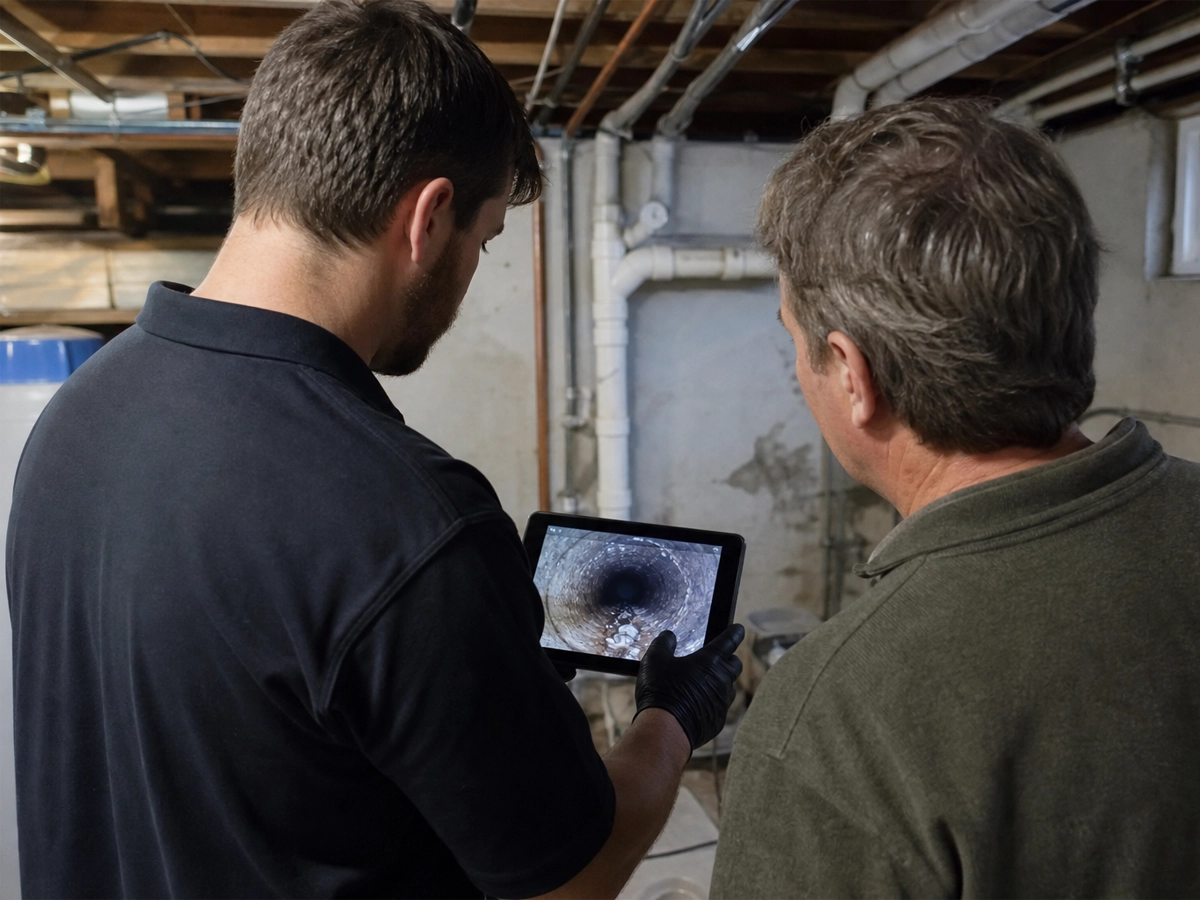 Confirming the cause
 A bellied pipe has sagged at one section, usually from soil settlement, creating a permanent low point where wastewater and solids collect instead of flowing through. The distinguishing sign: the exact same section clogs repeatedly no matter how recently it was cleared, since cleaning removes what's sitting in the belly but does nothing to fix the underlying sag. A camera inspection is the only way to confirm a belly's location and severity before recommending a repair.
4. Grease Buildup on Rough, Corroded Walls
Grease clings far more aggressively to a rough, corroded cast iron interior than it would to smooth PVC or PEX, which is why kitchen-line slowdowns are especially common in older Ogden homes. The pattern here is specific to the kitchen line and tends to worsen after cooking-heavy periods. Because the rough pipe surface is what's letting grease adhere in the first place, drain cleaning with hydro jetting addresses this more thoroughly than a cable alone, which can punch through the clog without clearing the walls that caused it.
5. Offset Joints from Soil Settlement
Decades of soil settlement — common throughout Weber County's clay-heavy ground — can shift pipe sections just enough to misalign the joints between them, creating a ledge where waste catches and a gap where roots and groundwater can enter. Offset joints often show up alongside gurgling sounds and, in more advanced cases, a visible dip or wet patch in the yard along the pipe's path. Because the misalignment is structural, a trenchless repair at the specific offset point is typically what resolves it for good, rather than repeated cleaning.
The pattern that matters most: constant vs. seasonal vs. isolated-to-one-section. Corrosion and grease tend to be constant and gradual, roots are seasonal, and bellies or offsets tend to be isolated to the exact same spot every time — that pattern alone gets you most of the way to the right diagnosis before a camera even goes in the line.
How to Know Which One You Have
A recorded sewer camera inspection is the only way to confirm which of these five is actually happening in your specific line rather than guessing from symptoms alone. The camera identifies roots, cracks, bellies, offset joints, and corrosion directly, and pairs with a sonde and locator to mark the exact depth and position — so any repair that follows is targeted instead of exploratory. For homes in Ogden specifically, where pre-1980 clay and cast iron are common, this diagnostic step is what separates a $250-$300 answer from a guessing-game repair bill.
What It Costs to Fix, By Cause
Once the camera identifies the cause, the fix follows a fairly predictable cost range depending on severity — see our full trenchless sewer repair cost guide for detailed pricing. Isolated spot issues are typically addressed through pipe repair, while more extensive corrosion or multiple defects usually point toward a full trenchless lining.
Prepping an Older Ogden Home Before Drain Work
Once you know which of the five causes is behind your slow drains, the actual fix — hydro jetting, trenchless lining, or simply opening a cleanout — usually happens down in the basement or crawlspace. In older Ogden homes, that's exactly where decades of stored belongings tend to pile up. Clearing the work zone before the crew arrives protects your things and lets the technician reach the line faster, which keeps the visit short.
A finished basement packed with boxes, seasonal gear, and furniture also raises the stakes if a line backs up mid-repair. Moving anything valuable or hard to replace out of the lowest level keeps it clear of dust, water, and foot traffic while the work is underway. Homeowners who don't have a dry garage or a spare room to spare often rent a short-term unit for a week or two — if you're just south of Ogden, Storage Units in Clearfield UT is a convenient place to keep basement belongings until your drains are flowing clean again.
Before the crew arrives:
Clear a walking path to the main cleanout, floor drain, or the affected fixture.
Lift stored boxes and totes off the basement floor, or move them out of the room entirely.
Relocate anything water-sensitive — documents, electronics, keepsakes — to a higher floor or off-site.
Leave a few feet of space around access points so the technician can set up equipment.
Frequently Asked Questions
How do I know if my Ogden home has cast iron or clay sewer pipe?
If your home was built before 1980 and the plumbing hasn't been replaced, cast iron or clay is a reasonable assumption. A camera inspection confirms the exact material and condition without any guesswork.
Can a slow drain fix itself, or does it always get worse?
With these five causes, it doesn't self-resolve. Corrosion and grease buildup continue accumulating, roots keep growing, and bellies or offset joints don't correct themselves — the timeline to a full backup varies, but the direction doesn't.
Is it worth getting a camera inspection before the drain fully backs up?
Yes. A $250-$300 camera inspection that confirms a fixable early-stage issue is far cheaper than the same problem discovered after a full backup, and the inspection cost is often credited toward the repair if you move forward with Rhino Rooter.
Which of these five causes is most common in Ogden specifically?
Cast iron and clay corrosion is the most frequent root cause in Ogden's pre-1980 housing stock, though root intrusion is a close second given the area's mature tree canopy along older residential streets. A slow drain in an older Ogden home is rarely just bad luck — it's one of five specific, identifiable causes, each with its own pattern and its own fix. A camera inspection turns the guessing into a clear answer before you spend money on the wrong solution.
Choose Rhino Rooter for Older Ogden Homes
Rhino Rooter has 23 years of pattern knowledge on northern Utah's pre-1980 housing stock, with every job camera-verified before a repair is recommended — one company, one warranty, from diagnosis through trenchless repair.
Contact us today for a recorded camera inspection that tells you exactly which of these five causes applies to your home.
Contact the crew →Not Sure Which of These Five Is Causing Your Slow Drain?
Rhino Rooter runs a recorded camera inspection before quoting any repair — see the actual cause, not a guess, for $250-$300.
Request a Camera Inspection →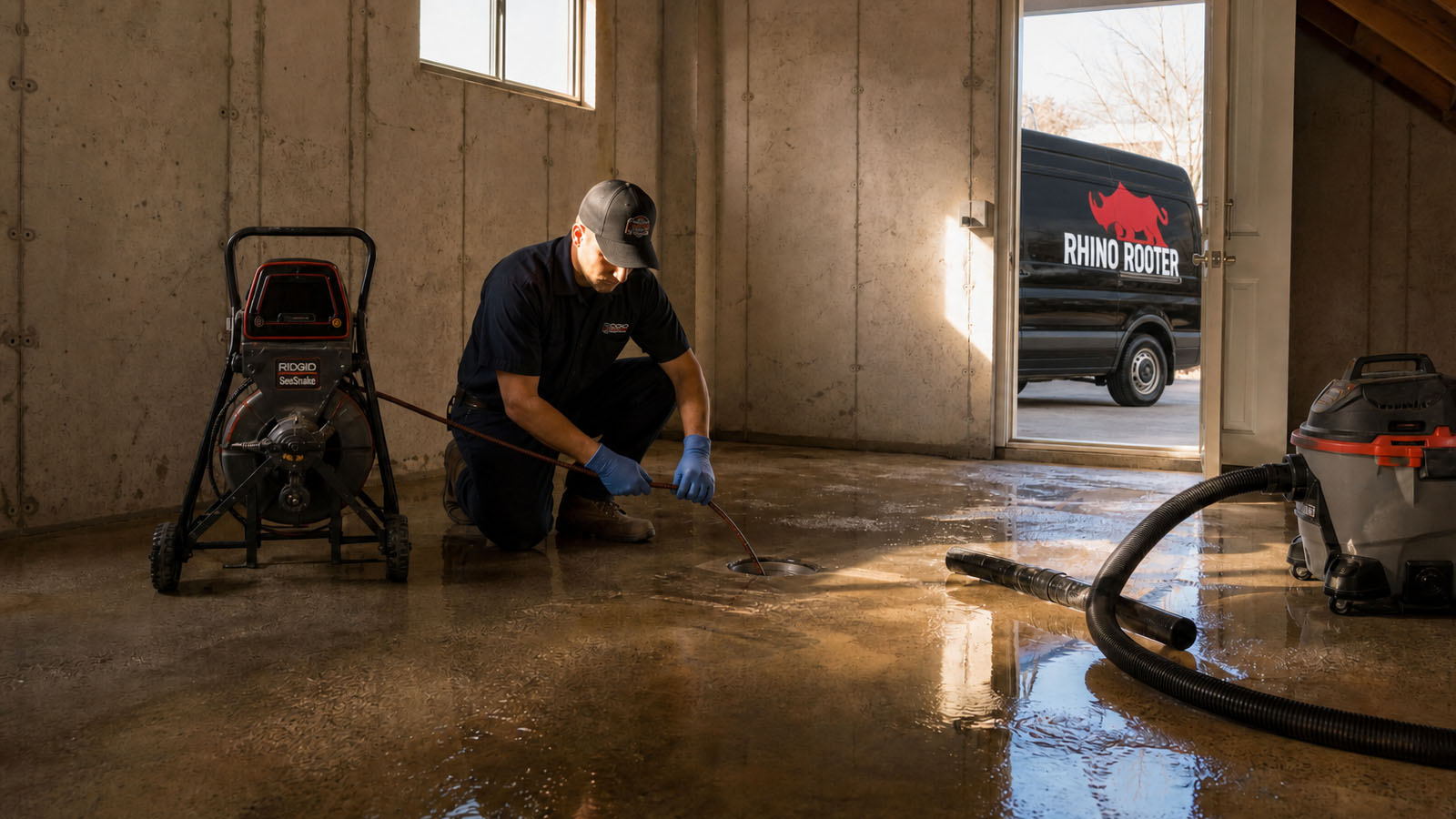
Get a Clear Answer, Not a Guess
A slow drain in an older Ogden home is rarely just bad luck — it's one of five specific, identifiable causes, each with its own pattern and its own fix. A camera inspection turns the guessing into a clear answer before you spend money on the wrong solution.