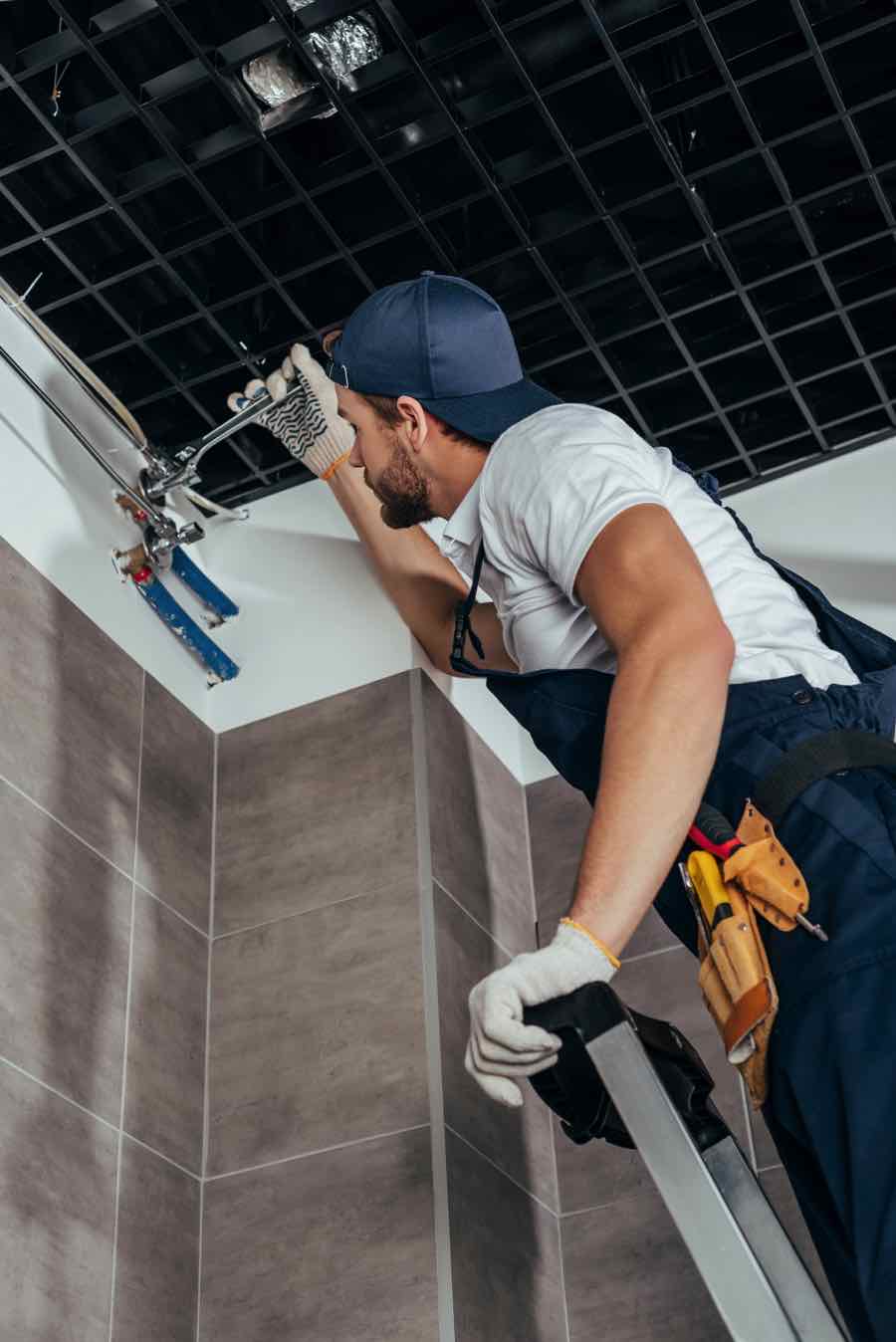

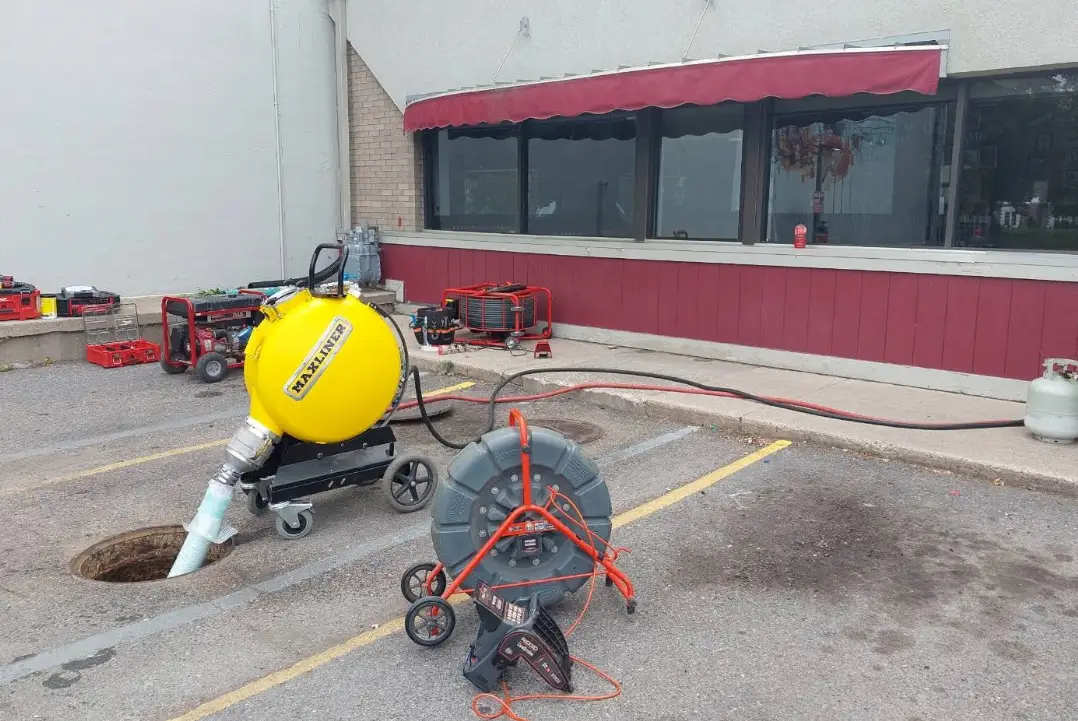
Trenchless sewer repair fixes underground sewer lines with minimal digging, while traditional excavation replaces or repairs pipes by digging long trenches across the property.
The difference comes down to how the pipe is accessed, how much disruption occurs, and the long-term impact on cost and property damage.
Rhino Rooter, based in West Haven, provides trenchless sewer repair, sewer line maintenance, camera inspections, and drain cleaning services for residential and commercial properties.
What Is Trenchless Sewer Repair?
Trenchless sewer repair is a no-dig or minimal-dig method used to repair or replace damaged sewer lines without excavating the entire pipe path. Access is typically made through one or two small entry points.
Common trenchless methods include:
- Cured-In-Place Pipe (CIPP) lining – a resin-saturated liner is inserted and cured inside the existing pipe
- Pipe bursting – the old pipe is fractured while a new pipe is pulled into place
- Directional drilling – used for installing new sewer lines under structures or landscaping
These methods allow sewer repair without tearing up driveways, sidewalks, patios, or landscaping.
What Is Traditional Sewer Excavation?
Traditional excavation involves digging a continuous trench from one end of the sewer line to the other to access damaged sections.
This method is commonly used when:
- Pipes are fully collapsed
- Sewer lines are severely misaligned
- Pipe materials are outdated or brittle
- Trenchless methods are not structurally viable
While effective, excavation causes significant surface disruption and often requires restoration work after repairs are completed.
Trenchless Sewer Repair vs Traditional Excavation
| Feature | Trenchless Sewer Repair | Traditional Excavation |
| Digging required | Minimal | Extensive |
| Yard & driveway damage | Very low | High |
| Repair time | 1–2 days (typical) | Several days to weeks |
| Cost predictability | More stable | Often increases |
| Pipe lifespan | 40–50+ years | 30–50 years |
| Ideal for landscaping & hardscapes | Yes | No |
| Best for collapsed pipes | Sometimes | Yes |
Key Differences That Matter to Homeowners
Property impact
- Trenchless methods preserve lawns, trees, walkways, and concrete
- Excavation often requires full surface restoration
Project timeline
- Trenchless sewer repairs are typically completed faster
- Excavation adds time for digging, backfilling, and surface repairs
Long-term durability
- Modern trenchless liners are jointless and root-resistant
- Excavated pipe replacements may still include joints vulnerable to intrusion
When Trenchless Sewer Repair Is the Better Option
Trenchless repair is often recommended for:
- Cracked or leaking sewer lines
- Root intrusion without full collapse
- Aging clay or cast iron pipes
- Sewer lines beneath driveways or foundations
- Properties with extensive landscaping
- Homeowners seeking minimal disruption
Because it strengthens the pipe from the inside, trenchless repair addresses structural issues while improving flow capacity.
When Traditional Excavation Is Necessary
Excavation may be required if:
- The sewer line has fully collapsed
- Pipes have severe misalignment
- There is extensive ground movement
- Pipe diameter or routing must be changed
In these cases, full access is needed to safely replace the line.
Is Trenchless Sewer Repair Safe and Reliable?
Yes — when the pipe is structurally suitable and the repair is preceded by a sewer camera inspection.
Trenchless repair is safe for:
- Clay sewer pipes
- Cast iron sewer lines
- PVC sewer systems
According to the U.S. Environmental Protection Agency, trenchless technologies reduce environmental disruption compared to open-cut excavation.
Cost Considerations: Trenchless vs Excavation
While trenchless sewer repair may appear more expensive upfront, it often:
- Reduces restoration costs
- Avoids driveway or sidewalk replacement
- Minimizes labor hours
- Prevents landscaping replacement
Traditional excavation may carry hidden costs related to surface repair, permits, and extended labor.
Frequently Asked Questions About Sewer Repair Methods
Is trenchless sewer repair better than excavation?
In most cases, yes. Trenchless repair minimizes property damage and shortens repair time. Excavation is typically reserved for severe pipe failure.
How long does trenchless sewer repair last?
Trenchless liners and replacement pipes are designed to last 40–50 years or more when properly installed.
Can trenchless sewer repair fix root damage?
Yes. Trenchless methods seal cracks and joints, preventing future root intrusion.
Does trenchless sewer repair work for old homes?
It often does, especially for homes with clay or cast iron pipes, as long as the line is not fully collapsed.
Is excavation always cheaper?
Not necessarily. Once landscaping, concrete, and labor costs are factored in, trenchless repair is often more cost-effective overall.
Professional Sewer Repair in West Haven, UT
Choosing the right sewer repair method depends on pipe condition, location, and long-term goals. A camera inspection is essential before deciding.
Rhino Rooter provides expert trenchless sewer repair and traditional excavation services throughout West Haven, UT and surrounding areas.